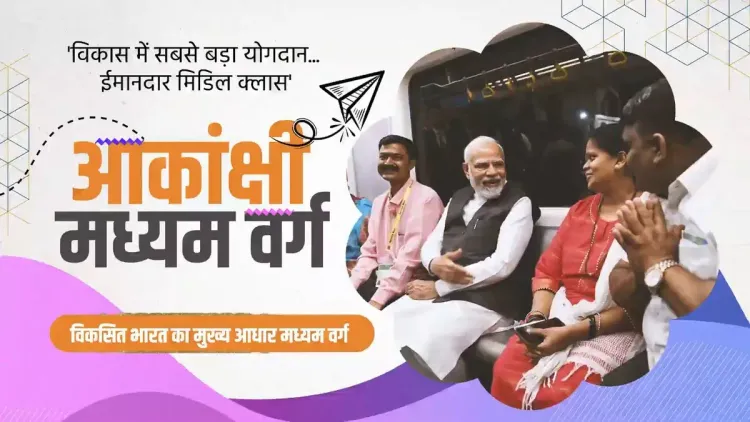
Nadda credits Modi govt for middle class transformation
Synopsis
Union Health Minister J. P. Nadda marked 12 years of the Modi government by citing zero income tax up to ₹12 lakh, Ayushman Bharat health coverage, digital connectivity, and green mobility as proof of unprecedented transformation for India's middle class and the newly emerged neo-middle class.
Key Takeaways
Union Health Minister J.
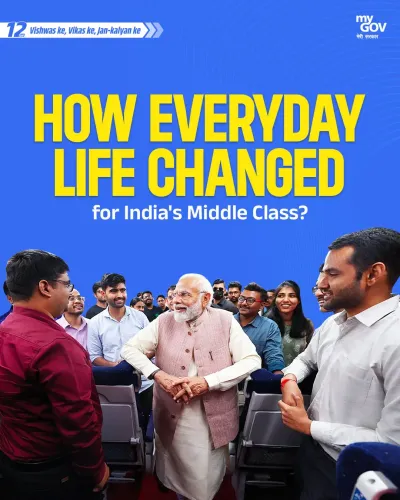
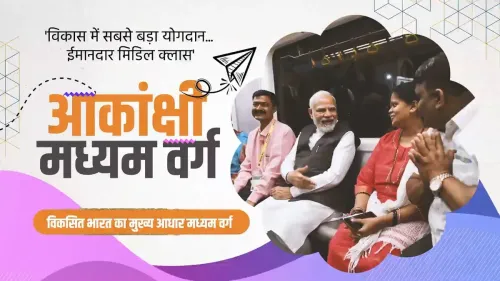
Nadda posted on June 15, 2026 crediting the Modi government with 12 years of middle-class welfare under #12YearsOfSakshamMiddleClass .
He cited a zero income-tax regime on earnings up to ₹12 lakh as direct relief for salaried and self-employed households.
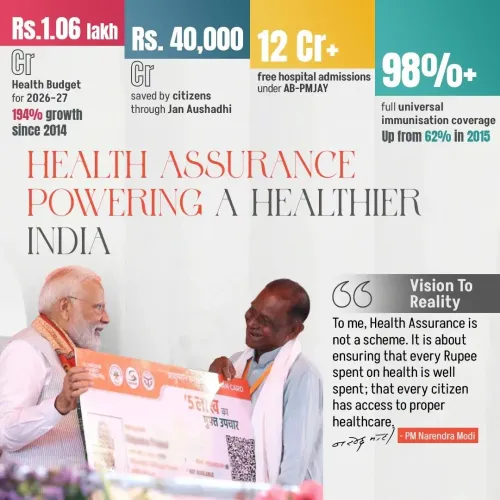
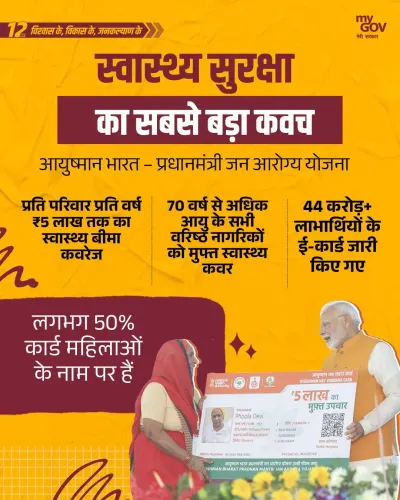
Ayushman Bharat (PM-JAY) , launched in 2018 , was highlighted as a key vehicle for expanding health security to the wider population.
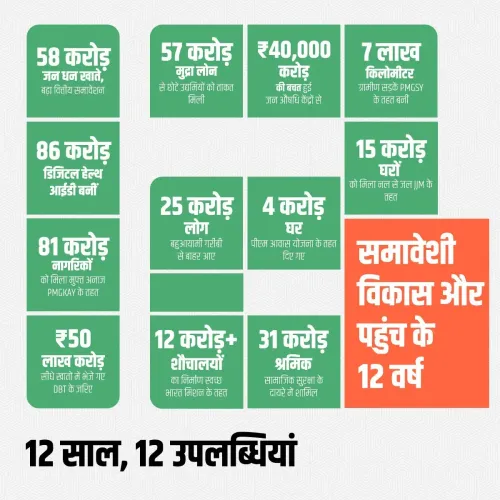
Nadda claimed 25 crore people have exited poverty and joined a 'neo-middle class' — a government figure that awaits independent verification.
Modern transport, road networks, Digital India , green energy, and electric mobility were cited as infrastructure pillars improving quality of life.
The post signals that middle-class outreach will remain a central BJP policy and electoral narrative ahead of the Union Budget 2027 .
Union Health Minister J. P. Nadda on Monday, June 15, 2026, credited the Modi government with bringing 'unprecedented change' to the lives of India's middle class over the past 12 years, citing tax relief, health coverage expansion, and infrastructure upgrades as pillars of this transformation.
Context
Posting on X under the hashtag #12YearsOfSakshamMiddleClass, Nadda wrote in Hindi that under the leadership of Prime Minister Narendra Modi, 'pichle 12 varshon mein Bharat ke madhyam varg ke jeevan mein abhootpoorv parivartan aaye hain' — 'unprecedented changes have come to the lives of India's middle class in the last 12 years.' He argued that the middle class is no longer confined to meeting basic needs but is now 'filled with new opportunities for self-reliance, prosperity, and progress.'
The post arrives as the BJP-led National Democratic Alliance government marks over a decade in power, with the ruling party increasingly framing its economic record around upward mobility and aspirational welfare.
Policy Backdrop
Nadda highlighted several specific policy pillars. On taxation, he pointed to a zero-tax regime on income up to ₹12 lakh, a measure introduced as part of the revised personal income tax structure aimed at easing the burden on salaried and self-employed households. On healthcare, he cited Ayushman Bharat — the Pradhan Mantri Jan Arogya Yojana launched in 2018 — as a vehicle for expanding health security to a wider population.
He also referenced modern transport infrastructure, a strengthened road network, accessible digital connectivity, green energy, and electric mobility as initiatives that have 'made life more convenient while giving new momentum to development.' The Digital India programme, initiated in 2015, forms the backbone of the digital connectivity push he alluded to.
Nadda further stated that 25 crore people have moved out of poverty and emerged as a 'neo-middle class,' describing this as a reflection of 'new India's transformative character.' It should be noted that this figure is part of the government's own stated narrative; independent verification of the precise claim remains pending.
Stakeholders and Impact
The primary beneficiaries cited in the post are middle-class households and the newly emerged neo-middle class — those who have crossed the poverty line and are entering the consumption and aspirations economy for the first time. For these groups, the convergence of tax savings, subsidised health insurance, and improved public infrastructure represents a tangible shift in living standards, according to the government's framing.
Ayushman Bharat alone, since its 2018 launch, has been positioned as one of the world's largest government-funded health assurance schemes, with successive expansions of its beneficiary base. The income tax relief on earnings up to ₹12 lakh directly targets urban salaried workers — a core middle-class constituency.
What's Next
The Union Budget 2027 will be closely watched for further announcements on income tax slab rationalisation and any expansion of Ayushman Bharat coverage targets, both of which are central to the government's middle-class outreach narrative. The BJP's sustained emphasis on combining infrastructure expansion, digital public goods, and targeted welfare suggests this policy arc will remain a dominant theme heading into the next electoral cycle.
Point of View
Using the 12-year milestone to consolidate the BJP's image as the party of aspirational India — a pivot from its earlier 'pro-poor' framing toward a broader middle-class constituency. The invocation of concrete policy instruments — tax exemptions, Ayushman Bharat, Digital India — gives the message a programmatic weight beyond mere rhetoric. The 'neo-middle class' framing is particularly significant: it attempts to fold newly upwardly mobile households into the BJP's core support base ahead of the budget cycle. Whether the numbers hold up to independent scrutiny will determine how durable this narrative proves in the public discourse.
NationPress
19 Sept 2026
Frequently Asked Questions
What did JP Nadda say about the middle class on June 15 2026?
J. P. Nadda posted on X crediting the Modi government with unprecedented transformation of India's middle class over 12 years, citing zero income tax up to ₹12 lakh, Ayushman Bharat health coverage, and improved digital and transport infrastructure.
What is the zero tax on income up to 12 lakh scheme in India?
The zero-tax provision on income up to ₹12 lakh is part of India's revised personal income tax structure, introduced to reduce the financial burden on salaried and self-employed middle-class households.
How many people has Ayushman Bharat covered in India?
Ayushman Bharat Pradhan Mantri Jan Arogya Yojana, launched in 2018, is one of the world's largest government-funded health assurance schemes; the government has progressively expanded its beneficiary base, though the latest verified coverage figures should be checked with official sources.
What does neo-middle class mean in India?
The 'neo-middle class' refers to the segment of the population that has recently crossed the poverty line and entered the aspirational consumer economy, according to the government's framing. Nadda cited a government figure of 25 crore such individuals, which awaits independent verification.
What is the BJP's 12YearsOfSakshamMiddleClass campaign?
The hashtag #12YearsOfSakshamMiddleClass marks 12 years of the BJP-led Modi government, with senior leaders highlighting welfare, tax, health, and infrastructure measures aimed at India's middle class and upwardly mobile population.