PM Modi Marks 12 Years of NDA Governance with Middle-Class Focus

Synopsis
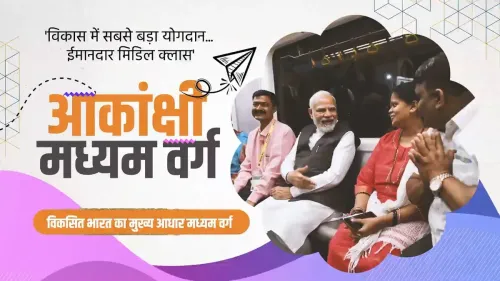
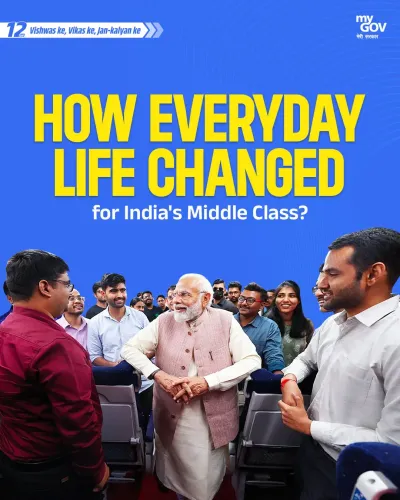
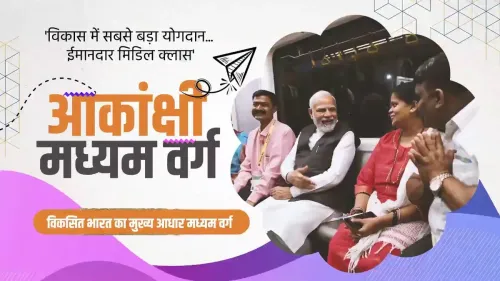
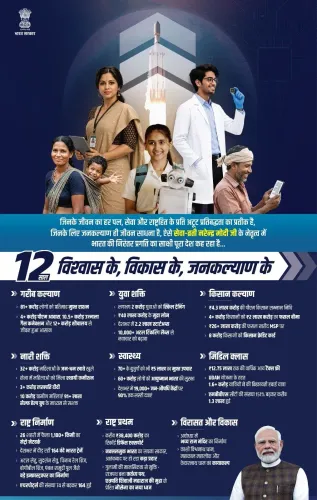
Prime Minister Narendra Modi on 15 June 2026 marked 12 years of NDA governance by reaffirming the government's commitment to India's middle class, citing improvements in healthcare, education, infrastructure, and public services under the #12YearsOfSakshamMiddleClass banner.
Key Takeaways
PM Modi posted on 15 June 2026 marking 12 years of NDA governance under the hashtag #12YearsOfSakshamMiddleClass .
The post highlights a broad agenda: affordable healthcare, quality education, better infrastructure, cleaner cities, and reduced everyday burdens for the middle class.
Key NDA programmes cited in context include Ayushman Bharat (2018), Swachh Bharat Mission (2014), GST (2017), Digital India (2015), NEP (2020), and PM Awas Yojana (from 2015).
The government's approach has emphasised formalisation of the economy, direct benefit transfers, and digital public infrastructure.
Upcoming Union Budget decisions on income-tax slabs and standard deduction will be a key test of the government's middle-class commitments.
The 12-year milestone framing signals that the middle class will remain central to BJP's political and policy narrative going forward.
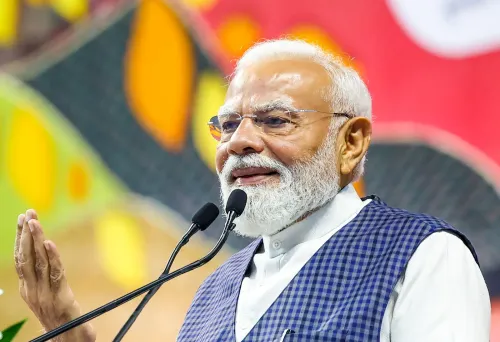
Prime Minister Narendra Modi on Monday, 15 June 2026, posted a message on X reaffirming the National Democratic Alliance (NDA) government's commitment to improving the quality of life of India's middle class, marking the occasion with the hashtag #12YearsOfSakshamMiddleClass.
Context
In his post, PM Modi described serving the middle class as a 'privilege' of the NDA government, stating that this segment has 'contributed to nation-building in countless ways.' He outlined a broad agenda covering 'easier access to opportunities, better infrastructure, improved public services, affordable healthcare, quality education, cleaner cities and reduced burdens in everyday life.'
The hashtag marks 12 years of what the ruling alliance frames as middle-class-centric governance, spanning the period from 2014 to 2026. The post arrives as the NDA government enters its third consecutive term in office at the centre.
Policy Backdrop
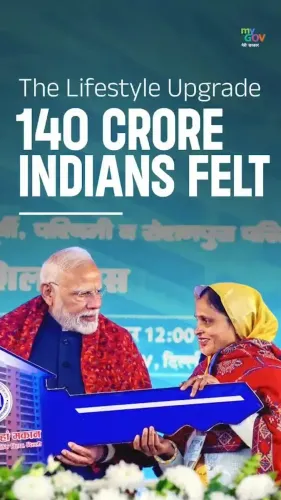
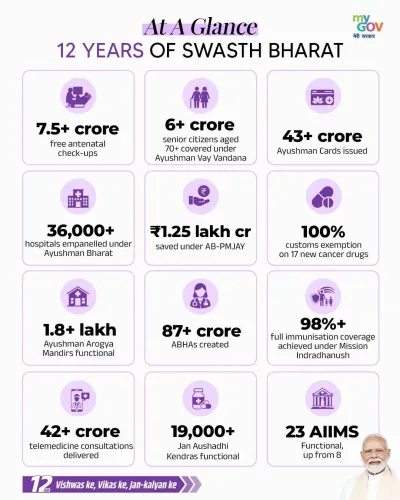
The NDA's record over the past decade includes several flagship programmes aimed squarely at middle-income and lower-middle-income households. The Ayushman Bharat health insurance scheme, launched in 2018, extended coverage to millions of families previously excluded from formal healthcare. The Swachh Bharat Mission, begun in 2014, targeted sanitation and urban cleanliness — a persistent quality-of-life concern for urban residents.
On the economic side, the rollout of the Goods and Services Tax (GST) in 2017 sought to rationalise indirect taxation, while the Digital India initiative launched in 2015 expanded e-governance and reduced friction in accessing public services. The National Education Policy (NEP), introduced in 2020, restructured both school and higher education with an emphasis on skills and flexibility. PM Awas Yojana, expanded from 2015 onwards, has worked to widen access to affordable urban housing.
Together, these programmes represent a shift toward formalisation of the economy, direct benefit transfers, and digital public infrastructure — all framed as reducing leakages while expanding access for ordinary citizens.
Stakeholders and Impact
The primary beneficiaries highlighted in the government's narrative are urban professionals, salaried workers, and middle-class families — a demographic that occupies a central role in India's electoral arithmetic and economic output. This group has historically voiced concerns about the cost of living, healthcare affordability, housing, and the quality of public education.
Critics have argued that the middle class continues to bear a disproportionate tax burden and that real wage growth has been uneven. However, the government points to infrastructure expansion, digital service delivery, and health coverage as evidence of tangible improvement in everyday governance. The framing of the #12YearsOfSakshamMiddleClass campaign positions these gains as a cumulative, decade-long achievement rather than any single policy moment.
What's Next
Attention will now turn to the forthcoming Union Budget, where proposals on income-tax slab revisions and changes to the standard deduction are expected to be closely watched by middle-class households. Progress on expanding Ayushman Bharat coverage and the pace of urban infrastructure delivery will also serve as key benchmarks. The 12-year milestone framing suggests the government intends to consolidate its middle-class narrative ahead of the next electoral cycle, making this demographic a continued centrepiece of its political and policy communication.
Point of View
Aspirational India that it remains the primary custodian of their interests. By cataloguing a decade of incremental gains across health, education, housing, and digital services, the messaging pre-empts opposition narratives around tax burden and unemployment that have gained traction among middle-income voters. The timing, 12 years after the NDA's first election victory in 2014, is deliberate: it anchors the party's record in a long arc of governance rather than any single term. Whether the framing translates into tangible Budget relief for salaried households will be the real measure of its credibility.
NationPress
19 Sept 2026
Frequently Asked Questions
What is the #12YearsOfSakshamMiddleClass hashtag about?
The hashtag marks 12 years of NDA governance since 2014, with PM Modi using it to highlight the government's focus on improving the quality of life of India's middle class through healthcare, education, infrastructure, and public services.
What schemes has the NDA government launched for the middle class?
Key schemes include Ayushman Bharat for health insurance (2018), PM Awas Yojana for affordable housing (from 2015), Digital India for e-governance (2015), the Goods and Services Tax for tax rationalisation (2017), and the National Education Policy (2020).
How has PM Modi's government helped the middle class in India?
The NDA government has focused on expanding digital public services, building physical infrastructure, extending health coverage through Ayushman Bharat, improving sanitation via Swachh Bharat Mission, and working toward affordable housing — all aimed at reducing everyday burdens for middle-class families.
What will the Union Budget mean for India's middle class?
The upcoming Union Budget is expected to include proposals on income-tax slab revisions and standard deduction changes, both of which will directly affect the take-home income of salaried middle-class households and signal the government's continued commitment to this demographic.
Who does India's middle class include for policy purposes?
For policy purposes, India's middle class broadly includes urban professionals, salaried workers, and middle-income families who are primary consumers of public services such as healthcare, education, and housing, and who form a significant part of the formal tax-paying base.