Shekhawat Hails 12 Years of Middle-Class Empowerment
Synopsis
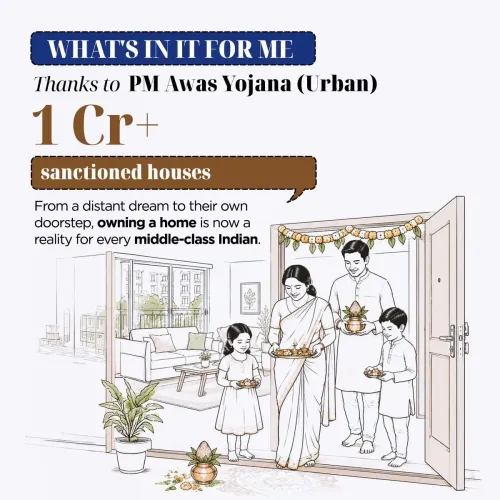
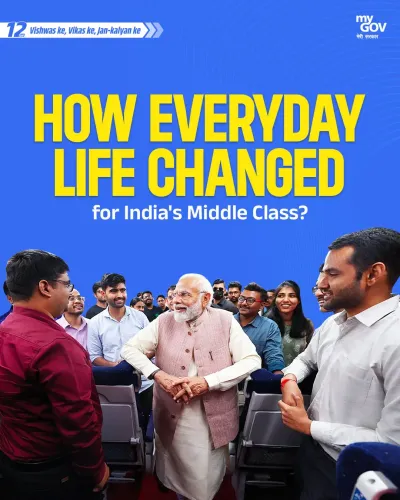
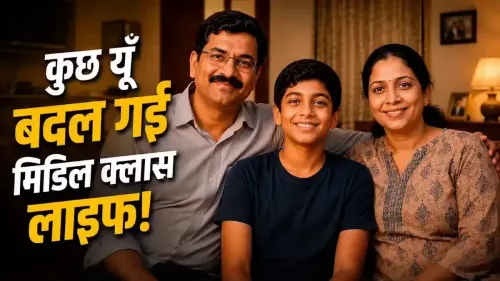
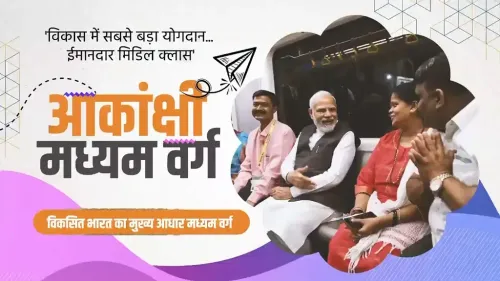
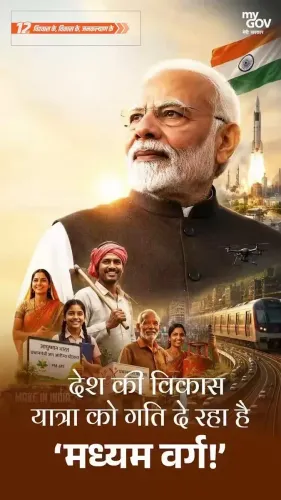
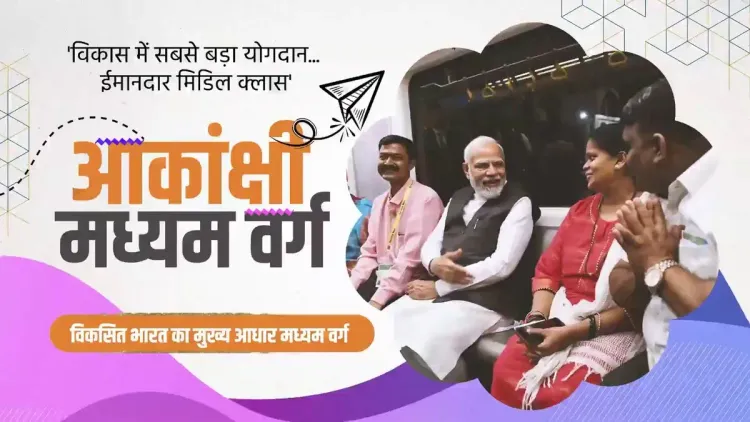
Union Culture and Tourism Minister Gajendra Singh Shekhawat on 15 June 2026 celebrated twelve years of BJP-led middle-class empowerment, sharing a video under the hashtag #12YearsOfSakshamMiddleClass and hailing the 'growing self-confidence of the new middle class.'
Key Takeaways
Gajendra Singh Shekhawat , Union Minister of Culture and Tourism, posted on 15 June 2026 to mark 12 years of what the BJP calls the 'Saksham Middle Class' era.
The hashtag #12YearsOfSakshamMiddleClass signals a coordinated BJP communication push tied to the party's May 2014 election anniversary.
Key reforms cited in the government's middle-class narrative include GST (2017) , direct-tax rationalisation, and digital-payment infrastructure expansion.
India's middle class is a pivotal electoral bloc for the BJP , with its sentiment tracking closely with party performance in urban and Tier-II constituencies.
The next Union Budget and Economic Survey will be watched for fresh middle-class policy announcements that could substantiate the campaign's claims.
Union Culture and Tourism Minister Gajendra Singh Shekhawat on Monday, 15 June 2026 marked twelve years of what the ruling Bharatiya Janata Party frames as transformative policy for India's middle class, sharing a video on X with the message 'New Middle Class ka badhta aatmavishwas' — 'the growing self-confidence of the new middle class.'
Context
The post, carrying the hashtag #12YearsOfSakshamMiddleClass, marks a full decade-plus since the NDA government first took office in May 2014 under Prime Minister Narendra Modi. The BJP has consistently anchored its political identity to the aspirations of urban and semi-urban salaried households, and the hashtag signals a coordinated messaging push around that anniversary.
The phrase 'Saksham Middle Class' — roughly, 'empowered middle class' — has been a recurring motif in government communications, linking successive budget decisions, digital-economy initiatives, and formal-credit expansion to improved living standards for this demographic.
Policy Backdrop
Since 2014, the Union government has pointed to a series of structural reforms as evidence of middle-class uplift. The rollout of the Goods and Services Tax (GST) in 2017 was presented as a formalisation measure that broadened the tax base while reducing cascading levies, and successive direct-tax rationalisation steps were framed as raising disposable incomes for salaried earners.
Financial-inclusion drives, the expansion of digital-payment infrastructure, and formal credit access for first-generation borrowers have also been cited by the government as pillars of a growing consuming class. Each Union Budget since 2014 has carried at least one headline measure targeted at middle-income households — from standard-deduction revisions to home-loan interest relief.
Stakeholders and Impact
India's middle class — broadly defined as urban and peri-urban salaried and self-employed households — is among the largest and fastest-growing consumer blocs in the world. Government policy that raises their disposable income or reduces their tax burden has direct knock-on effects on consumption, housing demand, and formal savings rates.
For the BJP, this constituency is also electorally pivotal. Middle-class sentiment has tracked closely with the party's performance in metropolitan and Tier-II constituencies across successive Lok Sabha and state assembly elections. Shekhawat's post, amplifying a party-wide hashtag, underscores how central this narrative remains to the ruling coalition's communication strategy heading into the next electoral cycle.
What's Next
Political observers will watch the forthcoming Union Budget and the annual Economic Survey for fresh announcements on income-tax slabs, standard deductions, or credit-access schemes that could give the 'Saksham Middle Class' narrative fresh policy substance. State assembly elections scheduled over the next twelve months will also serve as a test of how deeply this message resonates with voters on the ground.
With the BJP marking twelve years in office, the party's ability to demonstrate tangible, data-backed gains for middle-income households — beyond messaging — is likely to be scrutinised closely by opposition parties and independent economists alike.
Point of View
Suggesting central coordination around the party's twelve-year governance milestone. The 'Saksham Middle Class' framing is a deliberate attempt to convert policy continuity into electoral identity — positioning the BJP as the architect of upward mobility for India's largest aspirational demographic. At a moment when opposition parties are increasingly contesting the government's economic record on jobs and real wages, this messaging serves as a pre-emptive counter-narrative. How the government backs this narrative with concrete Budget measures will determine whether the campaign lands as political communication or as credible policy legacy.
NationPress
19 Sept 2026
Frequently Asked Questions
What is the Saksham Middle Class campaign by BJP?
'Saksham Middle Class' is a BJP government communication theme that frames twelve years of NDA policies — including GST, digital payments, and tax rationalisation — as having empowered and expanded India's middle class. The exact scope of the 2026 campaign has not been officially detailed.
Why did Gajendra Singh Shekhawat post about the middle class?
Shekhawat posted on 15 June 2026 as part of a BJP-wide hashtag campaign marking twelve years since the NDA government came to power in May 2014, celebrating what the party calls transformative middle-class policy outcomes.
What policies has the BJP government introduced for the middle class?
Since 2014, the government has pointed to GST rollout in 2017, direct-tax rationalisation, standard-deduction revisions, home-loan interest relief, financial inclusion schemes, and digital-payment infrastructure as key measures benefiting middle-class households.
Who is Gajendra Singh Shekhawat?
Gajendra Singh Shekhawat is the Union Minister of Culture and Tourism, a senior BJP leader, and a Lok Sabha MP from Jodhpur, Rajasthan.
What does 'New Middle Class ka badhta aatmavishwas' mean?
The Hindi phrase translates to 'the growing self-confidence of the new middle class' — a slogan the BJP uses to describe the rising aspirations and economic agency of urban and semi-urban Indian households under NDA governance.