CM Rekha Gupta Credits Modi Govt for 12 Years of Middle-Class Gains
Synopsis
Delhi Chief Minister Rekha Gupta on June 15, 2026, credited PM Narendra Modi's 12-year tenure with tangible gains for India's middle class — spanning income-tax relief, metro network expansion and improved ease of living — framing a confident middle class as a cornerstone of the Viksit Bharat vision.
Key Takeaways
Delhi CM Rekha Gupta posted on June 15, 2026 crediting 12 years of the Modi government with improving middle-class living standards.
Key areas highlighted: income-tax relief , expanding metro networks , modern connectivity and ease of living .
The post is part of a BJP campaign under #12YearsOfSakshamMiddleClass marking PM Modi's 12 years in office since May 2014 .
The Viksit Bharat vision — developing India into a fully developed economy by 2047 — is cited as the overarching goal underpinning these policies.
Policy lineage includes revised Union Budget tax slabs, the Metro Rail Policy 2017 and the Ease of Living Index launched in 2018 .
The next Union Budget and Delhi Metro Phase 4 progress will be key tests of whether this policy momentum is sustained.
Delhi Chief Minister Rekha Gupta on Monday, June 15, 2026, credited the Narendra Modi-led central government with delivering measurable quality-of-life improvements for India's middle class over the past 12 years, citing tax relief, metro expansion, modern connectivity and a sustained ease-of-living push as the pillars of that progress.
Context
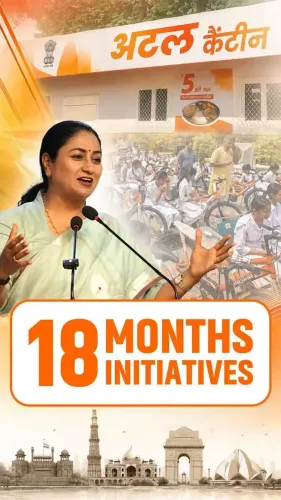
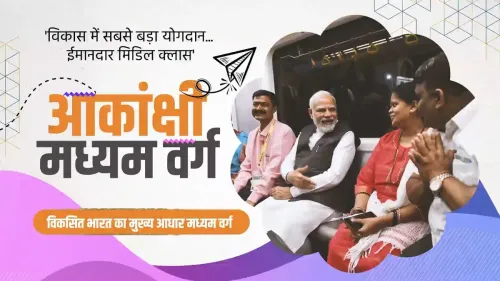
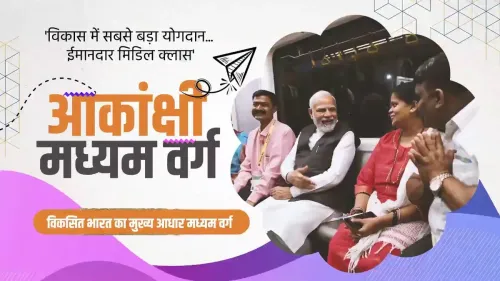
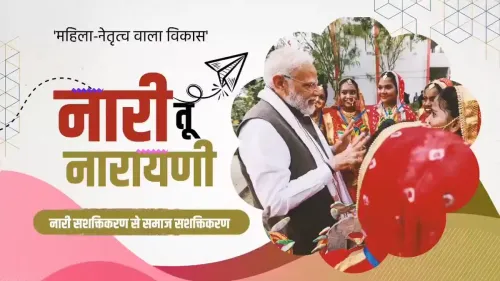
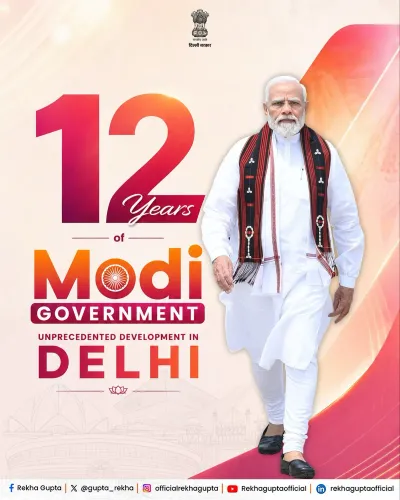
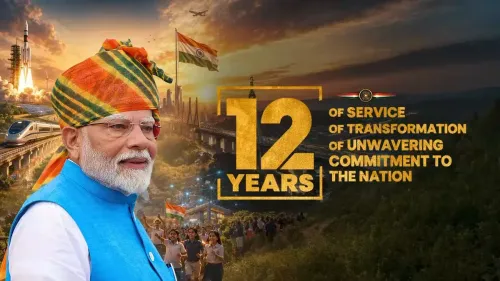
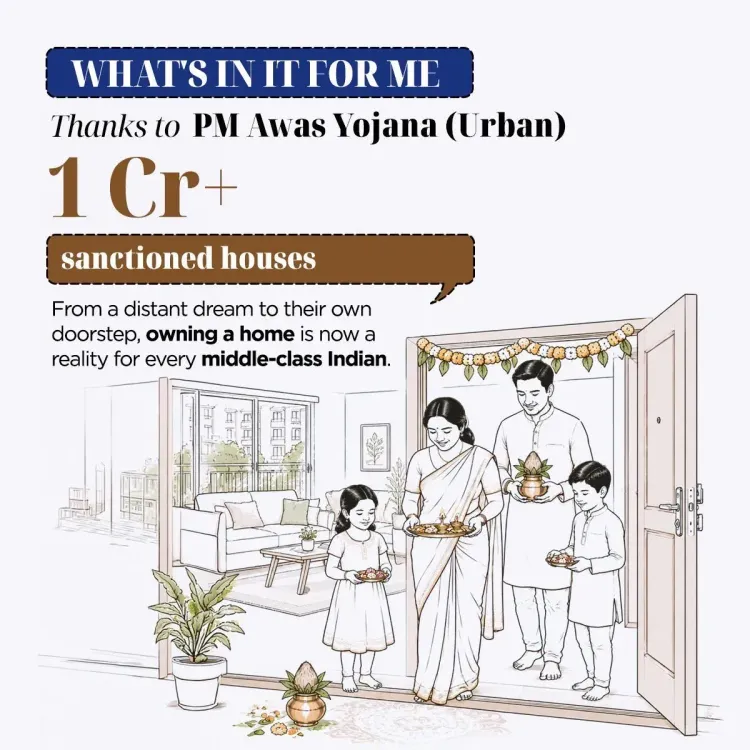
Posting under the hashtag #12YearsOfSakshamMiddleClass ('empowered middle class'), CM Gupta wrote that 'the last 12 years have brought tangible improvements in the lives of India's middle class through tax relief, expanding metro networks, modern connectivity and a sustained focus on ease of living.' The post accompanied four images and forms part of a coordinated BJP communication exercise marking 12 years of Prime Minister Modi in office since May 2014.
Gupta anchored her message in the ruling party's broader national narrative, adding that 'a confident middle class remains one of the strongest foundations of a Viksit Bharat' — the government's flagship vision to transform India into a fully developed economy by 2047.
Policy Backdrop
The tax-relief claim draws on a series of Union Budget measures since 2014 that progressively revised income-tax slabs and raised basic exemption limits for middle-income earners, leaving more disposable income in household hands. Successive budgets combined these direct-tax adjustments with stepped-up capital expenditure on urban infrastructure.
On connectivity, the Metro Rail Policy of 2017 provided a structured framework for city-level metro projects, and central funding supported Phase 3 and Phase 4 expansions of the Delhi Metro alongside new networks in several other cities. The government also launched the Ease of Living Index in 2018, an annual benchmarking tool that tracks city-level improvements in services, infrastructure and citizen satisfaction — giving the 'ease of living' promise a measurable institutional form.
Stakeholders and Impact
Middle-class households and urban commuters are the primary beneficiaries cited in Gupta's framing. Lower direct-tax outgo translates to higher savings and consumption capacity, while expanded metro networks reduce commute times and logistics costs for millions of daily urban travellers across cities including Delhi, Mumbai, Bengaluru, Hyderabad and Pune.
The Viksit Bharat framework explicitly positions the middle class as both a target beneficiary and an engine of growth — the logic being that empowered middle-income households drive domestic consumption, tax revenues and human-capital investment that collectively accelerate the path to a developed economy by 2047.
What's Next
Attention will now turn to the next Union Budget, where proposals on income-tax slabs and fresh central assistance for metro and multimodal connectivity projects will test whether the policy momentum highlighted by CM Gupta continues at the same pace. Any significant announcements on these fronts will directly bear on the middle-class welfare narrative the BJP is building ahead of future electoral cycles.
For Delhi specifically, the progress of Delhi Metro Phase 4 corridors and any new ease-of-living initiatives under Gupta's own state government will be watched as a local proof-point of the broader national claim.
Point of View
Metro connectivity and ease of living under a single 'Viksit Bharat' umbrella, the party is consolidating a narrative that positions the middle class as both a policy success story and a loyal electoral constituency. The framing is strategically significant: it pre-empts opposition critiques on inflation and unemployment by foregrounding disposable-income gains and infrastructure visible to urban voters. Whether the narrative holds will depend heavily on the next Union Budget's specifics on tax slabs and continued metro funding.
NationPress
14 Sept 2026
Frequently Asked Questions
What did Delhi CM Rekha Gupta say about PM Modi and the middle class?
CM Rekha Gupta credited PM Narendra Modi's 12-year tenure with delivering tangible improvements for India's middle class through income-tax relief, metro network expansion and a sustained focus on ease of living, calling a confident middle class a key foundation of Viksit Bharat.
What is the #12YearsOfSakshamMiddleClass hashtag about?
The hashtag, which translates to '12 years of an empowered middle class,' is part of a BJP communication campaign marking 12 years of the Narendra Modi government in office since May 2014, highlighting policy gains for middle-income households.
What is Viksit Bharat and how does it relate to the middle class?
Viksit Bharat is the Indian government's vision to transform India into a fully developed economy by 2047. The middle class is framed as both a primary beneficiary of current policies and a key growth engine driving the country toward that goal.
How has the Modi government provided tax relief to the middle class?
Successive Union Budgets since 2014 revised income-tax slabs and raised basic exemption limits for middle-income earners, reducing their direct-tax burden and increasing household disposable income.
What metro projects has the central government supported in the last 12 years?
The Metro Rail Policy of 2017 provided a framework for city-level projects, and central funding has supported Phase 3 and Phase 4 expansions of the Delhi Metro as well as new networks in cities including Mumbai, Bengaluru, Hyderabad and Pune.