Pradhan Highlights 12 Years of Middle-Class Gains Under Modi
Synopsis
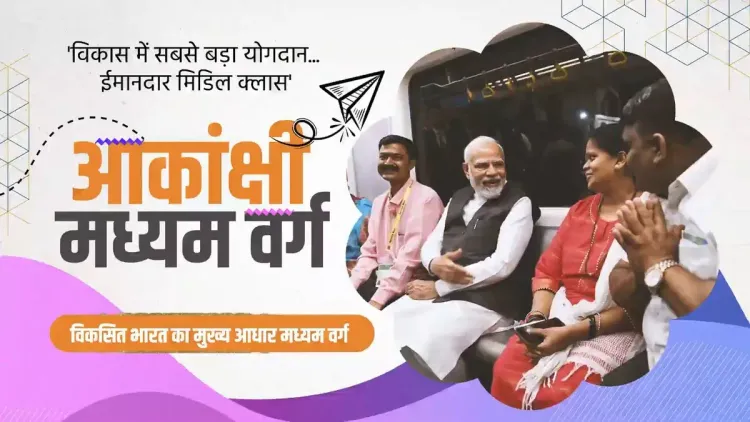
Union Education Minister Dharmendra Pradhan on June 15, 2026, marked 12 years of PM Modi's governance by highlighting gains for India's middle class — spanning GST, Skill India, Startup India, infrastructure expansion, and the Viksit Bharat vision for 2047.
Key Takeaways
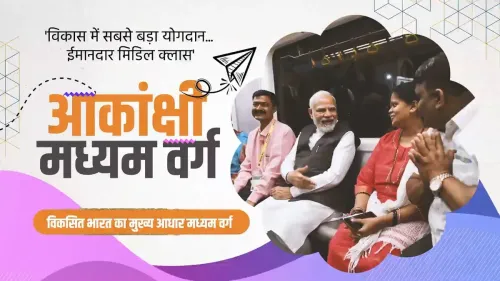
Dharmendra Pradhan posted on June 15, 2026 under #12YearsOfSakshamMiddleClass , crediting PM Modi's 12-year leadership with raising middle-class living standards.
Key reforms cited include the Goods and Services Tax (2017) , Skill India Mission (2015) , and Startup India (2016) .
Infrastructure improvements in rail, air connectivity, and highways are highlighted as direct quality-of-life gains for middle-class households.
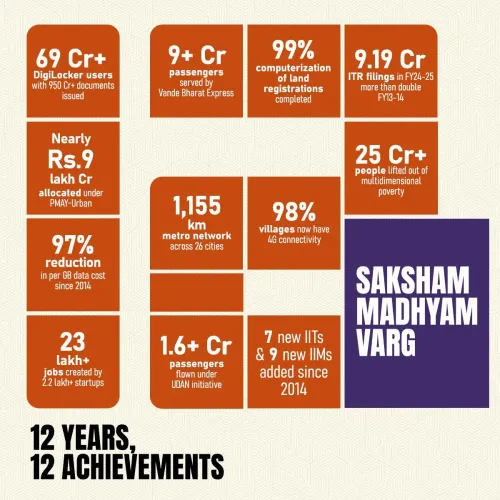
Expansion of higher-education institutions — including new IITs, IIMs, and AIIMS — has broadened access to quality education.
All measures are framed as building blocks toward the Viksit Bharat goal of developed-nation status by 2047 .
Upcoming Union Budget 2027-28 is the next key moment to watch for further middle-class tax and education announcements.
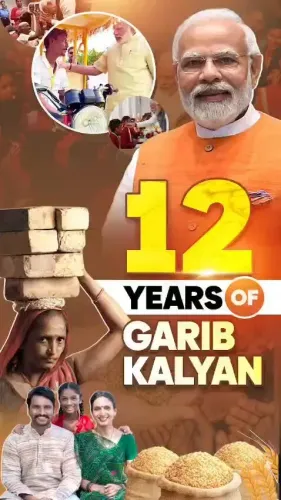
Union Education Minister Dharmendra Pradhan on Monday, June 15, 2026, credited 12 years of Prime Minister Narendra Modi's leadership with delivering sweeping improvements in the standard of living for India's middle class, citing gains across taxation, infrastructure, connectivity, education, and entrepreneurship.
Context
Posting under the hashtag #12YearsOfSakshamMiddleClass, Pradhan framed the anniversary as a milestone in what he called a journey of 'inclusion, empowerment and opportunity.' The post arrives as the BJP-led government marks over a decade in power at the Centre, with the ruling party highlighting policy continuity as a core electoral and governance message.
Pradhan specifically listed tax reforms, better infrastructure, enhanced rail and air connectivity, expansion of educational institutions, skill development, entrepreneurship promotion, and a thriving startup ecosystem as the pillars of middle-class advancement during this period.
Policy Backdrop
The reforms Pradhan referenced have defined the central government's domestic agenda since 2014. The Goods and Services Tax (GST), implemented in 2017, unified the country's indirect tax structure, reducing compliance layers for businesses and consumers alike. The Skill India Mission, launched in 2015, expanded vocational training access to millions of young Indians, while Startup India, rolled out in 2016, provided a policy framework to nurture entrepreneurship and early-stage ventures.
On the infrastructure front, successive Union budgets have allocated record capital expenditure toward national highways, railway modernisation, and regional airport expansion — all of which directly affect the mobility and economic participation of middle-class households. Parallel investments in higher education institutions, including new IITs, IIMs, and AIIMS, have broadened access to quality education.
Stakeholders and Impact
The primary beneficiaries named in the government's narrative are middle-class families, students, skilled workers, and entrepreneurs. For this demographic, lower personal income-tax burdens — including the revised tax slabs introduced in successive budgets — alongside cheaper air travel and improved digital public infrastructure have been among the most tangible changes.
The startup ecosystem, now among the world's largest by the number of registered ventures, has created employment and wealth-creation pathways for educated urban and semi-urban youth. Skill development programmes have sought to extend similar opportunities to those outside the formal higher-education pipeline.
Pradhan's post also invokes the Viksit Bharat vision — the government's long-term goal of achieving developed-nation status by 2047, the centenary of India's independence — positioning current middle-class gains as foundational to that larger national ambition.
What's Next
Attention will now turn to Union Budget 2027-28, where further announcements on income-tax relief, education outlays, and skill-development funding are expected to test the government's commitment to this middle-class agenda. Parliamentary deliberations on new entrepreneurship or vocational legislation could also define the next phase of the Viksit Bharat roadmap. As India's working-age population continues to grow, sustaining the pace of job creation and quality-of-life improvements will remain central to both governance delivery and political messaging.
Point of View
Not an isolated ministerial statement. By cataloguing reforms across taxation, mobility, education, and entrepreneurship, the messaging seeks to consolidate middle-class voters ahead of future electoral cycles, a demographic the party has consistently courted since 2014. The Viksit Bharat framing is particularly significant: it converts a backward-looking anniversary into a forward-looking national contract, making the 2047 vision a political anchor. For opposition parties, the challenge will be contesting the narrative on ground-level outcomes — jobs, real wages, and cost of living — rather than the policy architecture itself.
NationPress
15 Sept 2026
Frequently Asked Questions
What is the #12YearsOfSakshamMiddleClass campaign about?
It is a BJP-led communication campaign marking 12 years of the Modi government's policies aimed at empowering India's middle class through tax reforms, infrastructure development, skill development, and entrepreneurship support.
What is Viksit Bharat and how does it relate to the middle class?
Viksit Bharat is the central government's vision to make India a developed nation by 2047. Middle-class empowerment through jobs, education, and connectivity is framed as a core pillar of achieving that goal.
What are the main reforms Dharmendra Pradhan cited for the middle class?
Pradhan cited the Goods and Services Tax, Skill India Mission, Startup India initiative, expansion of rail and air connectivity, new educational institutions, and improved physical infrastructure as key reforms benefiting the middle class.
When was the Startup India initiative launched?
Startup India was launched in 2016 to create a supportive policy environment for entrepreneurs and early-stage businesses across India.
What should we watch for next on India's middle-class policy agenda?
Union Budget 2027-28 is the most immediate milestone, with potential announcements on income-tax relief, education spending, and new skill or entrepreneurship legislation expected to shape the next phase of middle-class policy.