CM Bhupendra Patel hails Modi's 12-yr middle-class push
Synopsis
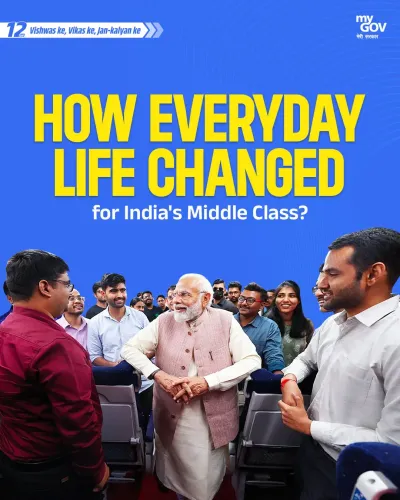
Gujarat Chief Minister Bhupendra Patel praised PM Narendra Modi's 12-year policy record on 15 June 2026, highlighting tax relief, digital governance, Vande Bharat, Namo Bharat, and metro expansion as transformative for India's middle class under the #12YearsOfSakshamMiddleClass campaign.
Key Takeaways
Gujarat CM Bhupendra Patel posted on 15 June 2026 crediting PM Narendra Modi 's 12-year tenure with strengthening India's middle class.
He cited tax relief , digital governance , and ease of doing business as key quality-of-life improvements.
Vande Bharat , Namo Bharat , and the expanding metro network were highlighted as transforming middle-class commuting.
The post invoked the Atmanirbhar Bharat (self-reliance) theme, framing the middle class as the driver of India's growth story.
The messaging is part of the BJP's #12YearsOfSakshamMiddleClass campaign marking over a decade of Modi-led governance.
Future Union Budget decisions on income-tax slabs and infrastructure approvals will be the next policy test for these commitments.
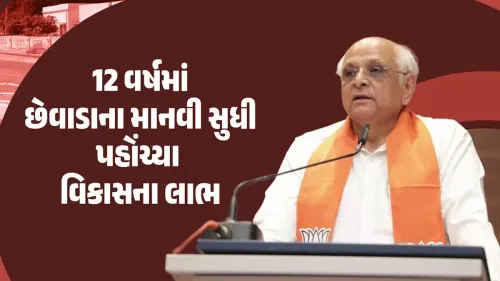
Gujarat Chief Minister Bhupendra Patel on Monday, 15 June 2026, credited Prime Minister Narendra Modi's policies over the past 12 years with delivering 'unprecedented dignity and economic strength' to India's middle class, citing tax relief, digital governance, and modern rail connectivity as landmark gains.
Context
Posting under the hashtag #12YearsOfSakshamMiddleClass (12 years of an empowered middle class), CM Patel wrote that Modi's policies had made life easier through 'big tax relief, digital governance, and ease of doing business.' He added that Vande Bharat, Namo Bharat, and the expanding metro network had made the middle class's daily commute 'modern and world-class.'
The post concluded with a forward-looking note: 'This middle class, moving towards self-reliance, is today writing the growth story of a new India.' The statement aligns with the ruling BJP's broader narrative ahead of continued economic policy messaging from state and central leaders.
Policy Backdrop
The 12-year window referenced in the post spans May 2014 to the present, encompassing several flagship reforms. The Goods and Services Tax (GST), rolled out in July 2017, rationalised indirect taxation and reduced the compliance burden on salaried and self-employed groups. The Digital India programme, launched in July 2015, expanded e-governance and Aadhaar-linked delivery of citizen services.
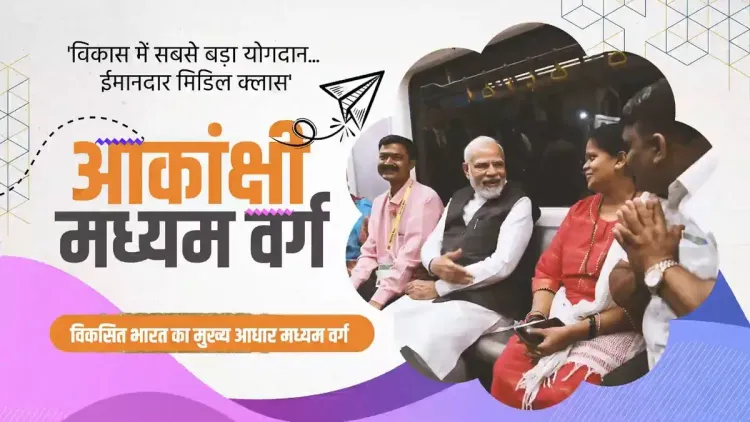
On the mobility front, Vande Bharat Express semi-high-speed trains were introduced from 2019 onward as part of rail modernisation goals set in the 2017-18 Union Budget. Namo Bharat trains, deployed on priority corridors such as the Delhi-Meerut Regional Rapid Transit System, target urban commuters — a core middle-class constituency. Together, these initiatives form part of a stated objective to expand the formal economy and raise the consumption capacity of middle-income households.
Stakeholders and Impact
Urban salaried workers, small-business owners, and daily rail commuters are the primary beneficiaries identified in CM Patel's framing. The Atmanirbhar Bharat programme — announced in May 2020 — extended this policy arc by coupling production-linked incentives with a domestic manufacturing push intended to generate employment for middle-income segments.
Successive Union Budgets since 2014 have combined direct-tax rate rationalisation with digitisation of government services, addressing both cost-of-living and mobility concerns. Small businesses, in particular, have been cited as beneficiaries of simplified GST compliance and digital payment infrastructure under the Digital India umbrella.
What's Next
Policy watchers will look to the next Union Budget for further moves on personal income-tax slab rationalisation and new approvals under the National Infrastructure Pipeline for metro and RRTS expansion. CM Patel's post signals that the BJP's state units intend to amplify the '12-year' milestone as a political and governance benchmark, likely shaping the party's communication strategy in the months ahead.
Point of View
Timed to amplify the '12-year' governance milestone across the party's state-level leadership. By anchoring the narrative in tangible middle-class touchpoints — tax cuts, digital services, and premium rail — the party is reinforcing its claim to the aspirational urban voter, a demographic that proved decisive in successive electoral cycles. The invocation of 'Atmanirbharta' links economic nationalism to household-level prosperity, a rhetorical bridge the BJP has consistently used since 2020. Whether the messaging translates into policy action — particularly on income-tax relief in the next budget — will determine its credibility beyond the campaign cycle.
NationPress
13 Sept 2026
Frequently Asked Questions
What did Gujarat CM Bhupendra Patel say about PM Modi and the middle class?
On 15 June 2026, CM Bhupendra Patel posted that PM Modi's policies over 12 years had given India's middle class 'unprecedented dignity and economic strength' through tax relief, digital governance, and modern rail infrastructure including Vande Bharat and Namo Bharat trains.
What is the #12YearsOfSakshamMiddleClass hashtag about?
The hashtag #12YearsOfSakshamMiddleClass (12 years of an empowered middle class) is a BJP campaign marking over a decade of Narendra Modi's governance since May 2014, highlighting policy gains for middle-income Indians.
What is Namo Bharat and how does it benefit the middle class?
Namo Bharat refers to regional rapid transit system trains deployed on urban corridors such as Delhi-Meerut, designed to provide faster, modern commuting options for middle-class urban residents.
How has Digital India helped India's middle class?
The Digital India programme, launched in July 2015, expanded e-governance and Aadhaar-linked citizen services, reducing paperwork and enabling easier access to government benefits and business registration for middle-class households and small entrepreneurs.
What is Atmanirbhar Bharat and its relevance to the middle class?
Atmanirbhar Bharat, announced in May 2020, is a self-reliance economic programme that includes production-linked incentives and a domestic manufacturing push aimed at generating employment and boosting the economic capacity of middle-income groups.