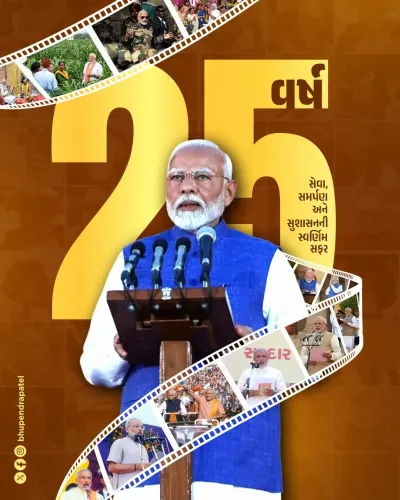
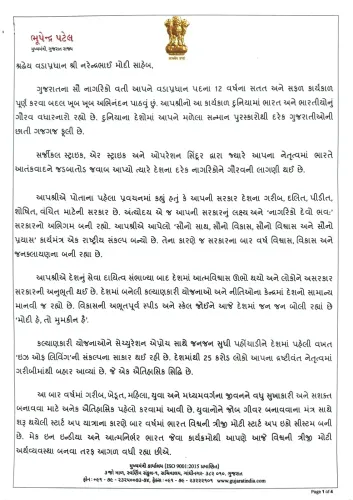
CM Bhupendra Patel marks 12 years of PM Modi's leadership
Synopsis
Gujarat Chief Minister Bhupendra Patel on 8 June 2026 marked twelve years of PM Narendra Modi's leadership, highlighting welfare schemes, Gujarat infrastructure milestones including GIFT City and Dholera SIR, and the Viksit Bharat @2047 national vision.
Key Takeaways
Gujarat CM Bhupendra Patel posted a tribute on 8 June 2026 marking 12 years of PM Narendra Modi's tenure since 26 May 2014 .
Patel credited Modi with scaling the Gujarat development model nationally through schemes like PM Jan Dhan Yojana , Ujjwala , Ayushman Bharat , and Digital India .
Gujarat infrastructure milestones cited include the Sardar Sarovar Dam , GIFT City , bullet train corridor , Dholera SIR , and a semiconductor hub .
Heritage projects at Somnath , Ambaji , Vadnagar Museum , and Lothal Heritage Complex were highlighted under the 'Vikas Bhi, Virasat Bhi' framework.
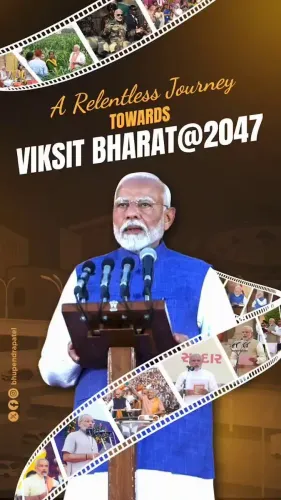
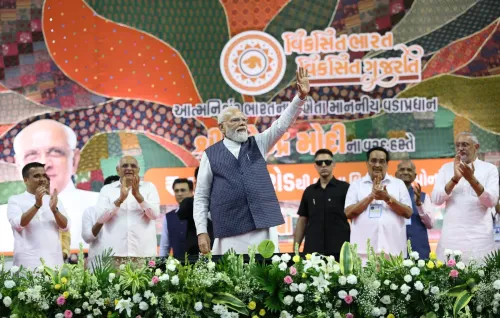
Patel called on citizens to commit to Viksit Bharat @2047 and Viksit Gujarat as twin development goals.
The post was tagged #12YearsOfGaribKalyan , aligning with the BJP's national messaging around the anniversary.
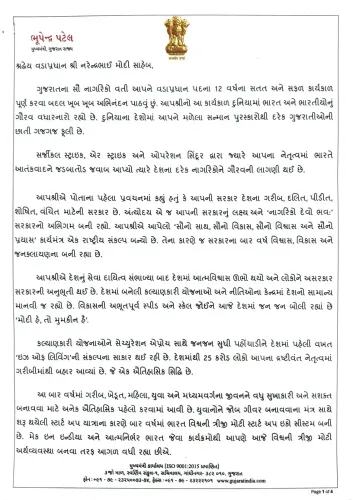
Gujarat Chief Minister Bhupendra Patel on Monday, 8 June 2026, marked twelve years of Prime Minister Narendra Modi's tenure at the Centre, crediting his leadership with transforming Gujarat and steering India toward the 'Viksit Bharat @2047' vision. Writing in Gujarati on X, Patel called it a matter of pride for every Indian to witness what he described as an unbroken journey of good governance and welfare for the poor.
Context
Narendra Modi was sworn in as Prime Minister on 26 May 2014, after leading the BJP to a decisive mandate in the general election. The post, tagged #12YearsOfGaribKalyan, arrives as the ruling party marks this milestone with tributes from leaders across the country. CM Patel framed the occasion as both a political and developmental landmark, invoking the governing motto 'Sabka Saath, Sabka Vikas, Sabka Vishwas, Sabka Prayas' ('Together for all, development for all, trust of all, effort of all').
Policy Backdrop
Patel's post traces a line from Modi's years as Gujarat Chief Minister (2001–2014) to his current national role, arguing that the Gujarat development model has since been scaled nationally. He cited flagship welfare schemes — PM Jan Dhan Yojana, launched in August 2014 to bring unbanked citizens into the formal financial system; Ujjwala Yojana, which provided cooking gas connections to poor households; and Ayushman Bharat, the national health insurance programme launched in 2018 offering up to Rs 5 lakh cover per family — as evidence of a 'people-first' approach.
On infrastructure, Patel highlighted the realisation of the Sardar Sarovar Dam project on the Narmada, and Gujarat's emergence as host to the bullet train corridor, GIFT City (Gujarat International Finance Tec-City), a semiconductor hub, and the Dholera Special Investment Region (SIR). These projects, he argued, have given Gujarat a global identity shaped by Modi's vision.
Stakeholders and Impact
The tribute explicitly names multiple beneficiary groups: economically weaker sections reached by direct-benefit welfare schemes, heritage tourism stakeholders who have seen redevelopment at sites such as Somnath and Ambaji temples, and the broader Gujarat population that Patel said has witnessed a 'complete transformation in every corner of the state.' The Vadnagar Museum and Lothal Heritage Complex were cited as expressions of what Patel called the 'Vikas Bhi, Virasat Bhi' ('Development as well as Heritage') philosophy — simultaneous pursuit of economic modernisation and cultural preservation.
Patel also pointed to India's rising profile in space and sports as indicators that the country is positioning itself among developed nations. Digital India was named alongside Jan Dhan and Ayushman Bharat as a scheme that has qualitatively changed life for the marginalised.
What's Next
Patel closed with a call to action, urging citizens to commit to completing Modi's vision of a 'Viksit Bharat' (Developed India) by 2047 — the centenary of independence — through the parallel goal of a 'Viksit Gujarat' (Developed Gujarat). Key milestones to watch include progress on the Mumbai–Ahmedabad bullet train, semiconductor fabrication units at Dholera SIR, and expanding beneficiary counts under Ayushman Bharat. The post signals that Gujarat's BJP leadership intends to anchor its own governance narrative firmly within the national developmental framework as the party approaches future electoral cycles.
Point of View
Deliberately weaving Gujarat's own development story into the national record to claim co-ownership of the 'Modi model.' By listing concrete projects — GIFT City, Dholera SIR, Sardar Sarovar — alongside welfare schemes, Patel frames Gujarat not merely as a beneficiary of central policy but as its originating laboratory. The invocation of 'Vikas Bhi, Virasat Bhi' signals that the party intends to contest the cultural-heritage space as vigorously as the economic one ahead of future elections. The closing pledge to 'Viksit Gujarat' also quietly positions Patel's own administration as the executor of a larger national mission, lending his government a borrowed mandate.
NationPress
24 Oct 2026
Frequently Asked Questions
Why is Gujarat CM Bhupendra Patel posting about PM Modi's 12 years?
8 June 2026 marks approximately twelve years since Narendra Modi was sworn in as Prime Minister on 26 May 2014 , and BJP leaders across the country, including Gujarat CM Bhupendra Patel , have been sharing tributes under the hashtag #12YearsOfGaribKalyan to mark the anniversary.
What is Viksit Bharat @2047?
Viksit Bharat @2047 is the Indian government's long-term vision to achieve developed-economy status by 2047 , the centenary of India's independence, encompassing goals in infrastructure, welfare, technology, and global competitiveness.
What is Dholera SIR and why is it significant?
Dholera Special Investment Region (SIR) in Gujarat is a greenfield smart city and industrial zone being developed as a global manufacturing and semiconductor hub, representing one of India's largest planned infrastructure investments.
What does 'Vikas Bhi, Virasat Bhi' mean?
'Vikas Bhi, Virasat Bhi' translates to 'Development as well as Heritage' — a policy and rhetorical framework used by the Modi government to describe simultaneous investment in modern infrastructure and the restoration of cultural and religious heritage sites across India.