Rajnath Singh credits Modi govt for middle-class transformation
Synopsis
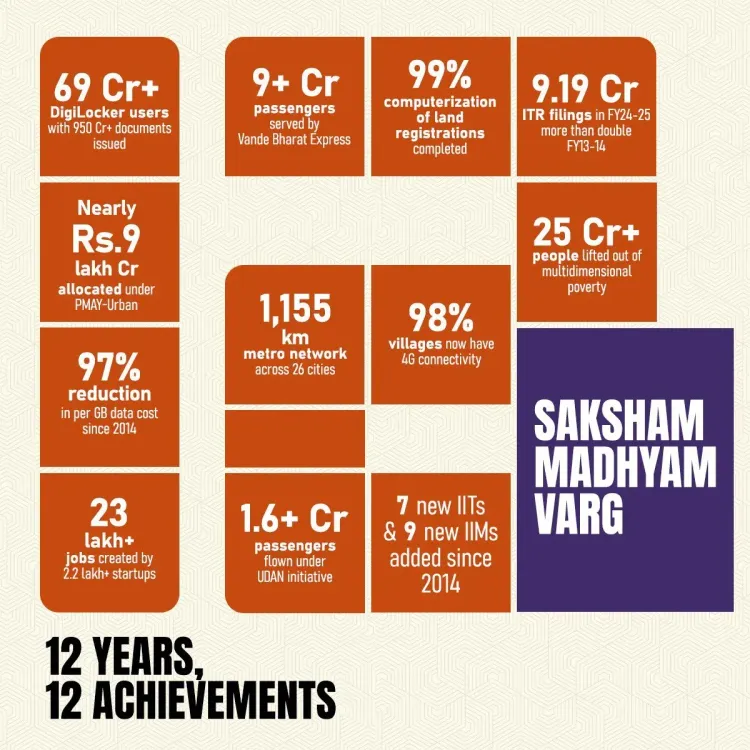
Union Defence Minister Rajnath Singh on June 15, 2026 credited PM Modi's 12-year governance with transforming India's middle class, citing GST, UPI, Digital India and direct benefit transfers as key drivers of improved incomes, access and opportunity.
Key Takeaways
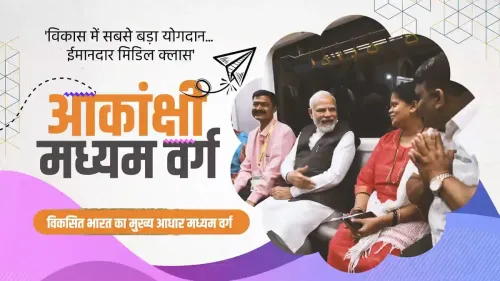
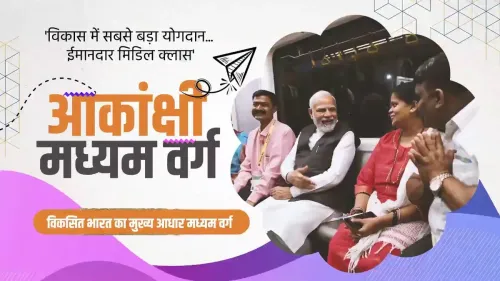
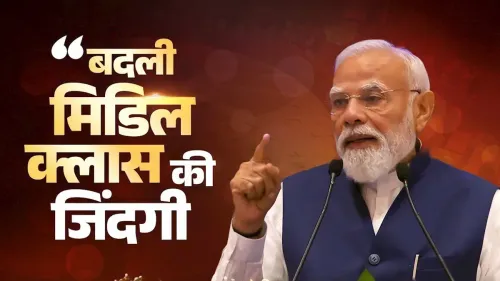
Union Defence Minister Rajnath Singh posted on June 15, 2026 crediting PM Modi 's governance with transforming India's middle class over 12 years .
The post was tagged #12YearsOfSakshamMiddleClass , part of a coordinated BJP anniversary campaign.
Singh cited economic reforms, technological innovation and infrastructure expansion as the three pillars of this transformation.
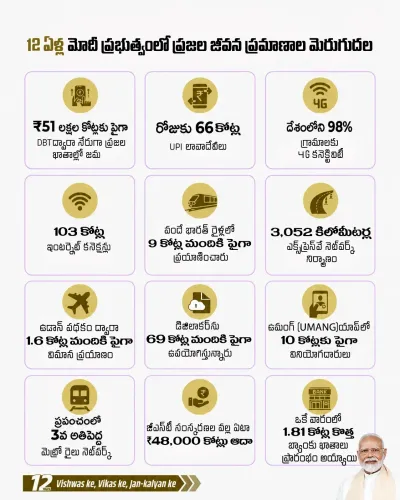
Key policy milestones include the GST rollout (2017) , UPI launch (2016) , Digital India (2015) and Aadhaar-linked direct benefit transfers (from 2014) .
Singh highlighted reduced leakages, faster travel, and greater access to education, entrepreneurship and employment as tangible benefits.
The next Economic Survey and household consumption data will be key to assessing the empirical basis of these claims.
Union Defence Minister Rajnath Singh on Monday, June 15, 2026, credited Prime Minister Narendra Modi's governance over the past 12 years with transforming India's middle class, citing economic reforms, technological innovation and infrastructure expansion as the pillars of this change.
Context
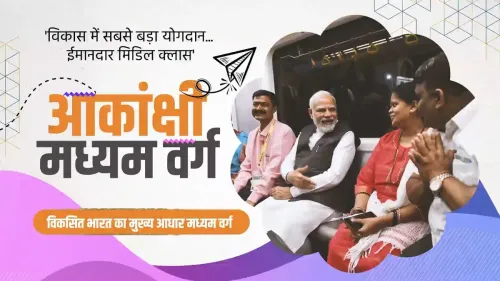
Posting under the hashtag #12YearsOfSakshamMiddleClass ('Capable Middle Class'), Rajnath Singh described the period since 2014 as one in which 'families today benefit from better incomes, easier access to services, reduced leakages, faster travel and greater opportunities for education, entrepreneurship and employment.' He characterised the impact as going beyond economics, writing that it has 'instilled confidence, dignity and a renewed belief in India's future.'
The post is part of a coordinated BJP messaging campaign marking 12 years of the Modi government, with senior party leaders amplifying a shared developmental narrative across social media platforms.
Policy Backdrop
The governance period in question spans a series of structural reforms. The Goods and Services Tax (GST), rolled out in July 2017, replaced a fragmented indirect tax system with a unified national market. The Unified Payments Interface (UPI), launched in 2016 by the National Payments Corporation of India, scaled digital retail transactions across income segments and is now among the world's largest real-time payment systems.
The Digital India programme, launched in 2015, expanded broadband access and e-governance infrastructure. Direct benefit transfers linked to Aadhaar, operational since 2014, were designed to reduce leakages in subsidy and welfare delivery — a point Singh's post references explicitly. The Insolvency and Bankruptcy Code of 2016 further aimed to formalise credit culture and resolve stressed assets.
These measures built on the liberalisation begun in 1991, adding emphasis on targeted transfers, real-time payments and physical connectivity through highway and rail expansion.
Stakeholders and Impact
The middle-class narrative is central to both the BJP's electoral framing and its developmental pitch. Small entrepreneurs and salaried families are the stated beneficiaries of formalisation drives, digital public infrastructure and reduced friction in accessing government services.
Singh's post specifically highlights education, entrepreneurship and employment as domains of expanded opportunity — areas that have been the focus of schemes ranging from Skill India to Startup India. The reference to 'reduced leakages' points to the direct benefit transfer architecture, which the government has credited with cutting subsidy diversion.
What's Next
The release of the next Economic Survey or a fresh household consumption survey will be closely watched for data on income deciles and formalisation metrics that could substantiate or complicate the claims embedded in this political messaging. Parliamentary debates on upcoming tax or infrastructure legislation are also expected to revisit these themes.
As the Modi government enters its fourth year of a third consecutive term, the middle-class transformation narrative is likely to remain a cornerstone of BJP's political communication ahead of state assembly elections across the country.
Point of View
Reinforcing the BJP's core electoral identity as the party of middle-class aspiration. By anchoring the message in specific policy instruments — digital payments, direct transfers, infrastructure — rather than purely rhetorical claims, the communication attempts to shift the frame from political achievement to governance outcome. The middle-class narrative has served the BJP across multiple election cycles and its articulation by a figure of Singh's stature signals its continued centrality to the party's 2027 and beyond electoral strategy. The absence of verifiable quantitative claims in the post is notable, suggesting a deliberate choice to keep the messaging aspirational rather than data-bound.
NationPress
14 Sept 2026
Frequently Asked Questions
What did Rajnath Singh say about India's middle class?
Rajnath Singh said that the transformation of India's middle class over the last 12 years is one of the defining achievements of PM Modi's governance, crediting economic reforms, technological innovation and infrastructure expansion for creating an ecosystem where aspirations can flourish.
What is the #12YearsOfSakshamMiddleClass hashtag about?
The hashtag #12YearsOfSakshamMiddleClass — meaning '12 Years of the Capable Middle Class' — is part of a BJP campaign marking 12 years of the Narendra Modi government, with senior leaders highlighting developmental milestones since 2014.
Which government schemes are linked to India's middle-class growth?
Key schemes include the Goods and Services Tax (2017), the Unified Payments Interface (2016), Digital India (2015), Aadhaar-linked direct benefit transfers (from 2014), Skill India and Startup India, all of which aimed to formalise the economy and expand opportunity.
What is Rajnath Singh's role in the Modi government?
Rajnath Singh is the Union Defence Minister of India and a senior BJP leader. He has previously served as Chief Minister of Uttar Pradesh and as Union Home Minister.
How will the impact of Modi government reforms on the middle class be measured?
The release of the next Economic Survey and updated household consumption survey data tracking income deciles and formalisation metrics will be the primary benchmarks for assessing the actual impact of these reforms on India's middle class.