Kishan Reddy Credits Modi's 12 Years for Middle-Class Gains
Synopsis
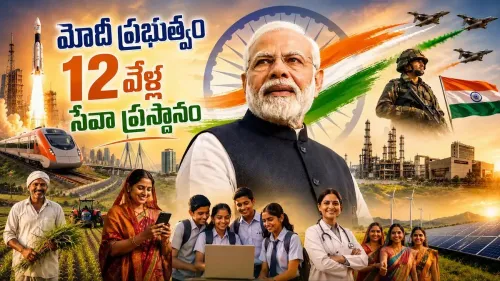
Union Minister G. Kishan Reddy marked twelve years of the Modi government by crediting GST, UPI, digital services, and expanded rail and air connectivity with significantly improving middle-class living standards and easing the financial burden on ordinary Indian households.
Key Takeaways
Union Coal and Mines Minister G.
Kishan Reddy posted in Telugu on June 15, 2026 under the hashtag #12YearsOfSakshamMiddleClass to mark twelve years of the Modi government.
He credited inflation control, income-tax relief, and GST reforms with reducing the financial burden on middle-class and small-business households.
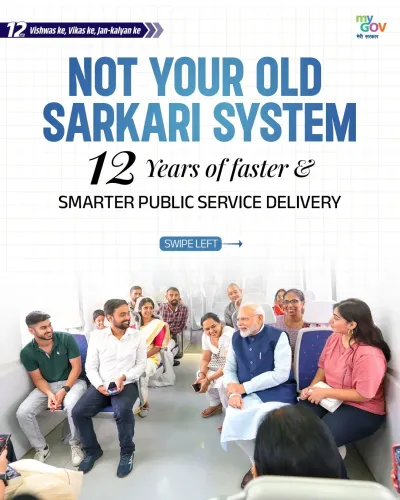
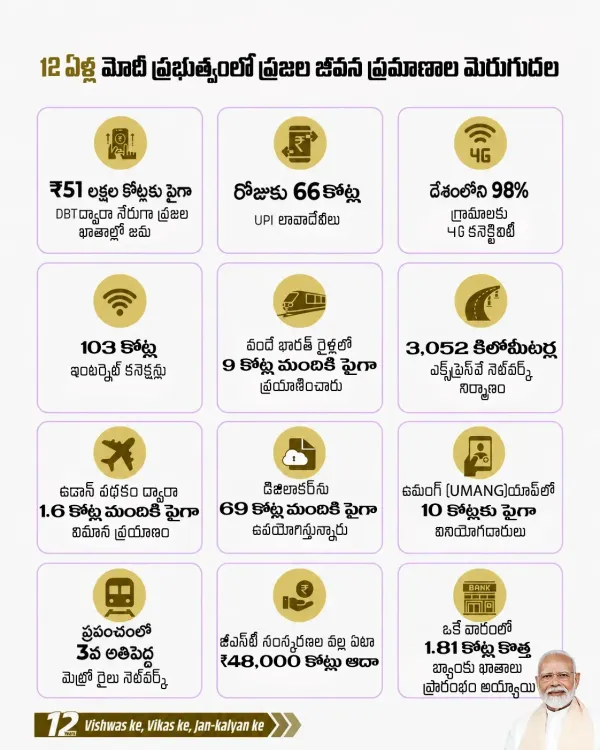
UPI, DigiLocker, and the UMANG app were highlighted as digital tools that have moved government services online under the Digital India programme launched in 2015.
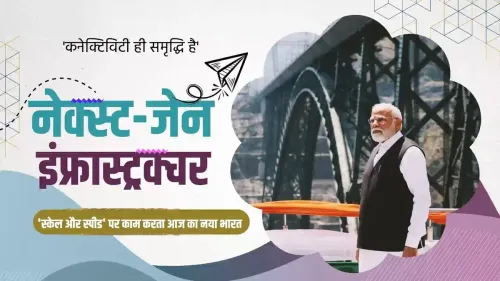
Vande Bharat Express (first run in February 2019), Namo Bharat , metro rail, and the UDAN scheme (2017) were cited as transport reforms that made travel faster, safer, and more affordable.
The post is part of a broader BJP communications campaign targeting middle-class voters ahead of upcoming electoral cycles.
Further GST rate rationalisation and additional Vande Bharat and metro completions under the National Infrastructure Pipeline are expected in the near term.
Union Coal and Mines Minister G. Kishan Reddy on Monday, June 15, 2026, credited Prime Minister Narendra Modi's twelve years in office with transforming India's economic, digital, and infrastructure landscape in ways that have materially raised living standards for the middle class. Posting in Telugu on X, the BJP Telangana state president listed inflation control, income-tax relief, digital payments, and expanded transport connectivity as the defining gains of the past decade-plus.
Context
Kishan Reddy's post, tagged #12YearsOfSakshamMiddleClass, is part of a coordinated BJP communication push marking twelve years of the Modi government. Writing in Telugu, he argued that reforms across taxation, digital infrastructure, and transport have collectively reduced the financial and logistical burden on ordinary households. 'The revolutionary changes in the country's economic, digital, and infrastructure sectors under the leadership of respected Prime Minister Shri Narendra Modi over the past twelve years have significantly raised the living standards of the middle class,' the minister wrote.
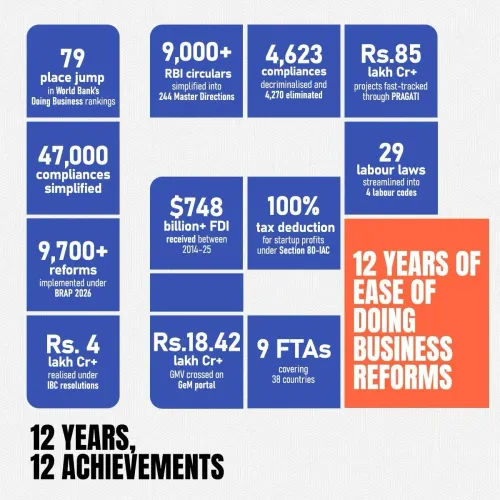
He specifically cited controlled inflation, income-tax exemptions, and what he referred to as GST 2.0 [GST reforms] as measures that eased the cost of living and simplified doing business.
Policy Backdrop
The Goods and Services Tax (GST), rolled out in July 2017, replaced a patchwork of central and state levies and is widely regarded as India's most significant indirect-tax overhaul. The Unified Payments Interface (UPI), introduced in August 2016 by the National Payments Corporation of India (NPCI), has since grown into one of the world's largest real-time digital payments networks.
The minister also highlighted DigiLocker and the UMANG app as platforms that have moved government services online, reducing citizens' dependence on physical office visits. These tools are pillars of the Digital India programme launched in 2015 to expand e-governance access across urban and semi-urban India.
On transport, Reddy pointed to Vande Bharat Express trains — the first of which was inaugurated in February 2019 between New Delhi and Varanasi — alongside Namo Bharat rapid-rail services, metro rail networks, and the UDAN regional air connectivity scheme launched in 2017 to make flying affordable in smaller cities.
Stakeholders and Impact
The minister's message is directed squarely at middle-class and lower-middle-income households — a demographic that successive NDA budgets have targeted through direct benefit transfers, simplified tax compliance, and visible infrastructure upgrades. Small businesses have also been cited as beneficiaries of GST rationalisation and UPI-enabled cashless transactions.
Urban and semi-urban commuters are among the most direct beneficiaries of the transport push, with semi-high-speed rail and affordable air routes cutting travel time and cost between Tier-2 and Tier-1 cities. Reddy framed these gains as having collectively lifted kotladi mandi ni peddarikatam nundi bayatapadeesi [crores of people out of poverty] and made everyday life easier for the common citizen.
What's Next
The BJP's #12YearsOfSakshamMiddleClass campaign is expected to intensify as the party seeks to consolidate its narrative ahead of state and national electoral cycles. On the policy side, further GST rate rationalisation is on the agenda of upcoming GST Council meetings, while additional Vande Bharat and metro rail project completions listed under the National Infrastructure Pipeline are set to roll out in the coming months. The government's ability to sustain the middle-class momentum narrative will depend in large part on how these deliverables translate into measurable household savings and connectivity improvements.
Point of View
Leaning into visible deliverables like Vande Bharat and UPI that cut across urban and semi-urban voter bases. By listing specific schemes rather than abstract growth figures, the messaging is designed to be relatable and verifiable at the household level. The campaign also serves a regional purpose: as BJP Telangana president, Reddy is reinforcing the party's development narrative in a state where it faces stiff competition.
NationPress
20 Sept 2026
Frequently Asked Questions
What is the #12YearsOfSakshamMiddleClass campaign?
It is a BJP social-media campaign marking twelve years of the Narendra Modi government, highlighting economic, digital, and infrastructure reforms said to have benefited India's middle class. Union Minister G. Kishan Reddy posted under this hashtag on June 15, 2026.
What reforms did Kishan Reddy mention in his post?
Kishan Reddy cited inflation control, income-tax exemptions, GST reforms, UPI digital payments, DigiLocker, the UMANG app, Vande Bharat Express trains, Namo Bharat services, metro rail, and the UDAN regional air connectivity scheme.
When was UPI launched and who runs it?
The Unified Payments Interface (UPI) was launched in August 2016 by the National Payments Corporation of India (NPCI) to enable instant, cashless bank-to-bank transfers.
What is the UDAN scheme?
UDAN — Ude Desh ka Aam Naagrik — is a regional air connectivity scheme launched in 2017 to make air travel affordable in smaller Indian cities by subsidising routes to underserved airports.
When was the first Vande Bharat Express train launched?
The first Vande Bharat Express was inaugurated in February 2019 on the New Delhi to Varanasi route. It is India's first semi-high-speed train service and has since been expanded to multiple corridors across the country.