Kishan Reddy Highlights 12 Years of Modi Govt Farm Schemes
Synopsis
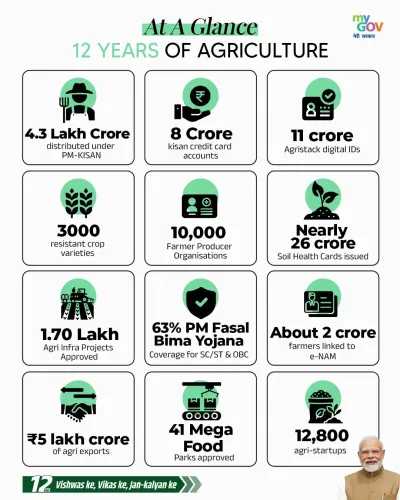
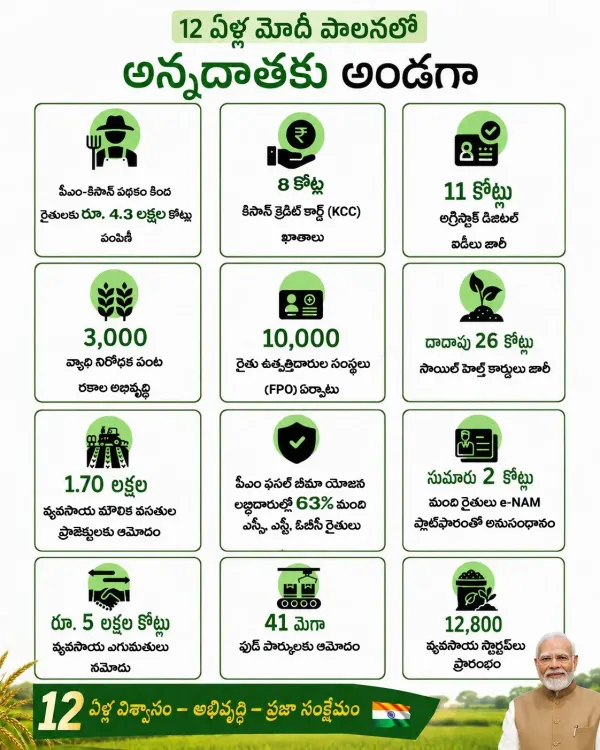
Union Minister G. Kishan Reddy has highlighted 12 years of Modi government agricultural schemes, citing Rs 4.3 lakh crore in PM-KISAN transfers, 8 crore Kisan Credit Cards, 11 crore AgriStack IDs, and Rs 5 lakh crore in farm exports as evidence of a transformative era for Indian farmers.
Key Takeaways
Rs 4.3 lakh crore disbursed to farmers under the PM-KISAN direct income support scheme since its 2019 launch.
8 crore Kisan Credit Card accounts active, expanding formal credit access for cultivators.
11 crore AgriStack digital farmer IDs issued, forming the backbone of targeted scheme delivery.
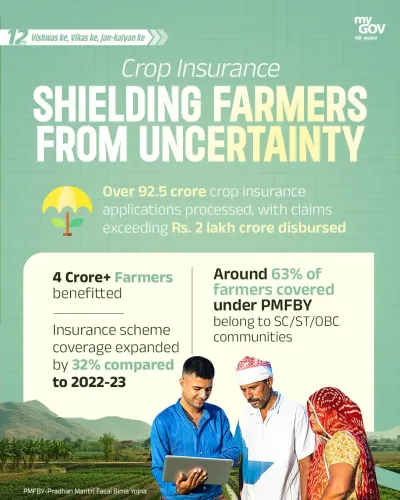
63 per cent of PM Fasal Bima Yojana beneficiaries belong to SC, ST, and OBC communities.
Agricultural exports reached Rs 5 lakh crore ; 12,800 agri-startups launched under the current government.
10,000 Farmer Producer Organisations formed to strengthen collective bargaining for small and marginal farmers.
Union Coal and Mines Minister and BJP Telangana president G. Kishan Reddy on Thursday, 11 June 2026, posted a detailed enumeration of agricultural welfare achievements under Prime Minister Narendra Modi's government, marking what he described as 12 years of a 'golden era' for Indian agriculture. The post, shared under the hashtag #12YearsOfKisanSamriddhi, listed more than a dozen scheme-wise statistics spanning direct income support, credit access, digital market linkages, crop insurance and agri-infrastructure.
Context
Kishan Reddy's post, written in Telugu, opens with the line: 'చేనులో చెమటోడ్చే రైతన్న కళ్లల్లో ఆనందం చూడటమే లక్ష్యంగా' — ('With the goal of seeing joy in the eyes of the farmer who sweats in the field'). He frames the last 12 years of the Modi government as a transformative period for the agricultural sector, describing the policy push as 'revolutionary schemes' aimed at doubling farmer incomes and making the cultivator a 'king'.
The post arrives as the ruling BJP marks a decade-plus in power at the Centre and seeks to consolidate its rural voter base ahead of upcoming state elections. Kishan Reddy, who holds the Coal and Mines portfolio at the Union level while simultaneously heading the party's Telangana unit, has been an active communicator of central government welfare messaging in the Telugu-speaking states.
Policy Backdrop
The figures cited in the post span several flagship programmes. The PM-KISAN scheme — launched in February 2019 as a direct benefit transfer of Rs 6,000 per year per eligible farmer family — is credited with distributing Rs 4.3 lakh crore to beneficiaries to date. The Kisan Credit Card (KCC) programme, significantly expanded post-2014, is said to have reached 8 crore accounts, while the AgriStack digital identity initiative has issued 11 crore farmer IDs.
The PM Fasal Bima Yojana, introduced in 2016 to replace the earlier National Agricultural Insurance Scheme, is highlighted for its inclusive reach: 63 per cent of its beneficiaries are stated to belong to SC, ST, and OBC communities. The e-NAM electronic trading platform, launched in April 2016, is cited as having onboarded nearly 2 crore farmers. Agricultural exports are reported at Rs 5 lakh crore, and 41 Mega Food Parks and 12,800 agri-startups have been approved or launched under the current dispensation.
The post also notes the development of 3,000 disease- and climate-resistant crop varieties, the issuance of approximately 26 crore Soil Health Cards, approval of 1.70 lakh agriculture infrastructure projects, and the formation of 10,000 Farmer Producer Organisations (FPOs) to improve the bargaining power of small and marginal cultivators.
Stakeholders and Impact
The schemes enumerated disproportionately target small and marginal farmers, who constitute the majority of India's cultivator population. The explicit mention that 63 per cent of PM Fasal Bima Yojana beneficiaries are from SC, ST, and OBC backgrounds underscores the government's stated focus on socially disadvantaged agricultural communities. FPOs are designed to give these groups collective leverage in input procurement and market access — areas where individual small farmers have historically been vulnerable.
In Telangana, where Kishan Reddy leads the BJP, the party has sought to position itself as a credible alternative on farm welfare, a domain long dominated by regional parties. Communicating central scheme achievements in Telugu is a deliberate outreach strategy to rural voters in the state.
What's Next
The Union government is expected to release fresh PM-KISAN instalment data and face parliamentary scrutiny on scheme coverage during the upcoming monsoon session of Parliament. The #12YearsOfKisanSamriddhi campaign suggests a broader BJP communications push around agricultural milestones as the party approaches the next electoral cycle. Whether the on-ground impact of these schemes translates into measurable income gains for farmers — the original 'doubling incomes by 2022' target — is likely to remain a point of political and policy debate in the months ahead.
Point of View
Translating central government welfare statistics into vernacular outreach for Telangana's rural voter base. The timing — marking 12 years of the Modi government — fits a broader BJP pattern of milestone-driven campaigns designed to consolidate rural support ahead of state elections. The explicit highlighting of SC, ST, and OBC beneficiary shares within PM Fasal Bima Yojana signals a deliberate attempt to counter opposition narratives about social equity in farm policy. Whether scheme reach translates into sustained income improvement for small farmers remains the central question that will define the political salience of this messaging.
NationPress
26 Sept 2026
Frequently Asked Questions
What is PM-KISAN and how much has been distributed?
PM-KISAN is a central government scheme launched in February 2019 that provides direct income support of Rs 6,000 per year to eligible farmer families. According to G. Kishan Reddy's post, a cumulative total of Rs 4.3 lakh crore has been distributed to beneficiaries over the scheme's life.
What is AgriStack and how many farmers have a digital ID?
AgriStack is a digital public infrastructure initiative that creates a unique digital identity for farmers to enable targeted delivery of government schemes. Kishan Reddy's post states that 11 crore AgriStack digital IDs have been issued to date.
How many Farmer Producer Organisations have been set up under Modi government?
According to the post by G. Kishan Reddy, 10,000 Farmer Producer Organisations (FPOs) have been established under the Modi government to improve market access and bargaining power for small and marginal farmers.
What share of PM Fasal Bima Yojana beneficiaries are from SC, ST, and OBC communities?
Kishan Reddy's post states that 63 per cent of PM Fasal Bima Yojana crop insurance beneficiaries belong to Scheduled Caste, Scheduled Tribe, and Other Backward Class communities.
What are India's agricultural exports under the Modi government?
The post by Kishan Reddy cites total agricultural exports of Rs 5 lakh crore recorded during the Modi government's tenure, alongside the approval of 41 Mega Food Parks and the launch of 12,800 agri-startups.