Kishan Reddy Highlights ₹4.3 Lakh Crore PM-KISAN Transfers
Synopsis
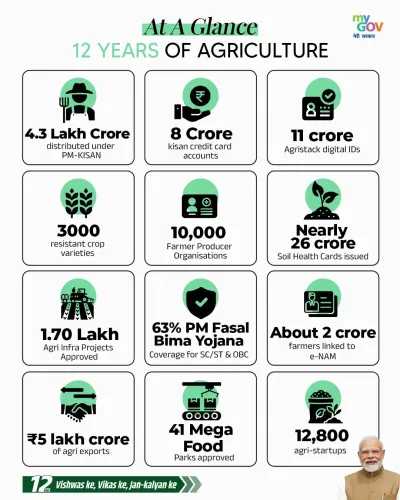
Union Minister G. Kishan Reddy has highlighted over ₹4.3 lakh crore transferred to 9.32 crore farmers under PM-KISAN, while pointing to the National Makhana Board in Bihar as an example of targeted agricultural support. He described empowered farmers as the foundation of a stronger rural economy.
Key Takeaways
Kishan Reddy cited over ₹4.3 lakh crore in cumulative PM-KISAN transfers as of June 2026 .
9.32 crore farmer families have received direct income support under the scheme since its February 2019 launch.
PM-KISAN provides ₹6,000 per year in three Aadhaar-linked instalments to eligible landholding farm households.
The National Makhana Board in Bihar was cited as an example of crop-specific, regionally targeted agricultural support.
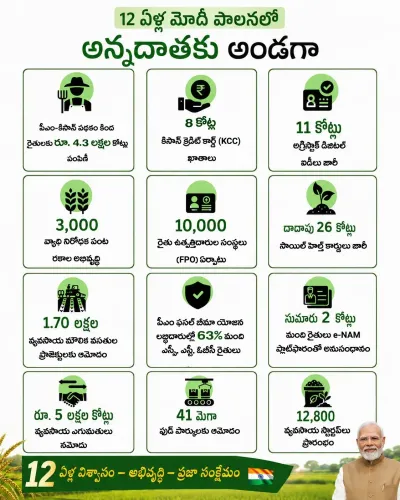
The government's farm welfare architecture combines direct cash transfers, crop insurance under Pradhan Mantri Fasal Bima Yojana , and agri-infrastructure investment.
Small and marginal farmers are the primary target group of the combined welfare framework.
Union Coal and Mines Minister and BJP Telangana state president G. Kishan Reddy on Thursday, June 11, 2026, highlighted the scale of agricultural welfare under the central government, citing over ₹4.3 lakh crore transferred to 9.32 crore farmers under the PM-KISAN scheme, and pointing to a broader package of farm-support measures including the National Makhana Board in Bihar.
Context
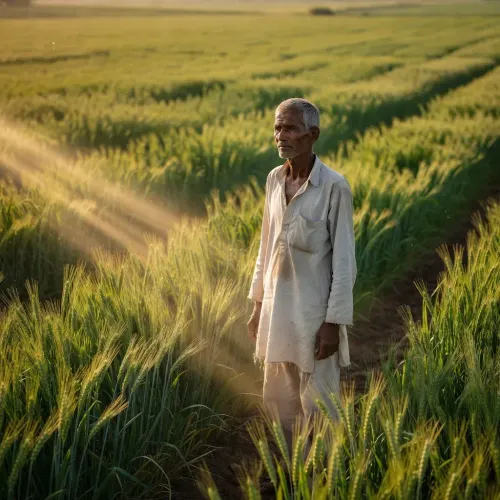
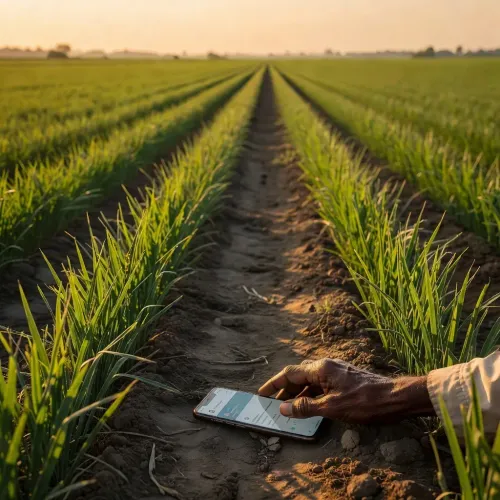
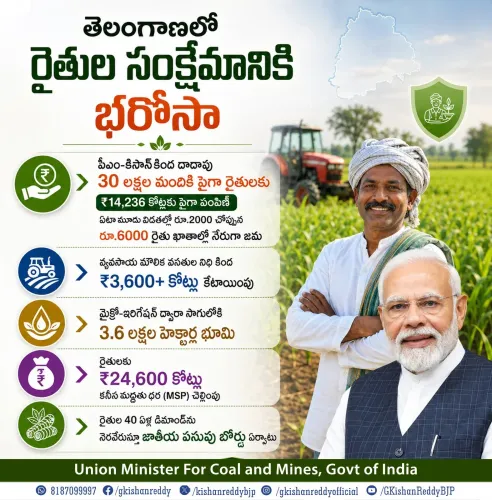
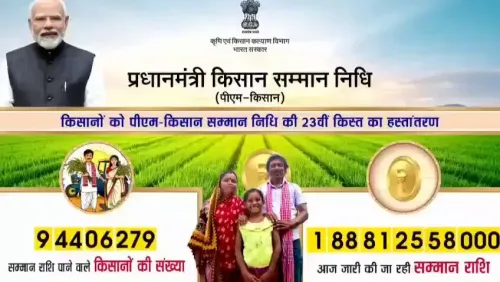
In his post, Reddy stated: 'Over ₹4.3 lakh crore has been transferred to 9.32 crore farmers under PM-KISAN, strengthening rural livelihoods and farmer welfare.' He added that 'empowered farmers are the foundation of a stronger rural economy,' framing the government's direct-benefit push as a structural investment in rural resilience. The post was accompanied by four images underscoring the outreach of the scheme.
The remarks come as the BJP continues to highlight its agricultural welfare record ahead of ongoing political cycles in key farm-dependent states. Reddy, who holds the Coal and Mines portfolio at the Centre, was responding to a post on the platform, amplifying the government's messaging on farmer income support.
Policy Backdrop
PM-KISAN, or Pradhan Mantri Kisan Samman Nidhi, was launched in February 2019 as a central sector scheme providing ₹6,000 per year in direct income support to landholding farmer families, disbursed in three equal instalments via Aadhaar-linked direct benefit transfer. The scheme is designed to reduce dependence on informal credit and supplement farm household income, particularly for small and marginal cultivators.
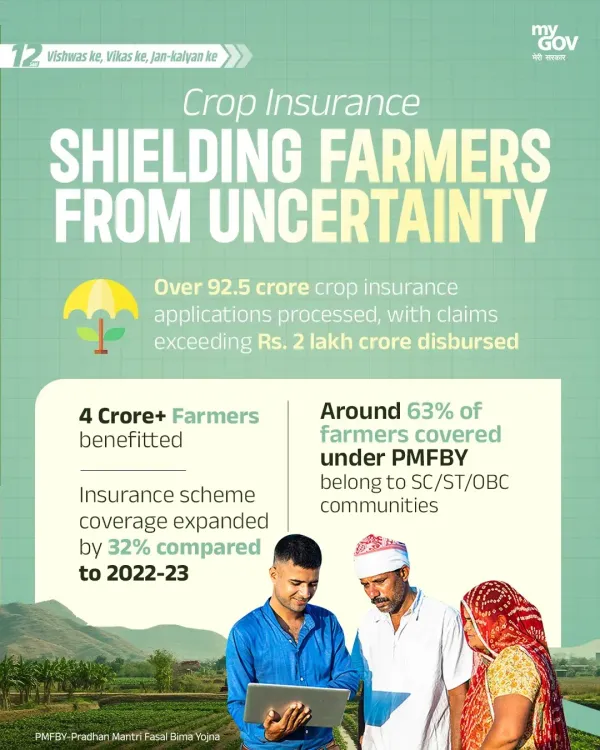
Complementing PM-KISAN, the Pradhan Mantri Fasal Bima Yojana, introduced in 2016, expanded crop insurance coverage to protect farmers against production losses. Together, these instruments form the core of a multi-pronged strategy that since 2014 has combined cash transfers, insurance, and infrastructure investment to raise farm incomes and reduce leakage from subsidy pipelines.
Stakeholders and Impact
The primary beneficiaries of PM-KISAN are small and marginal farmers, who make up the overwhelming majority of India's agricultural households. Direct benefit transfer via Aadhaar linkage has been credited with reducing intermediary leakage, though coverage gaps among tenant farmers and sharecroppers have been flagged by agricultural economists over successive years.
Reddy's post also drew attention to the National Makhana Board, an initiative targeting the production, processing and marketing of makhana (foxnut), a crop of particular economic significance in Bihar. The Board represents the government's approach of layering state-specific, crop-focused institutions on top of national cash-transfer programmes to develop regional agricultural value chains. Bihar is India's leading makhana-producing state, and targeted central support for the crop has been welcomed by growers in the region.
What's Next
Observers will watch for further details on the operational guidelines and budget allocation for the National Makhana Board, as well as any announcements in upcoming policy statements regarding changes to PM-KISAN instalment amounts or eligibility criteria. The government's continued emphasis on direct income support and value-chain development signals that farm welfare will remain a central plank of national economic messaging. Whether these measures translate into measurable income gains for the most vulnerable cultivators will be the benchmark against which their long-term impact is assessed.
Point of View
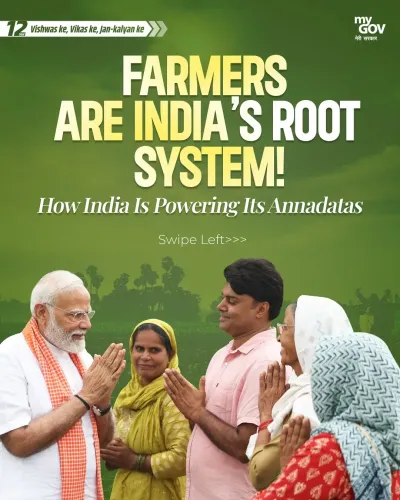
Timed to reinforce the BJP's farmer-centric credentials. By linking the macro-scale PM-KISAN transfer figure with a state-specific initiative like the National Makhana Board, the messaging attempts to bridge national policy with regional resonance, particularly in electorally significant Bihar. The framing of farmers as 'Annadatas' becoming 'more resilient and prosperous' positions direct benefit transfers not merely as welfare but as an economic transformation story. This pattern of stacking multiple scheme references in a single communication has become a consistent feature of the government's outreach strategy on agricultural policy.
NationPress
26 Oct 2026
Frequently Asked Questions
What is PM-KISAN and how much has been transferred under it?
PM-KISAN, or Pradhan Mantri Kisan Samman Nidhi, is a central government scheme launched in February 2019 that provides ₹6,000 per year in direct income support to eligible farmer families. Union Minister G. Kishan Reddy stated that over ₹4.3 lakh crore has been transferred to 9.32 crore farmers under the scheme.
What is the National Makhana Board and which state does it focus on?
The National Makhana Board is a government initiative to promote the production, processing and marketing of makhana (foxnut), with a focus on farmers in Bihar, which is India's leading makhana-producing state.
Who is G. Kishan Reddy?
G. Kishan Reddy is the Union Minister of Coal and Mines in the Government of India and serves as the BJP's Telangana state president. He is a senior BJP leader and Member of Parliament.
How does PM-KISAN transfer money to farmers?
PM-KISAN disburses ₹6,000 per year in three equal instalments of ₹2,000 directly into the bank accounts of eligible landholding farmer families through Aadhaar-linked direct benefit transfer, minimising intermediary leakage.
What other farm welfare schemes complement PM-KISAN?
Pradhan Mantri Fasal Bima Yojana, introduced in 2016, provides crop insurance coverage to farmers. Together with PM-KISAN's direct income support and agri-infrastructure investments, these schemes form the government's multi-pronged agricultural welfare framework.