Kishan Reddy: Central schemes strengthen Telangana farmers
Synopsis
Union Minister G. Kishan Reddy says central schemes including PM-KISAN, the Agricultural Infrastructure Fund, micro-irrigation, MSP payments, and the new National Turmeric Board are financially strengthening over 30 lakh farmers in Telangana under PM Modi's government.
Key Takeaways
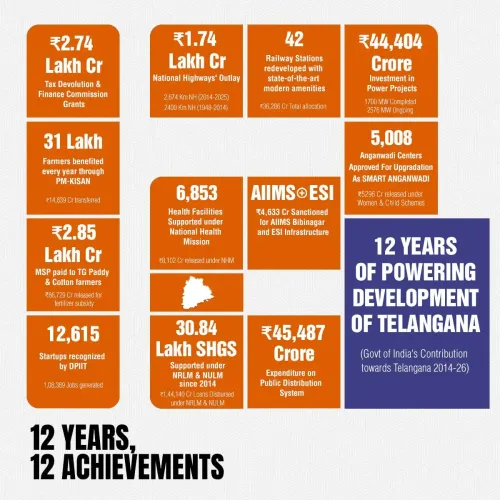
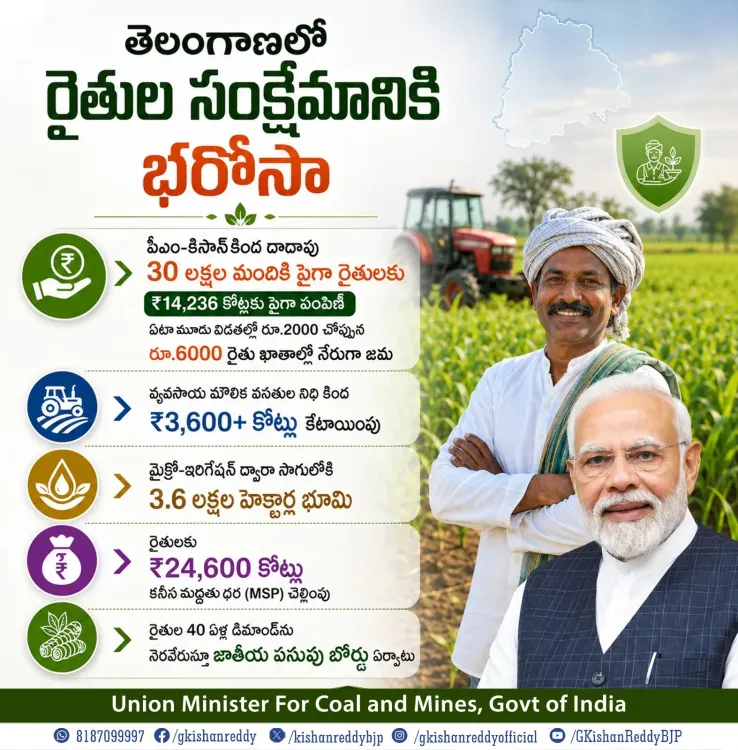
Over 30 lakh Telangana farmers have received more than ₹14,236 crore under PM-KISAN , with ₹6,000 per year credited in three instalments of ₹2,000 each .
More than ₹3,600 crore has been allocated to Telangana under the Agricultural Infrastructure Fund for warehouses and post-harvest facilities.
Micro-irrigation has brought 3.6 lakh hectares of land under cultivation in the state.
MSP payments totalling ₹24,600 crore have been made to Telangana farmers.
The National Turmeric Board has been established, fulfilling a demand farmers had raised for over 40 years .
Subsidised fertilisers and direct bank transfers are cited as key tools to reduce farm input costs.
Union Coal and Mines Minister G. Kishan Reddy, who also serves as BJP Telangana state president, on Thursday, 2 July 2026, highlighted a range of central government agricultural welfare measures that he said are financially empowering farmers across Telangana under Prime Minister Narendra Modi's administration.
Context
Posting in Telugu on X, Kishan Reddy stated that the central government has 'significantly reduced cultivation costs' through subsidised fertilisers, warehouse construction, agricultural infrastructure creation, and direct income support. He cited five specific deliverables for Telangana under various central schemes, asserting that these measures are 'doubling farmers' incomes while providing fair minimum support prices.'
The post comes as the BJP seeks to consolidate its position in Telangana, a state currently governed by the Indian National Congress, by underlining the Centre's contribution to rural welfare independent of the state government.
Policy Backdrop
The centrepiece scheme cited is PM-KISAN (Pradhan Mantri Kisan Samman Nidhi), launched in February 2019, which provides ₹6,000 per year in three instalments of ₹2,000 each, credited directly into farmers' bank accounts. Kishan Reddy claimed that more than 30 lakh farmers in Telangana have received over ₹14,236 crore under the scheme — figures the research notes should be verified against official PM-KISAN dashboards.
He also pointed to the Agricultural Infrastructure Fund (AIF), under which over ₹3,600 crore has been allocated for the state, supporting the construction of warehouses, cold-storage facilities, and other post-harvest infrastructure. The AIF was announced in the 2020-21 Union Budget with a corpus of ₹1 lakh crore to modernise farm logistics nationally.
On irrigation, the minister noted that micro-irrigation initiatives have brought 3.6 lakh hectares of land under cultivation in Telangana, while Minimum Support Price (MSP) payments totalling ₹24,600 crore have been made to farmers in the state.
National Turmeric Board
Kishan Reddy also highlighted the establishment of the National Turmeric Board, describing it as fulfilling 'a 40-year-old demand of farmers.' Telangana and neighbouring Andhra Pradesh are among India's largest turmeric-producing states, and growers had long sought a dedicated statutory body to regulate trade, improve processing, and boost exports. The Board's creation is expected to give turmeric farmers better market linkages and price discovery mechanisms.
Stakeholders and Impact
The direct beneficiaries of these schemes are Telangana's farming households, particularly smallholders who depend on subsidised inputs and assured procurement. Agricultural input suppliers and warehouse operators also stand to benefit from increased infrastructure spending under the AIF.
The broader pattern reflects the Centre's sustained push to lower cultivation costs through direct transfers and infrastructure investment — a strategy that operates alongside, and sometimes in political contrast to, state-level procurement and welfare programmes run by the Telangana government.
What's Next
The next rounds of PM-KISAN instalment releases will be closely watched as a measure of continued central commitment to farmer income support. Physical progress reports on projects sanctioned under the Agricultural Infrastructure Fund in Telangana will also indicate how quickly on-ground infrastructure is materialising. With assembly elections in the state having concluded, the BJP's focus on publicising central scheme deliverables signals an ongoing effort to build rural political capital ahead of future electoral cycles.
Point of View
The BJP seeks to draw a contrast with the state government on rural welfare. The mention of the National Turmeric Board is particularly targeted, given that turmeric is a cash crop with deep political resonance in Telangana and Andhra Pradesh. This pattern of highlighting direct benefit transfers and infrastructure spends in opposition-governed states has become a standard BJP communication strategy ahead of local body and parliamentary contests.
NationPress
1 Oct 2026
Frequently Asked Questions
What is PM-KISAN and how much do Telangana farmers get?
PM-KISAN (Pradhan Mantri Kisan Samman Nidhi) is a central scheme that provides ₹6,000 per year to eligible landholding farmers in three instalments of ₹2,000 each , credited directly into their bank accounts. Kishan Reddy has stated that over 30 lakh Telangana farmers have collectively received more than ₹14,236 crore under the scheme.
What is the National Turmeric Board and why is it significant for Telangana?
The National Turmeric Board is a statutory body created to promote turmeric cultivation, processing, and exports. It is significant for Telangana because the state is one of India's largest turmeric-producing regions, and farmers had been demanding such a body for over 40 years to secure better prices and market access.
How much has been allocated to Telangana under the Agricultural Infrastructure Fund?
According to Kishan Reddy, more than ₹3,600 crore has been allocated to Telangana under the Agricultural Infrastructure Fund , which supports the construction of warehouses, cold storages, and other post-harvest facilities for farmers.
How many hectares in Telangana have come under micro-irrigation?
Kishan Reddy stated that micro-irrigation initiatives have brought 3.6 lakh hectares of agricultural land in Telangana under cultivation.
How much MSP has been paid to Telangana farmers by the central government?
The minister cited ₹24,600 crore in Minimum Support Price (MSP) payments made to farmers in Telangana by the central government.