PM-Kisan: Over 9.44 crore farmers get ₹18,880 crore in latest instalment
Synopsis
More than 9.44 crore farmers received over ₹18,880 crore in a single PM-Kisan disbursement — one of the scheme's largest tranches — released from Hooghly, West Bengal. BJP Kisan Morcha chief Rajkumar Chahar used the occasion to lay out a sweeping case for the Modi government's farm record, from a near five-fold agriculture budget increase to 8,000-plus FPOs, setting the political tone ahead of state elections.
Key Takeaways
More than 9.44 crore farmers received over ₹18,880 crore in the latest PM-Kisan instalment on 20 June .
The scheme provides ₹6,000 annually per eligible farmer family in three instalments of ₹2,000 each.
BJP Kisan Morcha chief Rajkumar Chahar said the agriculture budget has grown from ₹27,000 crore (UPA era) to nearly ₹1.25 lakh crore .
More than 22 crore Soil Health Cards have been distributed, and over 8,000 FPOs established nationwide.
Chahar alleged opposition parties have sought to mislead farmers for political gain; no opposition response was available at the time of reporting.
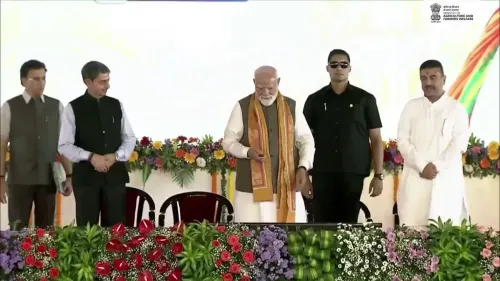
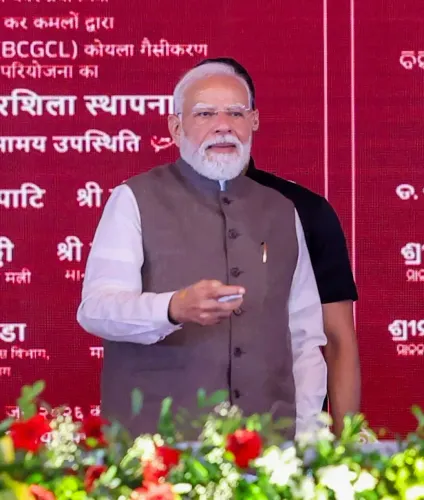
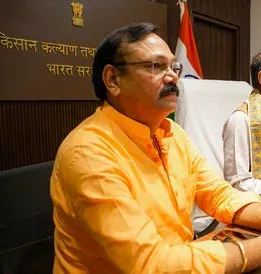
More than 9.44 crore eligible farmers across India received a direct benefit transfer of over ₹18,880 crore under the latest instalment of the Pradhan Mantri Kisan Samman Nidhi (PM-Kisan) scheme, disbursed from Hooghly district in West Bengal on 20 June. The release drew immediate acknowledgement from Bharatiya Janata Party (BJP) Kisan Morcha National President and Member of Parliament Rajkumar Chahar, who credited Prime Minister Narendra Modi with sustaining direct financial support to the farming community.
What the PM-Kisan Scheme Provides
Under PM-Kisan, eligible farmer families receive ₹6,000 annually, disbursed in three equal instalments of ₹2,000 each, directly into their bank accounts. The scheme is designed to provide a predictable income supplement to small and marginal farmers, bypassing intermediaries through direct benefit transfer.
Key Government Claims on Agriculture
Chahar cited a series of figures to underline what he described as the Modi government's decade-long commitment to the agriculture sector. He stated that the agriculture budget has risen from approximately ₹27,000 crore during the previous United Progressive Alliance (UPA) government to nearly ₹1.25 lakh crore — a near five-fold increase, according to his statement.
He also pointed to the distribution of Soil Health Cards to more than 22 crore farmers, which he said has enabled cultivators to make more informed decisions on crop nutrition and fertiliser use. The expansion of the Kisan Credit Card network and the establishment of more than 8,000 Farmer-Producer Organisations (FPOs) were highlighted as additional pillars of the government's agricultural reform agenda.
Fertiliser and Input Cost Initiatives
Chahar credited initiatives such as Nano Urea and Neem-Coated Urea with reducing farmers' dependence on conventional fertilisers and lowering overall input costs. He argued that these measures, combined with improved market access through FPOs, have strengthened the collective bargaining power of farming households.
Political Dimension
Taking aim at the opposition, Chahar alleged that while the government has consistently implemented farmer welfare measures over the past 12 years, opposition parties have sought to mislead the farming community for political gain. He asserted that the benefits of these programmes are now reaching millions of families through direct transfers and targeted agricultural schemes. Opposition parties have not publicly responded to these specific remarks, according to available reports.
What Comes Next
With the latest instalment now credited, attention will turn to the pace of FPO formation, the uptake of Nano Urea, and whether the agriculture budget allocation translates into measurable gains in farm income — metrics that independent analysts and opposition parties are likely to scrutinise ahead of upcoming state elections.
Point of View
000 annual transfer, while welcome, covers only a fraction of average input costs for small farmers. The near five-fold agriculture budget increase cited by Chahar deserves independent verification against actual expenditure data, not just allocations. More critically, the proliferation of FPOs and Soil Health Cards are supply-side measures; whether they have shifted the demand-side — what farmers earn per quintal — is the question mainstream coverage consistently skips.
NationPress
19 Sept 2026
Frequently Asked Questions
What is the PM-Kisan scheme and how much does it pay?
The Pradhan Mantri Kisan Samman Nidhi (PM-Kisan) scheme provides ₹6,000 annually to eligible farmer families, paid in three equal instalments of ₹2,000 each, directly into their bank accounts. It is one of the world's largest direct benefit transfer programmes for agriculture.
How many farmers received the latest PM-Kisan instalment?
More than 9.44 crore eligible farmers across India received the latest instalment, with over ₹18,880 crore credited directly to their accounts. The disbursement was released from Hooghly district in West Bengal.
Who is Rajkumar Chahar and why did he respond to the PM-Kisan release?
Rajkumar Chahar is the BJP Kisan Morcha National President and a Member of Parliament. He responded to the instalment release to highlight the Modi government's agricultural record, citing budget increases, Soil Health Cards, Kisan Credit Cards, and FPO expansion.
How has India's agriculture budget changed under the Modi government, according to BJP?
According to BJP Kisan Morcha chief Rajkumar Chahar, the agriculture budget has risen from approximately ₹27,000 crore during the UPA era to nearly ₹1.25 lakh crore under the Modi government — a claim attributed to his statement and not independently verified in this report.
What are Farmer-Producer Organisations and how many exist in India?
Farmer-Producer Organisations (FPOs) are collectives that allow farmers to pool resources, market produce jointly, and improve bargaining power. According to Chahar, more than 8,000 FPOs have been established across India under the current government's push.