Kishan Reddy marks 12 years of farmer welfare under Modi
Synopsis
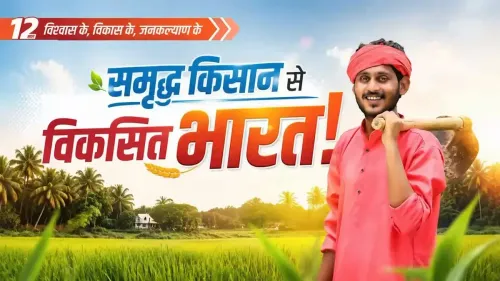
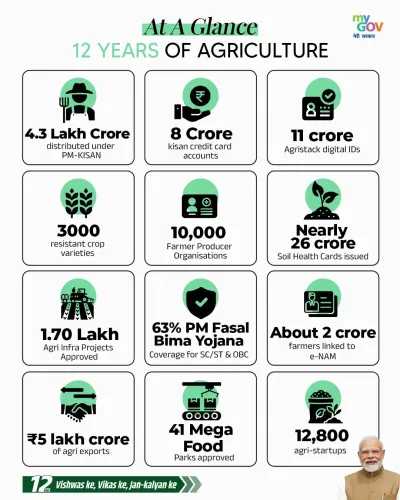
Union Minister G. Kishan Reddy on June 11, 2026, launched a thread marking 12 years of farm welfare under PM Modi, citing PM-KISAN, Kisan Credit Card, PM-KUSUM, and e-NAM as pillars of the government's Kisan Samriddhi agenda under the Viksit Bharat framework.
Key Takeaways
Kishan Reddy , Union Coal and Mines Minister and BJP Telangana president, launched a #12YearsOfKisanSamriddhi thread on June 11, 2026 .
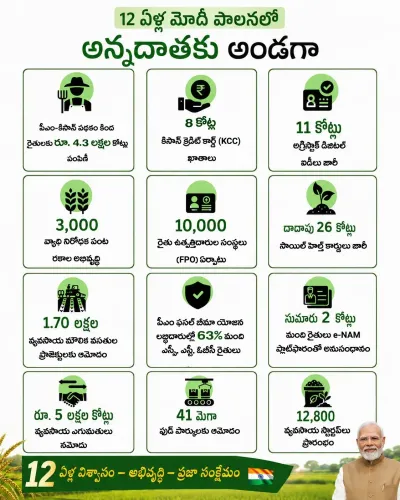
The PM-KISAN scheme provides Rs 6,000 per year to eligible farmer families and has covered more than 11 crore farmers since its February 2019 launch.
The PM-KUSUM scheme targets installation of 17.5 lakh solar pumps to reduce irrigation costs for farmers.
The e-NAM online trading platform has connected mandis across states for improved price discovery since 2016 .
The government set a goal in 2016 to double farmers' incomes by 2022 through seven priority areas including irrigation, insurance, and marketing.
The campaign frames farmer empowerment as central to the Viksit Bharat national development vision.
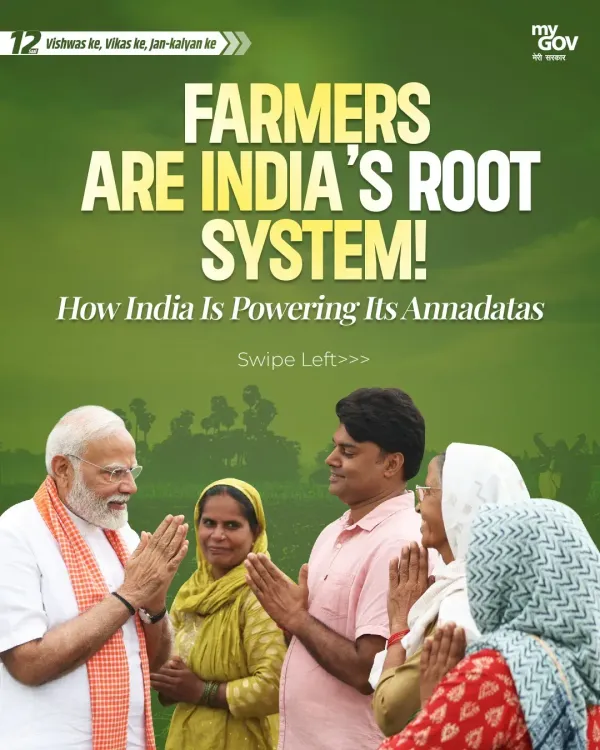
Union Coal and Mines Minister and BJP Telangana president G. Kishan Reddy on Thursday, June 11, 2026, launched a social-media thread marking 12 years of agricultural welfare under Prime Minister Narendra Modi, describing India's farmers as 'the backbone of our economy' and crediting the government with empowering them through direct income support, affordable credit, technology, clean energy, and better market access.
Context
Reddy's post, tagged #12YearsOfKisanSamriddhi, is part of a coordinated BJP communication effort marking the completion of 12 years of the Modi government's farm-sector interventions. He referred to farmers by the honorific Annadatas — meaning 'providers of food' — framing their prosperity as central to India's goal of becoming a developed nation, or Viksit Bharat. The thread signals an intent to document specific schemes and outcomes across multiple posts.
The post arrives as the ruling party increasingly ties its agricultural record to the broader Viksit Bharat narrative ahead of future electoral cycles, positioning farm welfare as a pillar of national development rather than a standalone sectoral concern.
Policy Backdrop
The welfare architecture Reddy references spans several flagship schemes. The PM-KISAN direct benefit transfer scheme, launched in February 2019, provides Rs 6,000 per year to eligible farmer families and has reached more than 11 crore farmers nationwide through Aadhaar-linked delivery. The Kisan Credit Card facility offers short-term crop loans at subsidised interest rates and saw coverage extended to additional small farmers in the 2018-19 budgets.
On the clean-energy front, the PM-KUSUM scheme, approved in 2019, targets the installation of 17.5 lakh solar pumps and the solarisation of existing grid-connected pumps, directly reducing diesel dependence for irrigation. Market access has been addressed through e-NAM, an online trading platform connecting mandis across states for better price discovery, operational since 2016. The government had also announced in 2016 a goal of doubling farmers' incomes by 2022 through seven priority areas including irrigation, insurance, and marketing.
Stakeholders and Impact
The primary beneficiaries of the policies cited are India's smallholder farmers and rural households, who have historically faced volatile incomes, high input costs, and fragmented market access. Direct transfers under PM-KISAN have provided a predictable income floor, while subsidised credit through the Kisan Credit Card has reduced dependence on informal moneylenders. Solar pump programmes under PM-KUSUM have aimed to lower electricity and diesel costs for irrigation-dependent cultivators.
State governments have been key implementation partners, coordinating beneficiary verification, land-record linkages, and last-mile delivery of scheme benefits. The success of these programmes has varied by state, depending on administrative capacity and the pace of Aadhaar-seeding of land records.
What's Next
Reddy indicated the thread would continue, suggesting further posts will detail specific scheme outcomes and milestones under the #12YearsOfKisanSamriddhi campaign. Analysts and parliamentary committees are expected to scrutinise state-level PM-KISAN and PM-KUSUM disbursement data as the government approaches the next Union Budget. The framing of farm welfare within the Viksit Bharat vision also signals that agricultural policy will remain a central pillar of the BJP's political messaging in the months ahead.
Point of View
The party signals a shift toward outcome-based communication. The invocation of 'Viksit Bharat' ties agricultural policy to a larger civilisational ambition, making farm welfare inseparable from the government's development brand. The thread format also suggests a sustained, multi-day information campaign rather than a one-off post, indicating coordinated party messaging machinery at work.
NationPress
16 Sept 2026
Frequently Asked Questions
What is #12YearsOfKisanSamriddhi?
#12YearsOfKisanSamriddhi is a BJP social-media campaign launched in June 2026 to highlight 12 years of agricultural welfare schemes introduced under Prime Minister Narendra Modi, including PM-KISAN, PM-KUSUM, Kisan Credit Card, and e-NAM.
What is PM-KISAN and how much do farmers get?
PM-KISAN is a direct benefit transfer scheme launched in February 2019 that provides Rs 6,000 per year to eligible farmer families in three equal instalments, and has reached more than 11 crore farmers across India.
What is the PM-KUSUM scheme for farmers?
PM-KUSUM is a central government scheme approved in 2019 to install 17.5 lakh solar pumps and solarise grid-connected pumps, helping farmers reduce their dependence on diesel and grid electricity for irrigation.
What is e-NAM and how does it help farmers?
e-NAM is an online national agriculture market platform operational since 2016 that connects mandis across states, enabling better price discovery and giving farmers access to a wider pool of buyers for their produce.
Who is G. Kishan Reddy?
G. Kishan Reddy is India's Union Minister of Coal and Mines and the president of the BJP's Telangana state unit, representing the Secunderabad constituency in the Lok Sabha.