CM Bhajan Lal hails Modi's 12 years of farmer welfare schemes
Synopsis
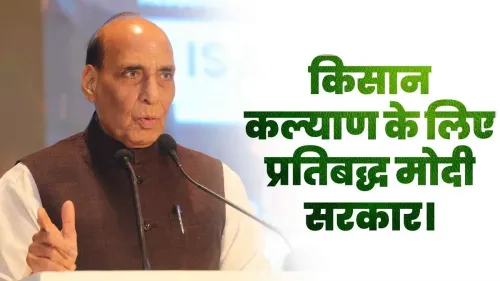
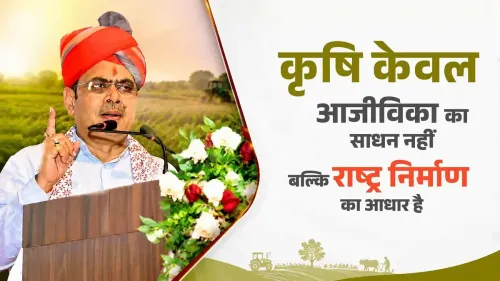
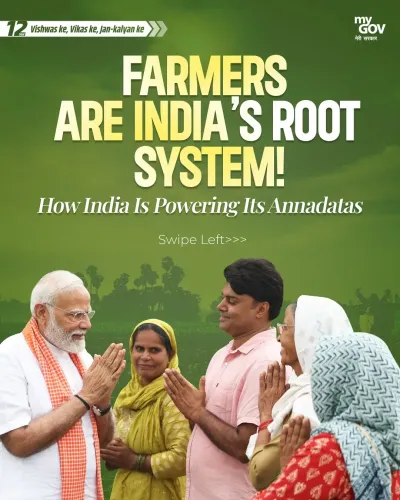
Rajasthan Chief Minister Bhajan Lal Sharma on June 11, 2026, praised PM Narendra Modi's 12-year agricultural welfare record, highlighting PM-KISAN, PM-KUSUM, crop insurance, and Kisan Credit Card as schemes that have brought confidence and prosperity to India's farming communities.
Key Takeaways
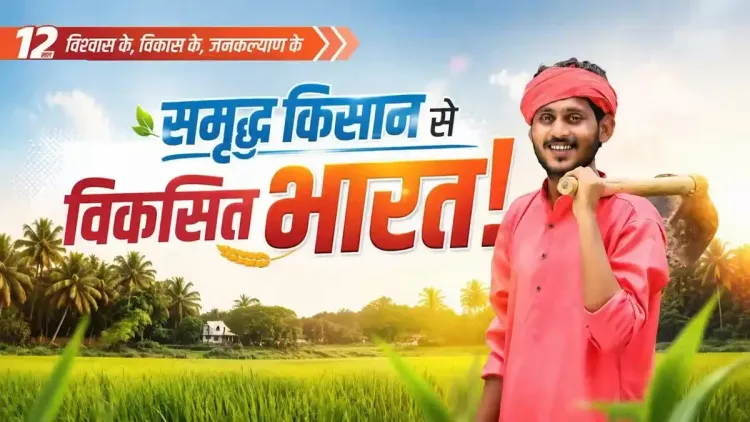
Rajasthan CM Bhajan Lal Sharma posted on June 11, 2026 praising 12 years of PM Modi's farmer-focused governance under #12YearsOfKisanSamriddhi .
PM-KISAN Samman Nidhi provides ₹6,000 per year in direct income support to eligible landholding farmer families.
PM-KUSUM , approved in March 2019 , promotes solar-powered agricultural pumps to reduce input costs for farmers.
Pradhan Mantri Fasal Bima Yojana , introduced in January 2016 , extended crop insurance coverage to a broader base of cultivators.
The Kisan Credit Card programme saw intensified outreach from 2019 onward, improving formal credit access for farm households.
Sharma framed farmer prosperity as the foundation for village and national development, consistent with BJP's broader rural messaging.
Rajasthan Chief Minister Bhajan Lal Sharma on Thursday, June 11, 2026, praised the 12-year agricultural welfare record of Prime Minister Narendra Modi, calling India's farmers the 'soul of the nation' and the 'most powerful carriers of the resolve for a Viksit Bharat.' Sharma credited a range of central schemes with restoring confidence and dignity among farming communities across the country.
Context
Posting under the hashtag #12YearsOfKisanSamriddhi, Sharma wrote in Hindi: 'Bharat ka kisan hamare rashtra ki aatma, samriddhi ka aadhar aur viksit Bharat ke sankalp ka sabse sashakt vahak hai' ['India's farmer is the soul of our nation, the foundation of prosperity and the most powerful carrier of the resolve for a developed India']. The post marks a broader BJP messaging exercise celebrating a dozen years of the Modi government's agrarian policy.
Sharma specifically cited PM-KISAN Samman Nidhi, crop insurance, PM-KUSUM, and the Kisan Credit Card as schemes that have 'brought a new smile of confidence on the faces of farmers.' He also highlighted the push to bring modern technology to fields and provide better market access to farm produce.
Policy Backdrop
The PM-KISAN Samman Nidhi, launched in February 2019, provides ₹6,000 per year in direct income support to landholding farmer families through three equal instalments. The Pradhan Mantri Fasal Bima Yojana, introduced in January 2016, replaced earlier crop insurance models and extended risk coverage to a wider base of cultivators.
The PM-KUSUM scheme, approved in March 2019, aims to solarise agricultural pumps and reduce farmers' dependence on grid electricity and diesel. The Kisan Credit Card programme, a long-standing credit facility, saw an intensified saturation drive from 2019 onward, with additional liquidity support extended during the COVID-19 period.
Together, these interventions represent the Union government's strategy of combining direct benefit transfers, insurance cover, renewable energy adoption, and credit access to improve rural incomes.
Stakeholders and Impact
The primary beneficiaries of these schemes are India's farm households, who constitute a substantial share of the rural population. State governments, including Rajasthan — one of India's largest states by area with significant agricultural activity — play a key role in scheme implementation and beneficiary enrolment.
Sharma's post reflects the pattern of BJP-governed state governments aligning their public communication with central agricultural programmes. Rajasthan's own uptake of PM-KUSUM funds and the pace of Kisan Credit Card saturation in the state are metrics that observers track as indicators of ground-level delivery.
Sharma concluded his post with the message: 'Jab kisan samriddh hota hai, tab gaon samriddh hote hain aur jab gaon aage badhte hain, tab rashtra vikas ke naye shikhar ko chhoota hai' ['When the farmer prospers, villages prosper; and when villages advance, the nation touches new peaks of development.']
What's Next
Analysts will watch for fresh budgetary enhancements to these schemes in the next Union Budget, as well as state-level data on PM-KUSUM installation targets and PM-KISAN beneficiary coverage in Rajasthan. The BJP's continued emphasis on farmer welfare messaging suggests these programmes will remain central to the party's political narrative ahead of any upcoming electoral cycles.
The satisfaction of farmers — as Sharma framed it — remains both a policy goal and a political benchmark for the ruling dispensation at the Centre and in states it governs.
Point of View
The post reinforces the party's claim that direct benefit transfers and technology infusion have structurally improved rural livelihoods — a thesis that remains politically potent in a state where farming households form a large voter bloc. The framing of farmer prosperity as the precondition for national development echoes the 'Viksit Bharat' vision that the BJP has made central to its governance identity. Whether ground-level scheme utilisation in Rajasthan matches the optimism of the messaging is the question that policy trackers will continue to examine.
NationPress
26 Oct 2026
Frequently Asked Questions
What is PM-KISAN Samman Nidhi and how much money do farmers get?
PM-KISAN Samman Nidhi is a central government scheme launched in February 2019 that provides ₹6,000 per year in direct income support to landholding farmer families, paid in three equal instalments of ₹2,000 directly into their bank accounts.
What is the PM-KUSUM scheme for farmers?
PM-KUSUM is a scheme approved in March 2019 to promote the installation of solar-powered agricultural pumps, helping farmers reduce dependence on grid electricity and diesel and lower their input costs.
Why did Rajasthan CM Bhajan Lal Sharma post about farmer welfare?
Sharma posted on June 11, 2026 under the hashtag #12YearsOfKisanSamriddhi to mark and celebrate 12 years of PM Modi's government and its agricultural welfare schemes, aligning the state BJP's messaging with the Centre's farmer-focused narrative.
What is the Pradhan Mantri Fasal Bima Yojana?
Pradhan Mantri Fasal Bima Yojana is a crop insurance programme introduced in January 2016 that replaced earlier insurance models and provides risk coverage to farmers against crop loss due to natural calamities, pests, and diseases.
How has the Kisan Credit Card scheme changed since 2014?
The Kisan Credit Card is a long-standing credit facility that saw a major saturation drive from 2019 onward, with higher credit limits, interest subvention, and additional liquidity support extended to farmers during the COVID-19 period to improve formal credit access.