CM Samrat Choudhary Hails 12 Years of Modi Farmer Welfare
Synopsis
Bihar Chief Minister Samrat Choudhary on June 11, 2026 credited twelve years of Modi government policy with transforming farmer welfare, citing PM-KISAN, Kisan Credit Card, and crop insurance as instruments of economic security for over 9 crore farmers across India.
Key Takeaways
Bihar CM Samrat Choudhary posted on June 11, 2026 praising the Union government's 12-year farmer welfare record under PM Narendra Modi .
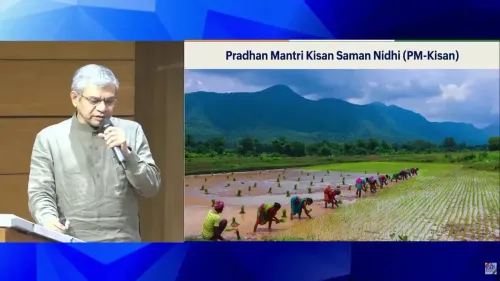
PM-KISAN provides Rs 6,000 per year in direct benefit transfers to eligible landholding farmer families and is claimed to have reached more than 9 crore beneficiaries.
Pradhan Mantri Fasal Bima Yojana , launched for kharif 2016 , protects farmers from yield losses due to natural calamities.
The Kisan Credit Card scheme received a major saturation drive from 2018 with higher credit limits and digital issuance.
Choudhary framed farmer prosperity as a precondition for India's development, aligning with the BJP's #12YearsOfKisanSamriddhi campaign narrative.
Focus now shifts to potential Bihar state-level supplementary schemes and upcoming beneficiary data in Union agricultural ministry reports.
Bihar Chief Minister Samrat Choudhary on Thursday, June 11, 2026, praised the farmer welfare record of the Narendra Modi-led Union government, crediting twelve years of central schemes with delivering economic security and confidence to India's agricultural community. Posting on X under the hashtag #12YearsOfKisanSamriddhi, Choudhary highlighted three flagship programmes — PM-KISAN, the Kisan Credit Card, and Pradhan Mantri Fasal Bima Yojana — as cornerstones of the transformation.
Context
Writing in Hindi, Choudhary opened with the line 'Samridh kisan, Aatmanirbhar Bharat ki pehchaan' ('A prosperous farmer is the identity of a self-reliant India'), framing agricultural welfare as inseparable from the broader national development goal. He stated that over the past twelve years, farmer welfare has received 'a new direction' under Prime Minister Modi's leadership. The post marks a symbolic milestone as the BJP-led government completes over a decade of continuous rule at the Centre.
Choudhary specifically noted that schemes such as PM-KISAN, the Kisan Credit Card, and crop insurance have provided farmers with 'economic support, security and self-confidence.' The post reflects a coordinated messaging effort within the ruling party to highlight agrarian policy achievements ahead of what observers expect to be a politically active agricultural calendar.
Policy Backdrop
PM-KISAN, launched in February 2019, provides eligible landholding farmer families with Rs 6,000 per year in three equal instalments directly into their bank accounts under the Direct Benefit Transfer architecture. Choudhary's post claims the scheme has reached more than 9 crore farmers, describing it not merely as financial aid but as 'an expression of respect and gratitude towards the nation's food providers.' (The research notes that the exact current enrolment figure requires official government confirmation.)
The Pradhan Mantri Fasal Bima Yojana, rolled out from kharif 2016, replaced earlier crop insurance programmes and is designed to shield cultivators from yield losses caused by natural calamities. The Kisan Credit Card scheme, a longstanding credit facility, received a significant saturation and digital-issuance push from 2018 onwards, with enhanced credit limits and interest subvention to reduce the cost of borrowing for small and marginal farmers.
Together, these programmes represent a structural shift in Union agricultural policy since 2014 — away from input subsidies alone and toward direct income support, credit access, and risk mitigation for cultivators, part of the government's stated objective of doubling farm incomes.
Stakeholders and Impact
The primary beneficiaries of the schemes cited by Choudhary are small and marginal farmers, who constitute the majority of India's agricultural workforce and have historically faced the greatest exposure to income volatility and credit exclusion. For Bihar — a state with a predominantly agrarian economy and a large share of small landholdings — the reach of these central schemes carries particular political and economic weight.
Choudhary closed his post with a pointed assertion: 'Kisan samridh hoga, tabhi Bharat viksit hoga' ('Only when the farmer prospers will India develop'), framing rural prosperity as a precondition for the country's broader development ambitions. He called this the 'greatest strength' of Prime Minister Modi's leadership.
What's Next
Attention will now turn to whether the Bihar government announces complementary state-level agricultural schemes to build on the central framework, particularly as the kharif sowing season approaches. Farmer beneficiary enrolment data and any supplementary disbursements are expected to feature in upcoming Union Budget documents and agricultural ministry reports. The #12YearsOfKisanSamriddhi campaign signals that farmer welfare will remain a central plank of BJP's political communication through the near term.
Point of View
Using social media to reinforce the party's agrarian credentials ahead of a politically sensitive agricultural season. By anchoring the message in concrete scheme names and a large beneficiary figure, the post attempts to shift the farmer welfare debate from protest and distress to delivery and dignity. The emphasis on PM-KISAN as an expression of 'respect' rather than mere subsidy reflects a deliberate reframing of direct cash transfers as a moral and political statement. This pattern — state chief ministers echoing central welfare milestones — has become a consistent feature of BJP's coordinated communication architecture since 2019.
NationPress
23 Sept 2026
Frequently Asked Questions
What is PM-KISAN and how much money do farmers get?
PM-KISAN is a central government scheme launched in February 2019 that provides eligible landholding farmer families with Rs 6,000 per year, paid in three instalments of Rs 2,000 each directly into their bank accounts via Direct Benefit Transfer.
How many farmers have benefited from PM-KISAN?
Bihar CM Samrat Choudhary's post on June 11, 2026 states that more than 9 crore farmers have been reached by the PM-KISAN scheme, though official government data should be consulted for the latest verified enrolment figures.
What is the Pradhan Mantri Fasal Bima Yojana?
Pradhan Mantri Fasal Bima Yojana is a crop insurance programme launched by the Union government for kharif 2016 to protect farmers against income losses caused by natural calamities, replacing earlier insurance schemes with broader and more standardised coverage.
What did Bihar CM Samrat Choudhary say about Modi's farm policies?
On June 11, 2026, Choudhary posted on X praising twelve years of farmer welfare under PM Modi, crediting PM-KISAN, Kisan Credit Card, and crop insurance with providing economic support, security, and self-confidence to India's farmers, and stating that farmer prosperity is the foundation of India's development.
What is the Kisan Credit Card scheme?
The Kisan Credit Card is a credit facility for farmers that provides them access to short-term loans for agricultural needs; the Union government intensified a saturation drive from 2018 onwards, increasing credit limits and enabling digital issuance to expand reach among small and marginal farmers.