Goyal marks 12 years of Modi govt farm welfare schemes
Synopsis
Union Minister Piyush Goyal on June 11, 2026 marked twelve years of the Modi government's farm welfare drive, spotlighting PM-KISAN income support, Kisan Credit Card credit access, and Pradhan Mantri Fasal Bima Yojana crop insurance as the three pillars of a sustained push from farmer welfare to farmer prosperity.
Key Takeaways
Piyush Goyal posted on June 11, 2026 under #12YearsOfKisanSamriddhi to mark over a decade of Modi government agricultural welfare.
PM-KISAN , launched in February 2019 , provides ₹6,000 annually in direct income support to eligible landholding farmer families.
The Kisan Credit Card scheme, expanded post- 2014 with interest subvention, aims to formalise credit access and reduce farmer dependence on informal lending.
Pradhan Mantri Fasal Bima Yojana , introduced in 2016 , provides crop insurance against natural calamities, replacing earlier fragmented insurance mechanisms.
The three schemes together address income support, credit access, and risk mitigation — the three core vulnerabilities of Indian farm households.
Disbursement trends and scheme coverage data in the next Union Budget will be key indicators of on-ground impact.
Union Commerce and Industry Minister Piyush Goyal on Thursday, June 11, 2026 highlighted the Narendra Modi government's twelve-year record on agricultural welfare, citing three flagship programmes — PM-KISAN, the Kisan Credit Card, and the Pradhan Mantri Fasal Bima Yojana — as pillars of farmer support under the hashtag #12YearsOfKisanSamriddhi.
Context
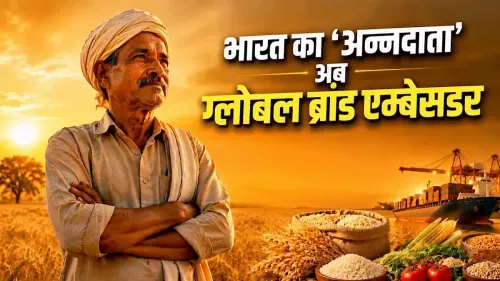
Posting in Hindi, Goyal wrote: 'किसान सम्मान निधि से संबल, किसान क्रेडिट कार्ड से सशक्तिकरण और फसल बीमा से सुरक्षा' — 'Support through Kisan Samman Nidhi, empowerment through Kisan Credit Card, and security through crop insurance.' He added that the government has worked over these 12 years to strengthen the 'annadata' (food provider) and give fresh momentum to the journey from farmer welfare to farmer prosperity.
The post coincides with the BJP's broader campaign marking over a decade of the Modi administration's agricultural initiatives, framing the period as a sustained policy arc rather than isolated interventions.
Policy Backdrop
PM-KISAN, launched in February 2019, provides direct income support of ₹6,000 annually to eligible landholding farmer families through direct benefit transfer. The scheme is among the largest such cash-transfer programmes in the world by beneficiary count.
The Kisan Credit Card scheme, originally introduced in 1998, was significantly expanded after 2014 with interest subvention to make short-term institutional credit available to cultivators and allied-activity workers at concessional rates, reducing dependence on informal moneylenders. The Pradhan Mantri Fasal Bima Yojana, launched in 2016, replaced earlier crop insurance mechanisms with a unified framework designed to protect farmers against losses from natural calamities, pests, and disease.
Together, the three schemes represent the government's three-pronged strategy: income support, credit access, and risk mitigation — each targeting a distinct vulnerability in the agricultural economy.
Stakeholders and Impact
India's agricultural sector supports roughly half the country's workforce, making farmer-welfare policy a central political and economic concern. The direct beneficiaries of these schemes span small and marginal farmers — who hold the majority of agricultural land holdings in the country — as well as tenant cultivators brought into formal credit networks through the Kisan Credit Card expansion.
State governments play a critical role in scheme implementation, particularly in updating beneficiary land records for PM-KISAN and enrolling farmers under crop insurance before sowing deadlines. Gaps in state-level saturation have been a recurring concern flagged by parliamentary committees and agrarian policy analysts.
What's Next
Analysts and farm-sector observers will watch the next Union Budget for updated disbursement figures and any enhancement in the annual PM-KISAN transfer, which has remained at ₹6,000 since the scheme's inception. Coverage data on crop insurance enrolment and Kisan Credit Card penetration in rain-shadow and tribal agricultural regions will also be closely tracked. The government's ability to demonstrate measurable outcomes — not just scheme launches — will shape the political narrative around farmer welfare heading into the next electoral cycle.
Point of View
Arriving as the BJP consolidates a 'decade-plus' governance narrative ahead of future electoral contests. By anchoring the tribute to three institutionalised schemes rather than rhetorical claims, the party signals confidence in a policy record that can be audited — a shift from aspiration-led communication. The framing of 'annadata' welfare as a journey toward 'samriddhi' (prosperity) also signals an intent to move the political conversation from input subsidies to income outcomes. How that narrative holds will depend on whether the next budget delivers tangible enhancements to PM-KISAN and insurance coverage.
NationPress
22 Sept 2026
Frequently Asked Questions
What is PM-KISAN and how much money do farmers get?
PM-KISAN is a central government scheme launched in February 2019 that provides ₹6,000 per year in direct income support to eligible landholding farmer families, transferred in three equal instalments of ₹2,000 directly to their bank accounts.
What is the Kisan Credit Card scheme?
The Kisan Credit Card scheme offers farmers short-term institutional credit at concessional interest rates for cultivation and allied activities. Originally introduced in 1998, it was expanded with interest subvention after 2014 to reduce farmer dependence on informal, high-interest moneylenders.
What does Pradhan Mantri Fasal Bima Yojana cover?
Pradhan Mantri Fasal Bima Yojana , launched in 2016, provides crop insurance to farmers against losses caused by natural calamities, pests, and disease. It replaced earlier crop insurance schemes with a unified, more accessible framework.
Why is Piyush Goyal posting about farmer schemes in June 2026?
The post is part of the #12YearsOfKisanSamriddhi campaign marking over twelve years of the Modi government's agricultural welfare programmes, timed to highlight the administration's record on farmer support.
What is the difference between farmer welfare and farmer prosperity as used by the BJP?
In the BJP's framing, 'farmer welfare' refers to protective measures such as income support and insurance, while 'farmer prosperity' implies a higher goal of sustained income growth and economic resilience — a rhetorical shift from safety nets to wealth creation for agricultural households.