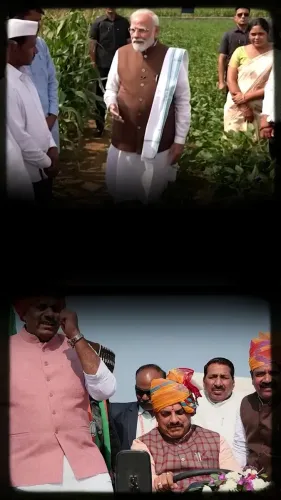
CM Mohan Yadav hails 12 years of farmer welfare under Modi govt
Synopsis
Madhya Pradesh CM Dr. Mohan Yadav marked 12 years of BJP-led farmer welfare on June 11, 2026, citing PM-KISAN, MSP payments of ₹26 lakh crore, Shri Anna promotion, and the Mukhyamantri Kisan Kalyan Yojana as cornerstones of the Viksit Bharat 2047 agenda.
Key Takeaways
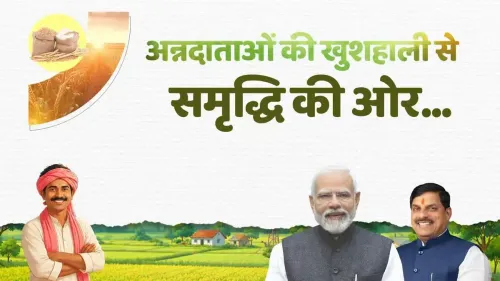
Mohan Yadav credited PM Narendra Modi 's government with 12 years of historic farmer welfare under the #12YearsOfKisanSamriddhi campaign.
The PM-KISAN scheme, launched in February 2019 , provides ₹6,000 per year in direct income support to eligible landholding farmers across India.
Madhya Pradesh supplements central schemes with its own Mukhyamantri Kisan Kalyan Yojana , creating a multi-tier farmer support framework.
The government claims ₹26 lakh crore has been paid to farmers via the MSP mechanism over the past 12 years .
Shri Anna (millets) promotion, accelerated during the International Year of Millets 2023 , has been highlighted as a key initiative for millet farmers' prosperity.
The post frames India's farmers as central drivers of the Viksit Bharat 2047 national development vision.
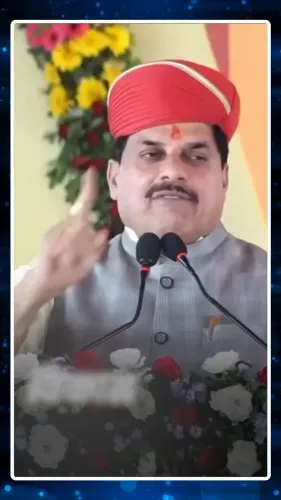
Madhya Pradesh Chief Minister Dr. Mohan Yadav on Thursday, June 11, 2026, credited Prime Minister Narendra Modi's government with transforming Indian agriculture over the past 12 years, calling farmers the 'most empowered charioteers' of the Viksit Bharat 2047 (Developed India 2047) vision. The Chief Minister cited landmark schemes and a claimed ₹26 lakh crore in MSP payments as evidence of the Centre's commitment to farmer welfare.
Context
Posting under the hashtag #12YearsOfKisanSamriddhi, Dr. Yadav wrote that the last 12 years have been 'historic' for annadata (food-provider) farmers in terms of support, empowerment and a secure future. He described the period as one in which agricultural policy evolved from basic income transfers to a broader modernisation of farming technology and natural farming practices. The post is part of a coordinated BJP messaging effort marking what the party frames as a decade-plus of farmer-centric governance.
Policy Backdrop
The Chief Minister specifically referenced the PM Kisan Samman Nidhi (PM-KISAN) scheme, launched in February 2019, which provides eligible landholding farmers with ₹6,000 per year in direct benefit transfers. At the state level, Madhya Pradesh has layered its own Mukhyamantri Kisan Kalyan Yojana on top of the central framework, creating a multi-tier income support model for farmers in the state. Dr. Yadav also highlighted expansion of irrigation coverage, modernisation of agricultural technology, and the promotion of natural farming as pillars of this transformation.
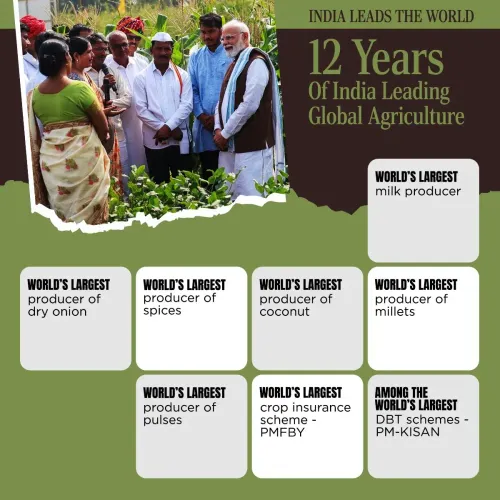
The post further drew attention to Shri Anna — the government's rebranding of millets — which gained global momentum during the International Year of Millets in 2023. The initiative positioned India as a leading producer and exporter of millets, with the stated aim of boosting the prosperity of millet-farming communities. The Minimum Support Price (MSP) mechanism, which guarantees government procurement at fixed prices for select crops, was cited as having channelled ₹26 lakh crore to farmers over 12 years, though this figure has not been independently verified.
Stakeholders and Impact
The beneficiaries at the centre of this policy narrative are India's small and marginal farmers, who collectively form the backbone of the country's agricultural workforce. Madhya Pradesh, one of India's largest agricultural states, has a substantial farmer population that has been a direct recipient of both central and state-level interventions under this framework. Schemes such as PMKSY (Pradhan Mantri Krishi Sinchayee Yojana) for micro-irrigation and PMFBY (Pradhan Mantri Fasal Bima Yojana) for crop insurance, rolled out from 2015 onwards, have added additional layers of protection for cultivators.
Dr. Yadav's framing connects state-level delivery directly to the Viksit Bharat 2047 national development agenda, positioning the farmer not merely as a welfare recipient but as an active driver of India's long-term economic ambitions. This narrative has become a consistent thread in BJP communication ahead of key budget and policy cycles.
What's Next
Attention will now turn to the Union Budget 2027 and any announcements regarding revised MSP procurement volumes, expanded natural farming targets, or enhanced PM-KISAN disbursements. For Madhya Pradesh specifically, the alignment of state agricultural spending with central frameworks will be a key indicator of whether the multi-tier delivery model continues to deepen. The government's ability to sustain and scale the Shri Anna push in global markets will also be closely watched as a measure of the initiative's long-term impact on millet farmers' incomes.
Point of View
Particularly ahead of budget cycles. By invoking the Viksit Bharat 2047 frame, the party attempts to elevate routine welfare delivery into a civilisational project, making it harder for opposition parties to contest on purely administrative grounds. The specific invocation of the ₹26 lakh crore MSP figure — even if unverified — signals an intent to shift the farmer-welfare debate from qualitative grievances to quantitative benchmarks. This pattern of coordinated state-Centre messaging is likely to intensify as the next Union Budget approaches and farm distress remains a politically sensitive fault line.
NationPress
25 Sept 2026
Frequently Asked Questions
What is the PM Kisan Samman Nidhi scheme?
PM-KISAN is a central government direct benefit transfer scheme launched in February 2019 that provides eligible landholding farmers with ₹6,000 per year in three equal instalments directly to their bank accounts.
What is the Mukhyamantri Kisan Kalyan Yojana in Madhya Pradesh?
The Mukhyamantri Kisan Kalyan Yojana is a Madhya Pradesh state government scheme that supplements the central PM-KISAN programme, providing additional direct income support to farmers in the state as part of a multi-tier welfare model.
What is Shri Anna and why is it significant for farmers?
Shri Anna is the Indian government's rebranding of millets, promoted heavily during the International Year of Millets in 2023. The initiative aims to boost global demand for Indian millets, thereby increasing income and recognition for millet-producing farmers.
How much has the government paid farmers through MSP in 12 years?
MP CM Dr. Mohan Yadav's post claims that ₹26 lakh crore has been paid to farmers through the Minimum Support Price mechanism over the past 12 years, though this figure has not been independently verified.
What is Viksit Bharat 2047 and what role do farmers play in it?
Viksit Bharat 2047 is the Indian government's vision to make India a developed nation by 2047, the centenary of independence. The BJP frames farmers as central contributors to this goal through agricultural modernisation, income support, and technology adoption.