US counter-drone MoU: 5 federal agencies unite to secure American airspace
Synopsis
Washington has moved beyond piecemeal drone policy: five federal departments — Defence, Homeland Security, Transportation, Energy, and Justice — have signed a single MoU to unify counter-drone testing and deployment. With the FBI already seizing over 700 drones at the FIFA World Cup and high-energy lasers deployed on the southern border, this agreement is less a starting gun and more a consolidation of tools already in the field.
Key Takeaways
Five US federal departments — Transportation, Defence, Homeland Security, Energy and Justice — signed a counter-drone MoU on 10 November 2026 .
The agreement is led by the White House Task Force to Restore American Airspace Sovereignty .
The FAA retains authority to conduct safety assessments and impose airspace restrictions on counter-drone systems it deems unsafe.
FBI Director Kash Patel said the bureau seized more than 700 drones during the FIFA World Cup using its National Counter-UAS Training Center.
High-energy lasers are among the counter-drone technologies already in active use, particularly at the southern US border .
The MoU builds on a 10 April FAA-Pentagon safety assessment that cleared a high-energy laser system for deployment alongside civilian aircraft.
Five US federal departments on Monday, 10 November 2026 signed a memorandum of understanding (MoU) to coordinate the testing and deployment of counter-drone systems across the country, while safeguarding civilian aircraft and navigation equipment. The agreement, led by the White House Task Force to Restore American Airspace Sovereignty, marks Washington's most comprehensive inter-agency move yet to tackle the growing threat of unauthorised drones.
Key Departments and Their Roles
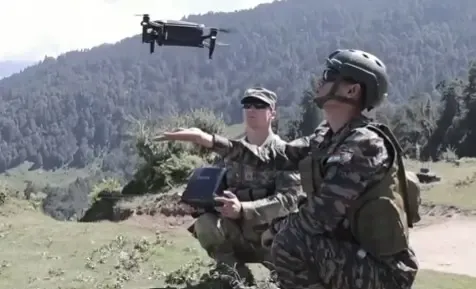
The departments of Transportation, Defence, Homeland Security, Energy, and Justice are party to the arrangement. Under the MoU, all five agencies will work in coordination with the Federal Aviation Administration (FAA) and the Federal Communications Commission (FCC) when developing systems designed to detect, track, disable, or take control of drones.
The FAA will conduct safety assessments of proposed counter-drone technologies and retain the authority to impose its own protective measures — including airspace restrictions — if existing safeguards are deemed inadequate. This gives the aviation regulator a de facto veto over deployments that could endanger commercial aircraft.
What Officials Said
Transportation Secretary Sean P. Duffy said the agreement would strengthen the federal government's ability to 'combat rogue drone threats and keep the flying public safe.' FAA Administrator Bryan Bedford described the MoU as building on existing cooperation while establishing a consistent process for introducing counter-drone technology without compromising aviation safety.
Defence Secretary Pete Hegseth linked the effort to protection of the southern border and military installations, citing high-energy lasers among the technologies already in active use. Homeland Security Secretary Markwayne Mullin said stronger coordination would help counter cartel drone operations and protect border personnel. Energy Secretary Chris Wright emphasised the need to shield critical energy infrastructure, stating: 'Protecting American energy infrastructure is essential to our national security.'
FBI's Role and the FIFA World Cup Precedent
FBI Director Kash Patel disclosed that the bureau had seized more than 700 drones during the FIFA World Cup, working alongside state and local officers trained at the FBI's National Counter-UAS Training Center. Patel said the new MoU 'strengthens the federal coordination behind that work, so new counter-drone tools are tested, deconflicted, and ready to deploy safely alongside civilian aviation.'
The Justice Department and the FBI also flagged drone incursions at public events as a key area where the agreement would have practical impact — a concern that has grown significantly in the United States in recent years.
Building on Earlier Assessments
The MoU builds on specific precedents. On 10 April, the FAA and the Pentagon jointly announced the completion of a safety assessment of a high-energy laser counter-drone system, following live demonstrations the previous month. The FAA concluded that appropriate safety controls were in place and that the system posed no undue risk to passenger aircraft — a finding that reportedly paved the way for broader coordination now formalised in the MoU.
Existing measures such as temporary flight restrictions along the southern US border are also referenced in the agreement as part of the layered architecture being expanded under the new framework.
What Comes Next
Agencies are expected to begin joint field testing and information-sharing under the MoU's technical requirements framework. The FAA's ongoing safety review process will serve as the gateway through which new counter-drone technologies must pass before widespread deployment. With drone threats evolving rapidly — from cartel operations on the southern border to incursions at large public events — the speed and rigour of that review process will determine how quickly the new framework delivers operational impact.
Point of View
From lasers on the southern border to FBI seizures at public events. The real shift is regulatory: the FAA's formal veto power over new deployments addresses a longstanding tension between national security imperatives and aviation safety, a gap that left earlier programmes in a legal grey zone. Critics may ask whether a voluntary MoU without statutory backing will hold when agency priorities clash, as they historically do in multi-department coordination frameworks. The southern border framing also reveals a political dimension: linking counter-drone authority to cartel interdiction gives the agreement domestic political momentum, but may shape technology choices in ways that do not map neatly onto the full range of drone threats the US faces.
NationPress
10 Nov 2026
Frequently Asked Questions
What is the US counter-drone MoU signed on 10 November 2026?
It is a memorandum of understanding signed by five US federal departments — Transportation, Defence, Homeland Security, Energy, and Justice — to coordinate the testing and deployment of counter-drone systems while protecting civilian aircraft and navigation equipment. The agreement is led by the White House Task Force to Restore American Airspace Sovereignty.
What role does the FAA play under the new counter-drone agreement?
The FAA will review proposed counter-drone systems, conduct safety assessments, and determine whether safeguards adequately protect other airspace users. It retains authority to impose its own protective measures, including airspace restrictions, if it identifies unsafe conditions.
Why did the FBI reference the FIFA World Cup in this context?
FBI Director Kash Patel cited the FIFA World Cup as a live operational example, noting that the bureau seized more than 700 drones during the event while working with state and local officers trained at its National Counter-UAS Training Center. The example illustrated the scale of drone incursions at large public gatherings and the need for the coordinated framework the MoU now formalises.
What technologies are covered under the counter-drone MoU?
The MoU covers systems that detect, track, disable, or take control of drones, with high-energy lasers specifically cited as one technology already in active use. All new systems must pass FAA safety reviews before deployment alongside civilian aviation.
How does this MoU build on earlier US counter-drone efforts?
It builds on existing measures including a temporary flight restriction along the southern US border and an April 2026 FAA-Pentagon safety assessment that cleared a high-energy laser counter-drone system for use near passenger aircraft. The MoU formalises these ad hoc arrangements into a unified inter-agency framework.