Odisha Cabinet OKs 12 Major Proposals Under CM Majhi
Synopsis
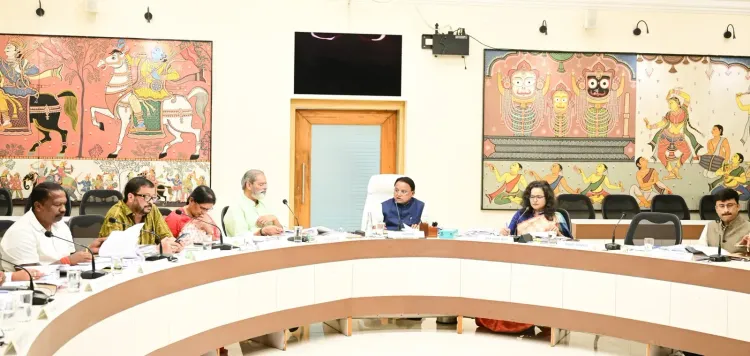
The Odisha Cabinet chaired by CM Mohan Charan Majhi on 9 November 2026 cleared 12 proposals spanning a ₹4,708 crore pumped-storage plant, free college Wi-Fi for 601 institutions, unlimited OCS exam attempts, western-Odisha irrigation schemes, and a paddy procurement target of 53 LMT at ₹3,100 per quintal.
Key Takeaways
Odisha Shikshanet : ₹393.62 crore scheme providing free Wi-Fi and up to 1 GB daily data to students across 601 government and aided colleges .
600 MW Upper Indravati Pumped Storage Project at Ranibahal, Kalahandi approved at ₹4,708.64 crore to bolster grid stability and energy storage.
Attempt limit on the Odisha Civil Services Examination removed for all eligible candidates.
Seven Mega Lift Irrigation Schemes in Nuapada (₹268.22 crore) will create irrigation potential across 8,800 hectares in 59 villages ; two additional in-stream storage projects approved for Balangir district.
Paddy procurement target for KMS 2026–27 set at 53 LMT of rice; farmers to receive ₹3,100 per quintal including MSP and input assistance.
Panchayat Executive Officers cadre restructured to 3,294 posts with improved career progression; Odisha Bovine Breeding (Regulation) Bill, 2026 approved for introduction in the state assembly.
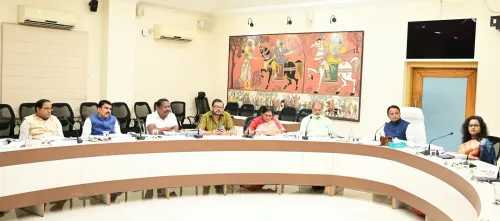
Twelve wide-ranging proposals — from free campus Wi-Fi to a ₹4,708.64 crore pumped-storage power plant — cleared the Odisha Cabinet in a single sitting on Monday, 9 November 2026, chaired by Chief Minister Mohan Charan Majhi, signalling a government determined to move on digital access, energy resilience, irrigation and administrative reform simultaneously.
Free Wi-Fi for 601 colleges and no cap on civil-services attempts
The headline welfare announcement is Odisha Shikshanet, a ₹393.62 crore scheme that will pipe free Wi-Fi and up to 1 GB of daily data to students across 601 government and aided colleges. For a state where many students commute from rural belts with poor connectivity, that daily gigabyte is more than a convenience — it is a leveller.
Equally consequential for a different constituency: the cabinet abolished the attempt ceiling for the Odisha Civil Services (OCS) Examination. Candidates who meet eligibility criteria can now sit the exam without restriction on the number of tries — a reform several other states have embraced and one that removes a punishing clock from aspirants who keep narrowly missing the cut.
₹4,708 crore Upper Indravati project anchors Odisha's energy storage push
The single largest outlay approved is the 600 MW Upper Indravati Pumped Storage Project at Ranibahal, Kalahandi, priced at ₹4,708.64 crore. Pumped-storage hydro works like a giant rechargeable battery: surplus grid power pushes water uphill; peak-demand periods release it back through turbines. As Odisha integrates more renewable capacity, grid-balancing infrastructure of this kind becomes structurally essential — not optional.
The project anchors a broader western-Odisha development push visible elsewhere in the same cabinet list: seven Mega Lift Irrigation Schemes in Nuapada worth ₹268.22 crore unlocking irrigation for 8,800 hectares across 59 villages, a ₹99.99 crore in-stream storage project near Patharla village, Balangir securing water for 12 villages, and the ₹81.36 crore Kursud In-stream Storage Project on the Indra river in Balangir district benefiting 17 drought-prone villages across Titilagarh and Bangomunda blocks.
Farmers, panchayats and judicial officers all get new frameworks
On agriculture, the cabinet set a paddy procurement target of 53 lakh metric tonnes (LMT) of rice — equivalent to roughly 78 LMT of paddy — for Kharif Marketing Season (KMS) 2026–27, with farmers guaranteed ₹3,100 per quintal inclusive of MSP and input assistance. The deadline for replacing institutional dealers with private dealers under the Public Distribution System (PDS) was pushed to 30 September 2027, buying time for a smoother transition.
Grassroots administration gets a structural overhaul: the Panchayat Executive Officers cadre is being restructured to 3,294 posts with improved promotion pathways. The Odisha Bovine Breeding (Regulation) Bill, 2026 introduces a regulatory framework for scientific livestock breeding, quality assurance and service traceability — it must still pass the state assembly. For the judiciary, newly recruited Trainee Judicial Officers will now serve one year of institutional training followed by one year of structured Law Clerkship, sharpening courtroom readiness before they take the bench. 19 Assistant Town Planners will be directly recruited through the Odisha Public Service Commission (OPSC) under revised age and educational criteria.
What comes next for Odisha's twelve-point cabinet sprint
Watch for two milestones in particular: the rollout timeline for Shikshanet — the connectivity infrastructure for 601 colleges does not materialise overnight — and the first construction update on the Upper Indravati project, which at this scale typically takes three-to-five years to commission. The Bovine Breeding Bill heads to the assembly floor, where its detailed provisions will face scrutiny. Each of these is a commitment that must now survive the gap between announcement and execution.
Twelve proposals, one meeting. The Majhi cabinet has drawn a wide map — the question now is the pace of the journey.
Point of View
Digital education, irrigation, cadre reform and food procurement all in one session — reflects a standard BJP state-government playbook of bundling visible welfare with infrastructure investment to demonstrate administrative momentum. The western-Odisha tilt in irrigation and energy projects is politically deliberate: the region has historically underperformed on development indices and delivered competitive electoral margins. The removal of OCS attempt limits, mirroring reforms in Rajasthan and Uttar Pradesh, extends a wider pattern of competitive-exam liberalisation that BJP governments have used to signal responsiveness to aspirational youth. The real test will be execution fidelity — Odisha has a track record of approving irrigation and energy projects whose commissioning timelines stretch well beyond initial projections.
NationPress
10 Nov 2026
Frequently Asked Questions
What is the Odisha Shikshanet scheme?
Odisha Shikshanet is a ₹393.62 crore government scheme approved in November 2026 to provide free Wi-Fi and up to 1 GB of daily internet data to students across 601 government and government-aided colleges in Odisha.
What is the Upper Indravati Pumped Storage Project?
It is a 600 MW pumped-storage hydroelectric project at Ranibahal in Kalahandi district, approved at a cost of ₹4,708.64 crore. The project will store surplus electricity by pumping water uphill and release it during peak demand, improving grid stability.
Has Odisha removed the attempt limit for the Civil Services Examination?
Yes. The Odisha Cabinet approved the removal of the ceiling on the number of attempts for the Odisha Civil Services (OCS) Examination; all candidates who meet eligibility criteria may now appear without an attempt restriction.
How much will Odisha farmers receive for paddy in KMS 2026–27?
Farmers will receive ₹3,100 per quintal for paddy under the Kharif Marketing Season 2026–27 procurement policy, an amount that includes the Minimum Support Price (MSP) and input assistance. The state has set a target of procuring 53 LMT of rice, equivalent to about 78 LMT of paddy.
What are the irrigation projects approved by the Odisha Cabinet for western Odisha?
The cabinet approved seven Mega Lift Irrigation Schemes in Nuapada worth ₹268.22 crore covering 8,800 hectares across 59 villages, a ₹99.99 crore in-stream storage project near Patharla village in Balangir for 12 villages, and the ₹81.36 crore Kursud In-stream Storage Project on the Indra river in Balangir benefiting 17 drought-prone villages.