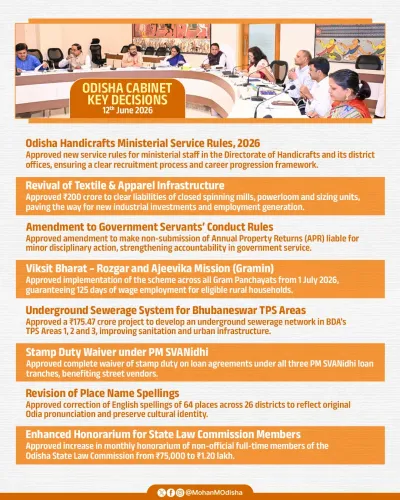
Odisha Cabinet Clears 13 Key Proposals Across 10 Departments
Synopsis
The Odisha state cabinet, chaired by Chief Minister Mohan Charan Majhi, approved 13 key proposals from 10 government departments on November 9, 2026, marking a broad round of administrative decision-making by the BJP-led state government.
Key Takeaways
13 proposals from 10 state departments were approved at a single Odisha cabinet sitting on November 9, 2026 .
The meeting was chaired by Chief Minister Mohan Charan Majhi , who has led Odisha's BJP government since June 2024 .
The CMO announced that all proposals were 'discussed and deliberated upon in detail' before receiving approval.
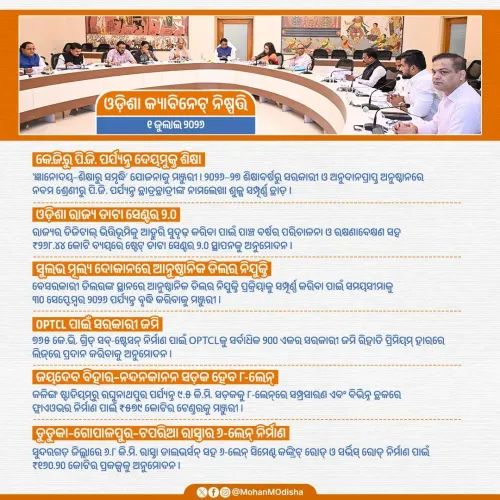
Specific details of the 13 proposals and the 10 departments involved were not disclosed in the official announcement.
Implementation and rollout of the approved decisions across Odisha's departments are the immediate next step to watch.
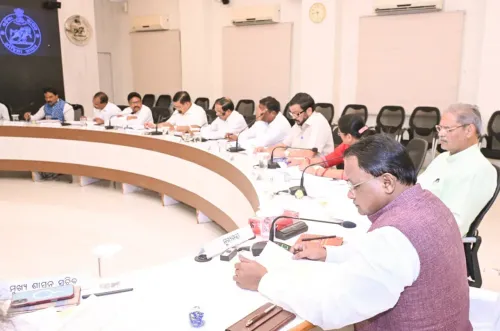
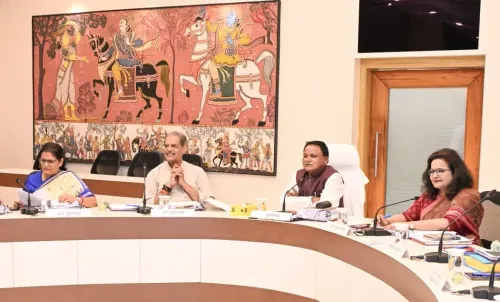
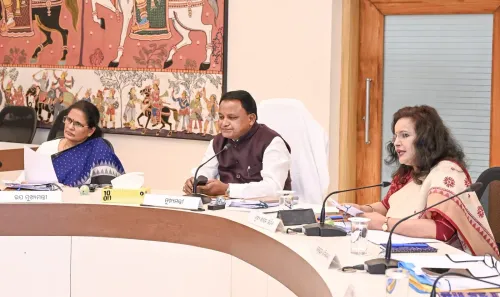
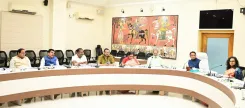
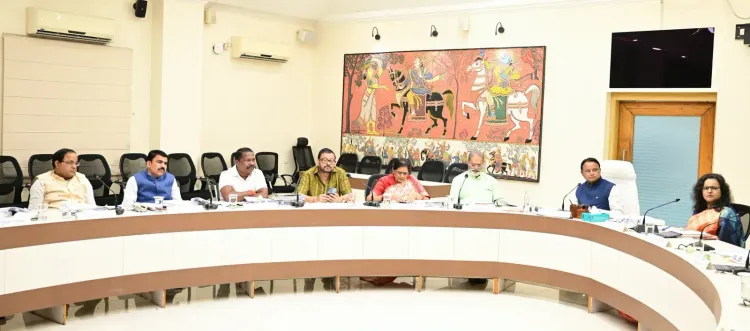
Governance moved at speed in Bhubaneswar on Monday, November 9, 2026, as the Chief Minister's Office of Odisha announced that a significant state cabinet meeting chaired by Chief Minister Mohan Charan Majhi approved 13 major proposals put forward by 10 state government departments — a broad sweep of administrative decision-making in a single sitting.
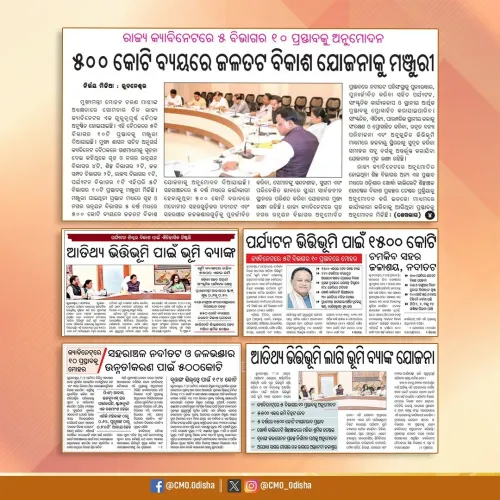
The CMO's post, written in Odia, stated that the proposals were 'bistarita alochana o paryalochana' — 'discussed and deliberated upon in detail' — before receiving cabinet approval. No individual proposal titles were disclosed in the announcement, keeping specifics from the public record for now.
Majhi's Cabinet at Work: What 13 Approvals in One Sitting Signals
Mohan Charan Majhi has led Odisha's BJP-led government since June 2024, when the party ended over two decades of Biju Janata Dal rule in the state following a decisive assembly election victory. Cabinet meetings chaired by the Chief Minister are the principal mechanism through which state governments translate policy intent into executable decisions — covering everything from infrastructure allocations and welfare schemes to regulatory changes and administrative restructuring.
Clearing 13 proposals from 10 departments in one session points to an administration pushing through a backlog of governance business — a common pattern in state governments looking to demonstrate momentum. The breadth of departments involved suggests cross-sectoral action rather than a single-domain focus.
Implementation Now the Measure: Watching What Rolls Out Next
Cabinet approvals are, in administrative terms, the starting gun — not the finish line. Each of the 13 decisions now moves into implementation: budget allocations, departmental orders, tendering, and on-ground rollout. For citizens and observers, the coming weeks will determine whether Monday's broad approvals translate into visible policy shifts across Odisha's districts.
The Majhi government has staked much of its early political identity on governance efficiency and welfare delivery. A cabinet round clearing double-digit proposals in one go feeds that narrative — but the proof will be in the detail that departments release as they begin execution.
Point of View
The absence of publicly disclosed proposal details keeps accountability mechanisms limited; opposition benches and civil society will be watching the gazette notifications that follow. How quickly these approvals translate into on-ground delivery will shape the BJP's governance credentials ahead of the next electoral cycle in Odisha.
NationPress
10 Nov 2026
Frequently Asked Questions
What was decided at the Odisha cabinet meeting on November 9 2026?
The Odisha state cabinet, chaired by Chief Minister Mohan Charan Majhi, approved 13 major proposals submitted by 10 state government departments after detailed discussion.
Who is the Chief Minister of Odisha in 2026?
Mohan Charan Majhi of the Bharatiya Janata Party is the Chief Minister of Odisha, in office since June 2024 following the party's assembly election victory.
Which departments submitted proposals at the Odisha cabinet meeting?
The official announcement stated that 10 state government departments presented proposals, but the specific names of the departments were not disclosed publicly.
How often does the Odisha cabinet meet?
The Odisha state cabinet convenes periodically under the Chief Minister's chairmanship to review and approve departmental proposals as part of standard administrative governance.
What happens after Odisha cabinet approval of proposals?
After cabinet approval, each proposal moves into implementation — departments issue official orders, allocate budgets, and begin on-ground rollout in the weeks that follow.