US restricts drone flights along Mexico border, targets cartel smuggling threat
Synopsis
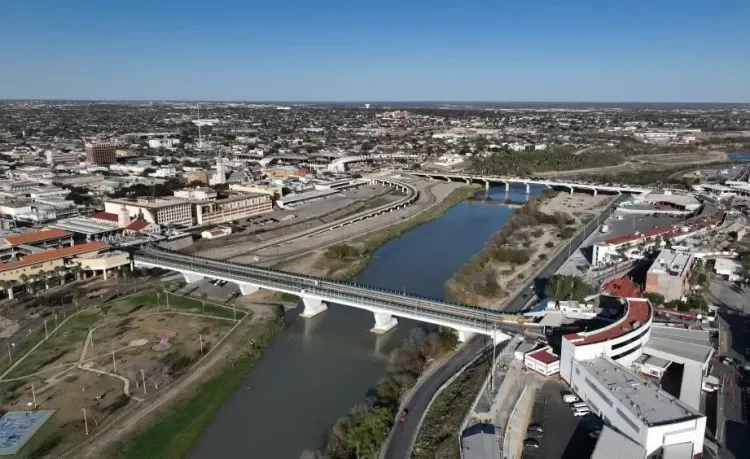
Washington has effectively zipped up a one-nautical-mile airspace corridor along the entire US-Mexico border, banning unauthorised drones up to 400 feet. With three federal departments — Transportation, Homeland Security, and Defence — signing on together, this is less a routine FAA ruling and more a national security declaration about the cartel drone threat.
Key Takeaways
The US imposed a temporary flight restriction on unauthorised drones along the Mexico border , effective 17 October 2025 .
The restriction covers airspace up to 400 feet above ground level within one nautical mile north of the international boundary.
The departments of Transportation, Homeland Security, and Defence jointly announced the measure.
The initiative targets security risks from drones linked to cartel smuggling and other illicit cross-border activity.
The US-Mexico border spans approximately 2,000 miles ; no end date for the restriction has been announced.
Legitimate operators must obtain authorisation before flying within the restricted zone.
The United States has imposed a new temporary flight restriction on unauthorised drone operations along its southern border with Mexico, effective 17 October 2025, in a move aimed at curbing security risks tied to cartel activity and cross-border smuggling. The departments of Transportation, Homeland Security, and Defence jointly announced the measure, marking a notable convergence of aviation, law enforcement, and national security authority over low-altitude airspace.
What the Restriction Covers
The temporary flight restriction prohibits unauthorised drone activity up to 400 feet above ground level within an area extending one nautical mile north of the international boundary. Drone operators wishing to fly within this defined corridor must obtain appropriate authorisation before conducting flights. The measure targets unmanned aircraft specifically; manned aviation and pre-approved operations are not affected under the terms announced.
Why Three Federal Departments Are Involved
The Federal Aviation Administration (FAA), which operates under the Department of Transportation, holds primary responsibility for managing American civil airspace. The participation of Homeland Security and the Department of Defence reflects the broader law enforcement and national security dimensions of the initiative — a signal that Washington views the drone threat along the border as exceeding a routine aviation-safety issue. The agencies stated the restrictions would support ongoing border operations and reduce risks to federal personnel carrying out enforcement duties.
The Cartel Connection and Broader Context
The announcement comes amid persistent concerns about criminal organisations exploiting inexpensive commercially available drones for cross-border smuggling and reconnaissance. According to the administration, the restrictions form part of a wider effort to address security threats associated with cartel operations. However, the announcement did not provide a comprehensive count of unauthorised drones recently detected along the border, nor did it assert that every unauthorised drone in the region is definitively linked to criminal networks. The US-Mexico land border stretches approximately 2,000 miles, making consistent surveillance and inter-agency coordination major components of any enforcement strategy.
Growing Counter-Drone Challenge
The growing availability of low-cost drones has complicated security planning for law enforcement and military agencies alike. Counter-drone systems increasingly combine detection, electronic monitoring, and other technologies to identify and respond to unauthorised aircraft. Notably, this restriction expands a pattern of federal measures to manage low-altitude airspace in zones where aviation safety, law enforcement, and national security concerns converge — a challenge that has intensified globally as drone hardware becomes cheaper and more capable.
What Comes Next
The agencies have not specified an end date for the temporary restriction, nor outlined the exact authorisation process for legitimate commercial, recreational, or public safety operators who routinely fly in the border region. Industry observers and civil liberties groups are expected to scrutinise both the duration of the measure and its impact on lawful drone activity. The administration is likely to frame any extension as part of its continued emphasis on drug interdiction and the disruption of transnational criminal networks.
Point of View
Homeland Security, and Defence is the real story here — it signals that the drone threat on the southern border has been elevated from an FAA nuisance problem to a national security priority. But the administration's own announcement quietly concedes a critical evidentiary gap: it cannot confirm how many unauthorised drones have been detected, nor that all of them belong to cartels. Blunt airspace bans risk penalising the growing ecosystem of legitimate commercial and agricultural drone operators in border states. The durability of this measure — and whether it translates into actual interdictions — will define whether it is serious policy or a headline designed to reinforce a border-security narrative.
NationPress
17 Oct 2026
Frequently Asked Questions
What is the new US drone restriction along the Mexico border?
The US has imposed a temporary flight restriction prohibiting unauthorised drone operations up to 400 feet above ground level within one nautical mile north of the US-Mexico international boundary. Drone operators must obtain appropriate authorisation before flying in this zone.
Why has the US restricted drones along the southern border?
The measure is intended to reduce security risks from unmanned aircraft near sensitive border operations, particularly threats linked to cartel smuggling and cross-border illicit activity. The administration says it forms part of a broader effort to disrupt transnational criminal networks.
Which US government agencies are enforcing the drone restriction?
The departments of Transportation, Homeland Security, and Defence jointly announced the measure. The Federal Aviation Administration, under the Transportation Department, holds primary authority over civil airspace, while Homeland Security and Defence cover law enforcement and national security dimensions.
Does the restriction affect legitimate drone operators?
Yes, any drone operator — commercial, recreational, or public safety — wishing to fly within the restricted corridor must obtain prior authorisation. The announcement did not detail the specific authorisation process or confirm how long the restriction will remain in force.
How long is the US-Mexico border where the restriction applies?
The US-Mexico land border stretches approximately 2,000 miles. The new restriction applies as a one-nautical-mile-wide corridor along the entire international boundary, making it a large-scale airspace management challenge for federal agencies.