MP CM's Office: RTE opens private school doors for poor kids
Synopsis
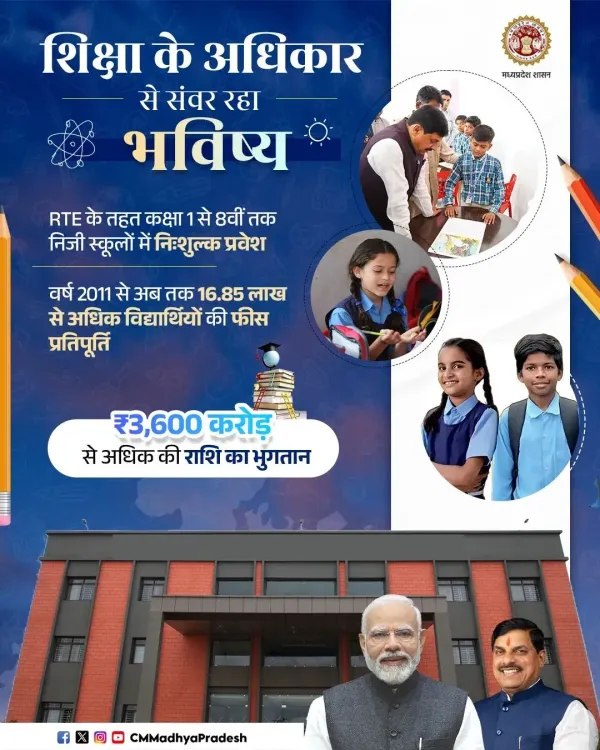
The Chief Minister's Office of Madhya Pradesh has spotlighted the Right to Education Act's 25% private-school quota, affirming that children from economically weaker sections are accessing free education in private institutions under CM Dr. Mohan Yadav's government.
Key Takeaways
The Chief Minister's Office of Madhya Pradesh reaffirmed the state's use of the Right to Education Act (RTE) to place poor children in private schools free of charge.
The RTE Act, 2009 mandates a 25% reservation in private unaided schools for children from economically weaker and disadvantaged sections.
Section 12(1)(c) of the Act governs these reservations; states must operationalise the quota and reimburse private schools.
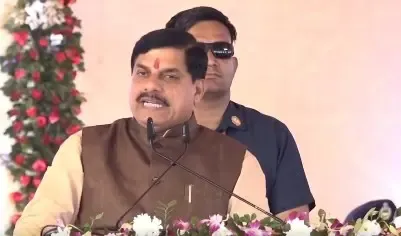
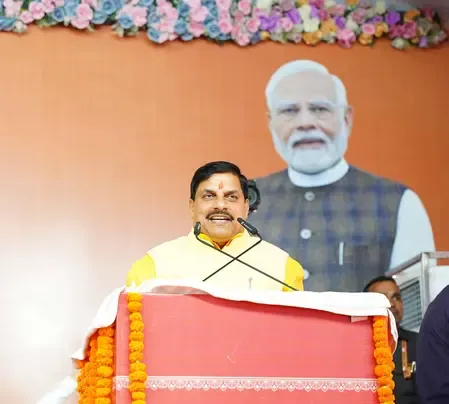
Mohan Yadav (in power since December 2023 ) was directly tagged in the post, signalling top-level political ownership of the education outreach.
Madhya Pradesh has periodically highlighted RTE compliance and reimbursement mechanisms as part of its education-access narrative.
Every child deserves a classroom — and in Madhya Pradesh, the Right to Education Act is making that promise real for thousands of children from the poorest families. The Chief Minister's Office of Madhya Pradesh posted on X on Saturday, October 17, 2026, highlighting how the RTE framework is channelling disadvantaged children into private schools at zero cost.
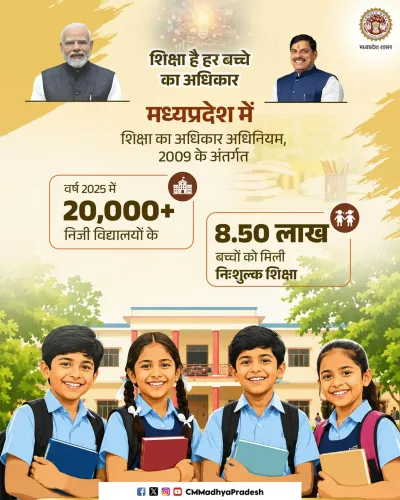
The post, shared alongside a tag to Chief Minister Dr. Mohan Yadav, declared: 'हर बच्चे को शिक्षा, हर बच्चे को आगे बढ़ने का अवसर' ('Education for every child, an opportunity for every child to move forward'). It underlined that through the Right of Children to Free and Compulsory Education Act (RTE), children from economically weaker and marginalised communities are receiving free seats in private schools across the state.
What RTE's 25% quota actually means on the ground
The Right of Children to Free and Compulsory Education Act, 2009 — a landmark piece of central legislation — obligates every private unaided school to reserve 25 percent of its entry-level seats for children from economically weaker sections (EWS) and disadvantaged groups. States are responsible for operationalising this provision and reimbursing private institutions for the cost of those seats. Madhya Pradesh has been among the states periodically highlighting its compliance with Section 12(1)(c) of the Act, which governs these reservations. For a family that cannot afford private-school fees, this quota is not a statistic — it is a child sitting in a classroom she would never otherwise enter. The state government's reimbursement mechanism ensures private schools are compensated, removing a key friction point that has historically slowed implementation in several states.Dr. Mohan Yadav's education push in MP
Dr. Mohan Yadav, who has served as Chief Minister of Madhya Pradesh since December 2023, represents the BJP government's emphasis on social-sector delivery. Spotlighting RTE implementation fits a broader pattern of the Madhya Pradesh government periodically amplifying education-access initiatives on public platforms — reinforcing both policy intent and political messaging around welfare delivery. The state education department's annual RTE seat allotments and reimbursement disbursals to schools remain the key metrics that will determine whether this public commitment translates into expanding enrolments on the ground.Point of View
Making periodic state-level reaffirmations politically meaningful but also a reminder that execution — measured in actual seat allotments and timely reimbursements — remains the real test. For CM Yadav, who inherited a large and complex state administration in late 2023, keeping education-access optics aligned with ground-level delivery is an ongoing challenge. The post signals intent; the state education department's data will ultimately tell the fuller story.
NationPress
17 Oct 2026
Frequently Asked Questions
What is the Right to Education Act and how does it help poor children in private schools?
The Right of Children to Free and Compulsory Education Act, 2009 mandates that every private unaided school reserve 25 percent of entry-level seats for children from economically weaker sections and disadvantaged groups, at no cost to the child. The state government reimburses private schools for these seats.
Who is CM Dr. Mohan Yadav and what is his role in MP's education policy?
Dr. Mohan Yadav has been the Chief Minister of Madhya Pradesh since December 2023 , representing the BJP government. He was tagged in the October 2026 post highlighting RTE implementation in the state.
Which section of the RTE Act covers private school reservations for EWS students?
Section 12(1)(c) of the Right of Children to Free and Compulsory Education Act, 2009 requires private unaided schools to admit children from economically weaker sections and disadvantaged groups in at least 25 percent of their entry-level seats.
Does Madhya Pradesh reimburse private schools for RTE quota students?
Yes. Under the RTE framework, state governments including Madhya Pradesh are required to reimburse private schools for the cost of seats occupied by EWS students admitted under the 25% quota.
When was the Right to Education Act passed in India?
The Right of Children to Free and Compulsory Education Act was enacted by the Indian Parliament in 2009 and states began operationalising its private-school quota provisions from 2010 onward.