MP CM Office: 8.50 Lakh Kids Get Free Education Under RTE 2025
Synopsis
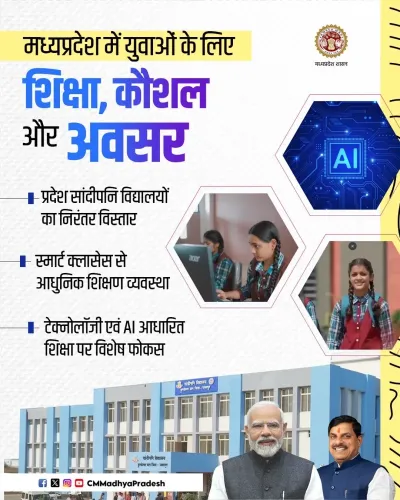
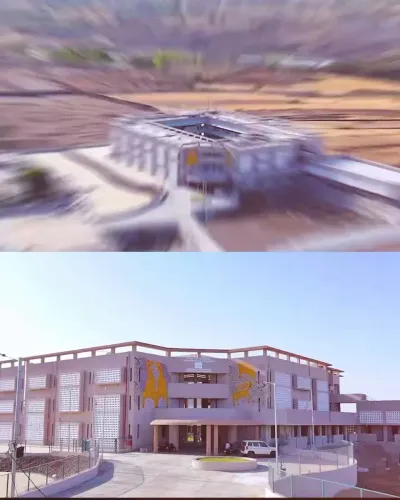
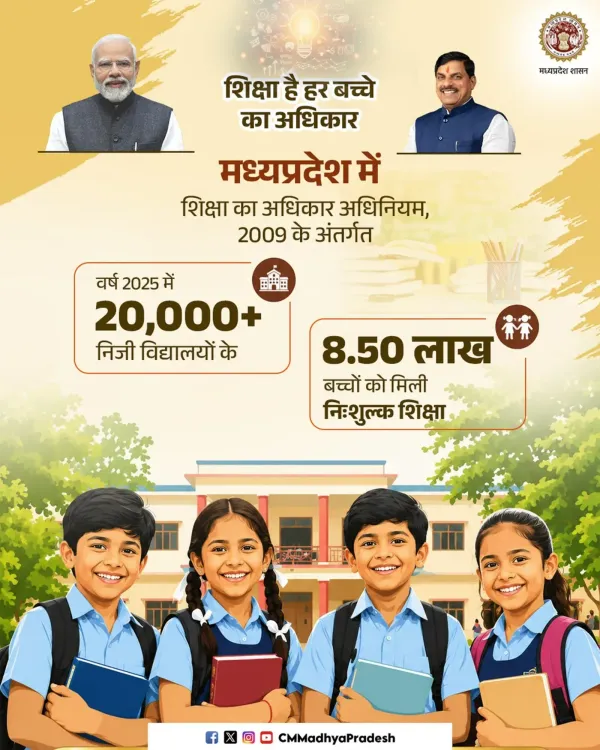
The Chief Minister's Office of Madhya Pradesh announced that over 8.50 lakh children accessed free education in more than 20,000 private schools under the Right to Education Act, 2009, during 2025 — one of the state's largest reported RTE beneficiary counts to date.
Key Takeaways
8.50 lakh children in Madhya Pradesh received free education under the RTE Act, 2009 in the year 2025 .
The benefit was delivered through over 20,000 private schools empanelled under the scheme across the state.
The RTE Act mandates a 25 percent reservation for economically weaker section students in private unaided schools under Section 12(1)(c).
Madhya Pradesh has been reimbursing private schools for RTE admissions since the 2010-11 academic year .
Mohan Yadav was directly tagged in the announcement, indicating political ownership of the milestone.
Independent verification of the figures is expected through upcoming UDISE+ data releases and legislative audit reports.
The Chief Minister's Office of Madhya Pradesh announced on Monday, 22 June 2026 that more than 8.50 lakh children have benefited from free education across over 20,000 private schools in the state under the Right to Education Act, 2009, during the year 2025.
Context
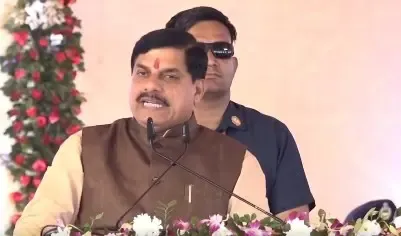
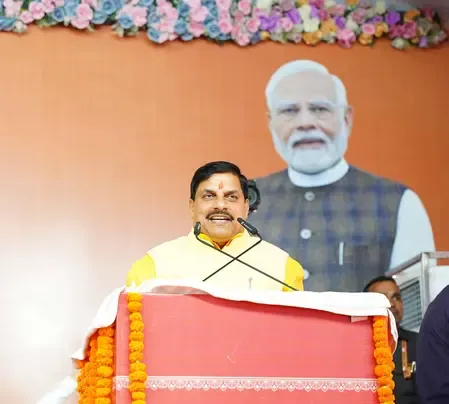
The official post from the Chief Minister's Office stated, 'शिक्षा के अवसर बढ़े, सपनों को नए पंख मिले' ('Educational opportunities have grown, dreams have found new wings'), underlining the state government's framing of the milestone as a transformational achievement for children from economically weaker sections. The announcement tags Chief Minister Dr. Mohan Yadav, signalling direct political ownership of the outcome.
Under Section 12(1)(c) of the Right of Children to Free and Compulsory Education Act, private unaided schools are mandated to reserve 25 percent of their seats for children from economically weaker sections and disadvantaged groups. The state government reimburses schools for these admissions from the education budget.
Policy Backdrop
The RTE Act was enacted by Parliament in 2009 to give legal force to Article 21A of the Constitution, which guarantees free and compulsory education to every child between the ages of 6 and 14. Madhya Pradesh began operationalising the reimbursement mechanism for private schools under this provision from the 2010-11 academic year onward.
Over the intervening years, the state has steadily expanded the number of empanelled private schools participating in the scheme. The figure of 20,000-plus private schools now reported represents one of the larger private-school networks mobilised for RTE implementation among Indian states, reflecting a public-private partnership model at scale.
Indian states have implemented the 25 percent EWS reservation clause at varying levels of compliance, with reimbursement flows often forming a significant line item in state education budgets. Madhya Pradesh has positioned itself among states reporting large beneficiary numbers in annual reviews, using private school capacity to supplement government school infrastructure in pursuit of universal elementary education goals.
Stakeholders and Impact
The primary beneficiaries are children from economically weaker sections and disadvantaged groups who gain access to private school education without bearing tuition costs. For many families, particularly in semi-urban and rural pockets of Madhya Pradesh, this represents access to schools with infrastructure and resources that government schools in their vicinity may not match.
Private school managements are the other key stakeholder group: they absorb the mandated seats and receive state reimbursements, making timely and adequate reimbursement a recurring concern for school associations. The scale of 8.50 lakh beneficiaries across 20,000-plus schools implies a substantial reimbursement obligation on the state exchequer.
What's Next
Analysts tracking the scheme will look to the release of updated UDISE+ enrollment data and state-level RTE reimbursement audit reports in upcoming Madhya Pradesh Legislative Assembly sessions to independently corroborate the beneficiary figures and assess the adequacy of reimbursements to participating schools.
CM Dr. Mohan Yadav's government is expected to use this milestone in its broader education narrative ahead of future policy reviews, with the numbers likely to feature in budget presentations and scheme performance reports. The trajectory points to continued expansion of private school participation as a lever for meeting universal elementary education targets across the state.
Point of View
The CMO is clearly positioning this as a governance achievement under his leadership rather than routine administrative reporting. The announcement fits a broader pattern of BJP-governed states using RTE implementation numbers as a measurable, citizen-facing metric of social welfare delivery. The credibility of the claim, however, will ultimately rest on forthcoming UDISE+ data and reimbursement audit findings, which will determine whether the numbers reflect sustained enrollment or administrative headcounts.
NationPress
20 Sept 2026
Frequently Asked Questions
How many children benefited from free education in Madhya Pradesh under RTE in 2025?
According to the Chief Minister's Office of Madhya Pradesh, over 8.50 lakh children received free education under the Right to Education Act, 2009 in the year 2025.
How many private schools in MP are part of the RTE scheme?
The Chief Minister's Office stated that more than 20,000 private schools in Madhya Pradesh provided free education under the RTE Act in 2025.
What is the Right to Education Act 2009?
The Right of Children to Free and Compulsory Education Act, 2009 is a central law guaranteeing free and compulsory education to children aged 6 to 14 and mandating that private unaided schools reserve 25 percent of seats for economically weaker section students.
Who is the Chief Minister of Madhya Pradesh?
Dr. Mohan Yadav has been the Chief Minister of Madhya Pradesh since December 2023 .
Does the Madhya Pradesh government pay private schools for RTE admissions?
Yes, Madhya Pradesh reimburses private schools for seats filled under the RTE's EWS reservation clause, a practice the state has followed since the 2010-11 academic year .