CM Yogi's Nomadic Board to Map, Uplift Forgotten Communities
Synopsis
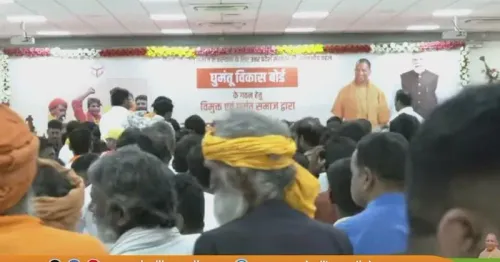
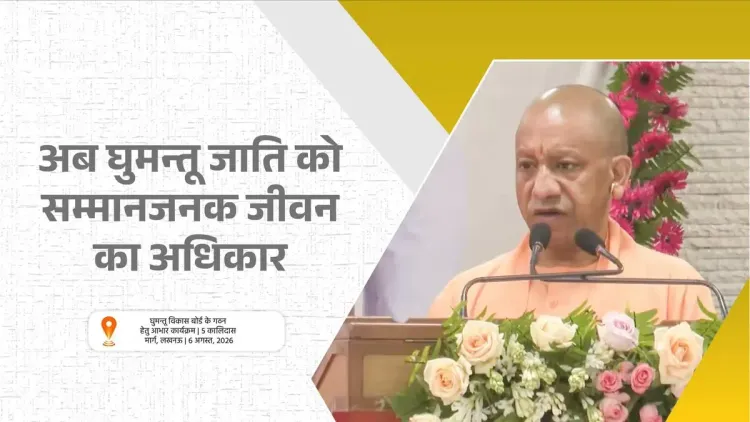
The Uttar Pradesh Ghumantu Vikas Board will identify nomadic and semi-nomadic communities across the state and connect them to existing government welfare schemes, Chief Minister Yogi Adityanath announced on 6 August 2026, targeting historically excluded groups.
Key Takeaways
The Uttar Pradesh Ghumantu Vikas Board will survey and identify multiple nomadic and semi-nomadic castes across the state.
CM Yogi Adityanath made the announcement on 6 August 2026 via the official Chief Minister's Office account.
The board's primary mandate is scheme-linkage — connecting identified families to existing housing, scholarship, and skill-development programmes.
The initiative follows a pattern of community-specific development boards established by the UP government between 2017 and 2022 .
Nomadic and denotified communities have historically been excluded from welfare due to lack of fixed addresses and official documentation.
Specific castes to be covered, the board's formal establishment date, and any new budget allocation have not yet been officially announced.
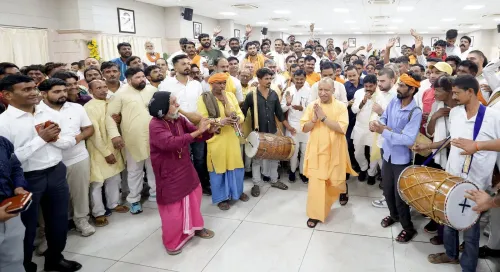
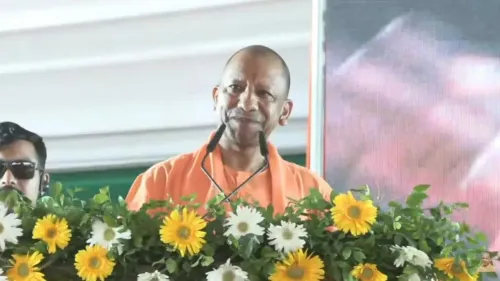
Millions of nomadic and semi-nomadic families in Uttar Pradesh have long slipped through the cracks of government welfare — no fixed address, no records, no benefits. Chief Minister Yogi Adityanath is now moving to change that, announcing on 6 August 2026 that the Uttar Pradesh Ghumantu Vikas Board will identify multiple communities and actively connect them to state welfare schemes, raising their standard of living.
The Chief Minister's statement, shared by the Chief Minister's Office of Uttar Pradesh, reads: 'Uttar Pradesh Ghumantu Vikas Board anek jaatiyon ko chihnitkar unhe shasan ki vibhinn yojanaon se laabhanvit karte hue unke jeevanstar ko behtar banane ka prayas karega' — 'The Uttar Pradesh Nomadic Development Board will identify several castes, benefit them through various government schemes, and work to improve their standard of living.'
Who the Ghumantu Vikas Board Is Meant to Reach
Nomadic and semi-nomadic communities — historically categorised as denotified tribes — have faced a structural paradox for decades: welfare schemes require documentation, and documentation requires a fixed address that a travelling community rarely has. The result is near-total exclusion from housing subsidies, scholarships, skill-development programmes, and health coverage.
The Uttar Pradesh Ghumantu Vikas Board is a state-level body designed specifically to break this cycle — first by surveying and identifying eligible families, then by acting as a bridge to existing state and central welfare pipelines rather than creating entirely new spending lines.
UP's Pattern of Community-Specific Boards
This is not the Yogi Adityanath government's first move of this kind. Between 2017 and 2022, the Uttar Pradesh administration established several caste and community-specific development boards, each tasked with mapping beneficiaries who had previously fallen outside formal lists. The Ghumantu board follows that same template — identification first, scheme-linkage second.
The approach mirrors efforts in other Indian states that have created dedicated institutional mechanisms for denotified and nomadic tribes, recognising that the bottleneck is rarely the scheme itself but the absence of the community in any official record.
Key details — including the board's formal establishment date, the specific castes to be surveyed, and any fresh budget allocation or convergence with central government schemes for denotified tribes — are yet to be officially released.
For communities that have spent generations invisible to the state, a board that begins with the act of simply counting them may be the most consequential first step of all.
Point of View
Simultaneously addressing a genuine welfare gap and consolidating support among groups that have felt ignored by previous regimes. The identification-first approach is administratively sound — you cannot deliver benefits to people the state cannot find — but the real test will be whether the board moves beyond enumeration to measurable improvements in beneficiary enrolment. For the BJP in Uttar Pradesh, visible outreach to denotified and nomadic tribes also carries electoral logic, as these communities span caste lines and geographic regions in ways that cut across traditional vote-bank arithmetic.
NationPress
6 Aug 2026
Frequently Asked Questions
What is the UP Ghumantu Vikas Board?
The Uttar Pradesh Ghumantu Vikas Board is a state-level body set up to identify nomadic and semi-nomadic communities in UP and connect them to government welfare schemes covering areas such as housing, scholarships, and skill development.
What did CM Yogi Adityanath announce about nomadic communities?
On 6 August 2026, CM Yogi Adityanath announced that the UP Ghumantu Vikas Board will identify several nomadic and semi-nomadic castes and work to improve their living standards by linking them to various state welfare schemes.
Which communities will the UP Ghumantu Vikas Board help?
The board targets nomadic, semi-nomadic, and denotified tribal communities in Uttar Pradesh — groups historically excluded from welfare benefits due to lack of fixed addresses and official documentation.
How does the UP government plan to deliver welfare to nomadic tribes?
The Ghumantu Vikas Board will first survey and identify eligible families, then act as a bridge to channel existing state and central government schemes — such as housing subsidies, scholarships, and skill programmes — to these communities.
Has the Yogi government created similar boards before?
Yes. Between 2017 and 2022, the Uttar Pradesh government established several caste and community-specific development boards to bring previously unregistered groups into the formal beneficiary system.