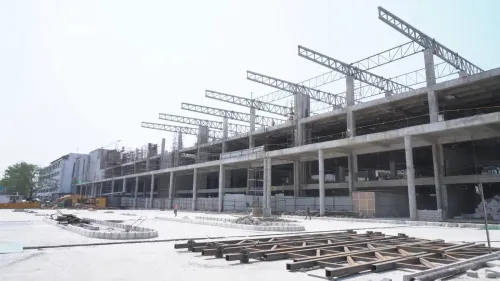
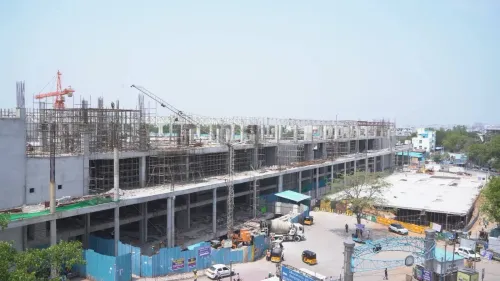
Kishan Reddy: ₹40,769 Cr Rail Push Reshaping Telangana
Synopsis
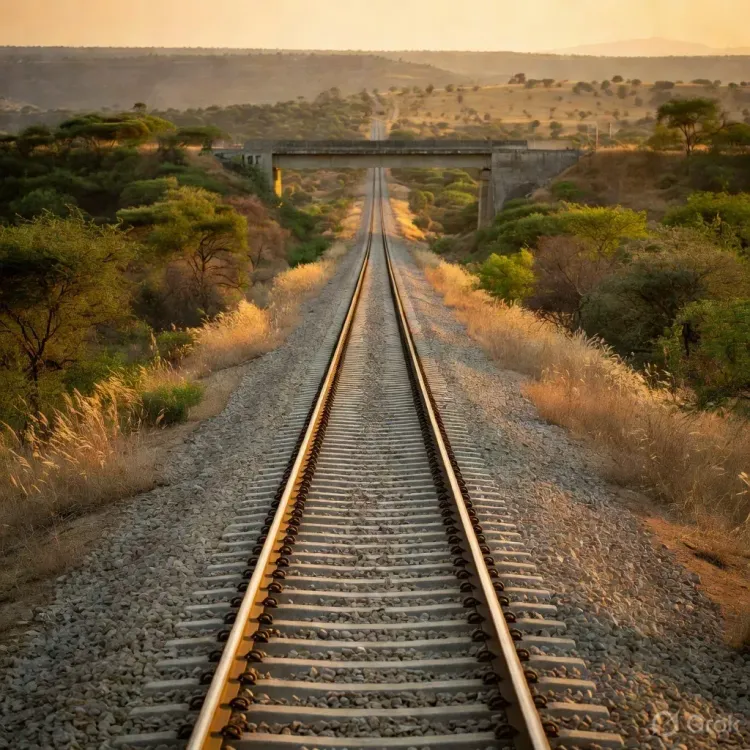
Union Minister G. Kishan Reddy highlights 21 railway projects worth ₹40,769 crore underway in Telangana, including 6 new lines and 15 doubling works spanning 2,347 km, with 677 km already commissioned and 118 safety bridges sanctioned.
Key Takeaways
21 railway projects worth ₹40,769 crore are currently under execution across Telangana.
The portfolio covers 6 new railway lines and 15 track-doubling projects spanning 2,347 km .
By March 2026 , 677 km had been commissioned with ₹12,105 crore spent.
Key projects include the Secunderabad–Wadi 3rd and 4th Lines and the Malkangiri–Pandurangapuram via Bhadrachalam New Line .
888 km of new tracks have been commissioned in Telangana between 2014 and 2026 .
118 ROBs and RUBs worth ₹4,883 crore have been sanctioned to eliminate level crossings.
Twenty-one major railway projects worth ₹40,769 crore are simultaneously under execution across Telangana — a scale of rail investment the state has rarely seen in a single window. Union Coal and Mines Minister G. Kishan Reddy, who also serves as BJP Telangana state president, laid out the full sweep of the expansion in a post on Thursday, 6 August 2026, crediting the momentum to the leadership of Prime Minister Narendra Modi.
21 Projects, 2,347 km, Six Brand-New Lines
The active project portfolio spans 6 new railway lines and 15 track-doubling works covering 2,347 km of corridor. By March 2026, 677 km of this network had already been commissioned, with an expenditure of ₹12,105 crore already out the door. That means roughly a third of the sanctioned outlay has translated into tracks on the ground — a commissioning pace that signals operational urgency, not just budgetary ambition.
Three projects anchor the headline list. The Secunderabad–Wadi 3rd and 4th Railway Lines will add critical capacity on one of the busiest corridors feeding into Hyderabad. The Munirabad–Mahabubnagar New Line opens fresh rail access to a district that has historically relied on road freight. Most striking geographically is the Malkangiri–Pandurangapuram via Bhadrachalam New Line, which stitches together a tribal-belt corridor straddling Telangana and Odisha — a route with both economic and strategic significance.
888 km Commissioned Since 2014 — and 118 Bridges to Eliminate Level Crossings
Reddy's post frames the current push inside a longer arc: 888 km of new railway tracks commissioned in Telangana between 2014 and 2026. That twelve-year figure coincides precisely with the formation of Telangana as a state and the start of the NDA government at the Centre — a political alignment Reddy, as BJP's state unit chief, is clearly keen to highlight.
Alongside the new tracks, 118 Road Over Bridges and Road Under Bridges (ROBs/RUBs) worth ₹4,883 crore have been sanctioned across the state. Level-crossing eliminations are among the highest-impact safety interventions Indian Railways undertakes — each ROB or RUB removes a collision point from the network permanently. At 118 structures across a single state, the scale is substantial.
Why the Corridor Math Matters Beyond Telangana
Southern India's rail network has long been capacity-constrained relative to the freight and passenger volumes it carries. Track doubling on saturated corridors directly improves punctuality and unlocks freight throughput — the kind of gain that shows up in logistics costs for manufacturers and in travel time for millions of daily commuters. The Bhadrachalam corridor, once complete, would also improve connectivity to one of the country's most underserved forest-belt regions.
India's national railway capital expenditure has climbed sharply since 2014, and Telangana's project list is a state-level expression of that national trend. Whether the March 2026 commissioning targets hold — and whether the remaining outlay flows on schedule — will determine how much of the ambition converts into daily operational reality.
For a state that turns twelve this year, the rail map being drawn right now may define its economic geography for the next generation.
Point of View
He ties Telangana's rail growth directly to the Modi government's tenure — a framing that serves BJP's state-unit narrative ahead of any future election cycle. The emphasis on new lines into tribal and underserved corridors (Bhadrachalam, Malkangiri) also signals an attempt to broaden the party's geographic footprint beyond urban Hyderabad. Nationally, the post fits a pattern of central ministers using state-level infrastructure data to reinforce the 'Viksit Bharat' brand, with railway capex as the most visible and quantifiable proof point. Whether on-ground commissioning pace sustains the political narrative will depend on how the remaining ₹28,000-plus crore in pending outlay moves through the next two budget cycles.
NationPress
20 Sept 2026
Frequently Asked Questions
How many railway projects are underway in Telangana in 2026?
21 major railway projects worth ₹40,769 crore are currently under execution in Telangana, comprising 6 new lines and 15 track-doubling works covering 2,347 km.
What is the Malkangiri–Pandurangapuram via Bhadrachalam New Line?
It is a new railway line project that will connect Malkangiri and Pandurangapuram via Bhadrachalam , opening rail access to a tribal-belt corridor straddling Telangana and Odisha.
How many kilometres of railway track have been commissioned in Telangana since 2014?
888 km of new railway tracks have been commissioned in Telangana between 2014 and 2026 , according to Union Minister G. Kishan Reddy.
What are ROBs and RUBs and how many have been sanctioned in Telangana?
Road Over Bridges (ROBs) and Road Under Bridges (RUBs) eliminate dangerous level crossings. 118 such structures worth ₹4,883 crore have been sanctioned across Telangana.
What is the Secunderabad–Wadi railway line project?
The Secunderabad–Wadi 3rd and 4th Railway Lines project adds two additional tracks to one of the busiest corridors feeding into Hyderabad, significantly increasing capacity on that route.