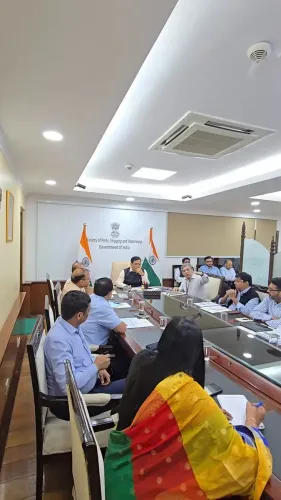
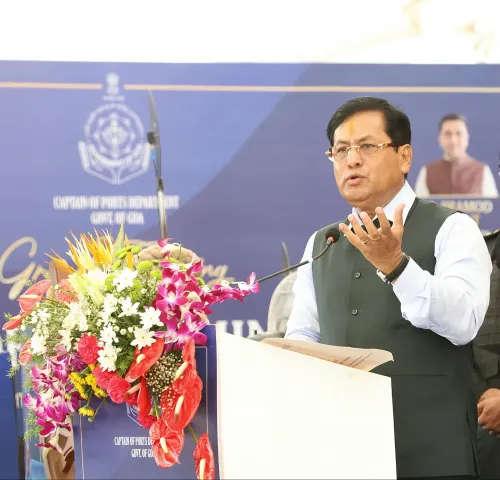
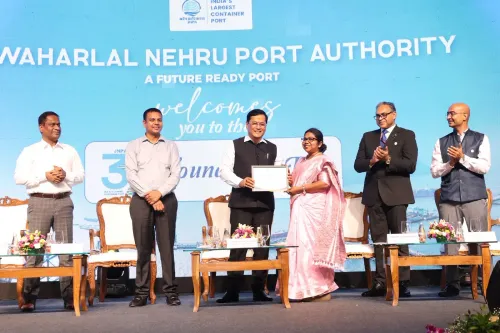
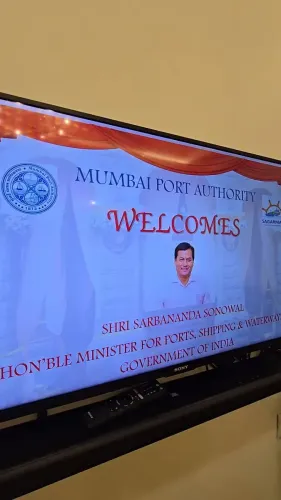
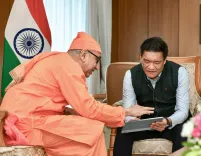
Sonowal addresses National Port Security Conference 2026 in Delhi
Synopsis
Union Minister Sarbananda Sonowal addressed the 2nd National Port Security Conference 2026 in New Delhi on August 6, calling for a secure, resilient and technology-driven maritime ecosystem as central to India's trade ambitions and the Viksit Bharat vision for 2047.
Key Takeaways
Sarbananda Sonowal addressed the 2nd National Port Security Conference 2026 in New Delhi on August 6, 2026 .
The minister called for a 'secure, resilient and technology driven port and maritime ecosystem' as the foundation for safe trade and economic progress.
India's maritime policy rests on two key frameworks: the Sagarmala Project (2015) and Maritime India Vision 2030 (2021).
Port security is positioned as integral to the government's #ViksitBharat goal of a developed India by 2047 .
Follow-up announcements on technology deployment mandates and new security guidelines for major ports are expected from the conference.
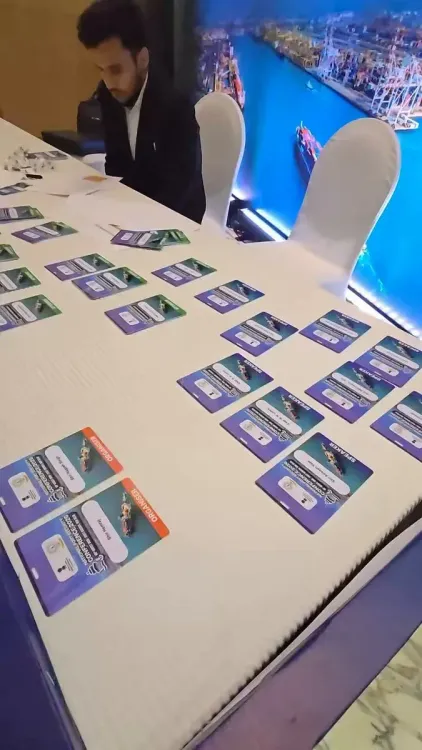
Port security is no longer a niche concern — it is the frontline of India's economic ambitions. Union Minister of Ports, Shipping and Waterways Sarbananda Sonowal addressed the 2nd National Port Security Conference 2026 in New Delhi on Thursday, August 6, framing maritime security as the bedrock on which India's trade future will be built.
Why port security is now a national priority
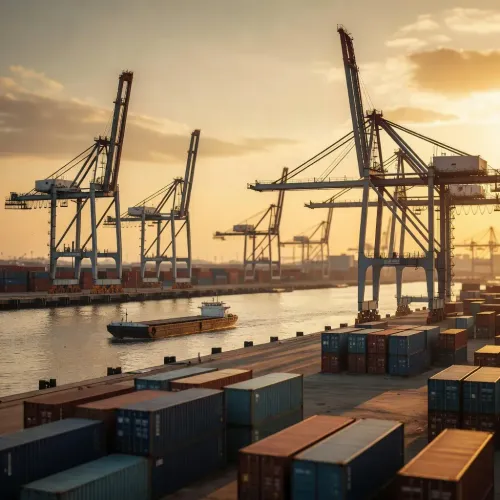
India's coastline stretches over 7,500 kilometres, and its major ports handle the bulk of the country's merchandise trade by volume. As cargo throughput climbs and new logistics corridors come online, the vulnerabilities at these gateways scale in parallel. Sonowal's address placed technology-driven resilience at the centre of the government's response — calling for a 'secure, resilient and technology driven port and maritime ecosystem' as the foundation for safe trade and economic progress.
The conference is one of the few dedicated national forums where port authorities, maritime security agencies and shipping stakeholders converge to align on threats, standards and deployments. Its second edition signals that the government is treating this not as a one-off exercise but as an evolving institutional conversation.
Sagarmala, Maritime Vision 2030 and the security thread running through both
The policy architecture behind today's push goes back more than a decade. The Sagarmala Project, launched in 2015, set out to modernise India's ports and unlock port-led development along the coastline. Maritime India Vision 2030, released in 2021, sharpened those targets — expanding port capacity, deepening connectivity and explicitly incorporating maritime security as a pillar, not an afterthought.
What Sonowal articulated on Thursday is the logical next layer: as the infrastructure scales, the security architecture must scale with it. A port that cannot guarantee the integrity of its supply chain is a liability, not an asset — and India's #ViksitBharat vision for a developed India by 2047 cannot afford that liability.
What to watch after the conference
The real test of any security conference is what follows the closing address. Observers will be tracking whether the 2nd National Port Security Conference 2026 produces binding guidelines for technology deployment — surveillance systems, vessel-tracking integration, cybersecurity mandates — at India's major ports. Any such directives would have immediate implications for port authorities and the shipping companies that move goods through them.
If the government moves from framework to mandate, it would mark a meaningful shift from aspiration to enforcement in India's maritime security posture.
Point of View
Not merely logistical, asset — layering security mandates onto the capacity-expansion agenda of Sagarmala and Maritime India Vision 2030. Holding a second dedicated national conference signals institutional continuity rather than ad hoc policymaking. The framing around Viksit Bharat also serves a political function: anchoring port security within a 2047 civilisational narrative gives the government a long runway to claim credit for incremental progress. The real signal to watch is whether this conference produces enforceable technology standards — that would distinguish it from previous forums that generated declarations without binding follow-through.
NationPress
6 Aug 2026
Frequently Asked Questions
What is the National Port Security Conference 2026?
The National Port Security Conference 2026 is a government-convened forum in New Delhi where port authorities, maritime agencies and shipping stakeholders align on security threats, standards and technology deployments. Its second edition was addressed by Union Minister Sarbananda Sonowal on August 6, 2026.
What did Sarbananda Sonowal say at the port security conference?
Sonowal called for a 'secure, resilient and technology driven port and maritime ecosystem' as the foundation for safe trade, economic progress and India's Viksit Bharat vision, while noting that strengthening port security is central to the government's agenda.
What is the Sagarmala Project and how does it relate to port security?
The Sagarmala Project, launched in 2015, is a central government initiative for port-led development and modernisation of India's coastline. Port security upgrades are integrated into its broader mandate of expanding capacity and connectivity.
What is Maritime India Vision 2030?
Maritime India Vision 2030, released in 2021, sets targets for port capacity expansion, improved connectivity and maritime security, treating security as a core pillar of India's maritime growth strategy.
What is Viksit Bharat and why is it linked to port security?
Viksit Bharat is the government's vision for India to become a fully developed nation by 2047. Port security is linked to it because maritime gateways handle the bulk of India's trade, making their security essential to sustained economic growth.