CM Fadnavis Attacks Opposition Over 'Regime Change' Remark on SIR
Synopsis
Maharashtra CM Devendra Fadnavis accused the opposition of seeking 'regime change' rather than democratic electoral victory, defending the Election Commission's Special Intensive Revision of voter rolls and framing opposition to SIR as an attack on democracy itself.
Key Takeaways
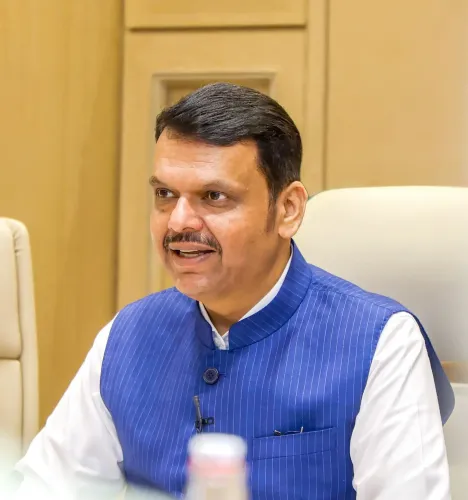
CM Devendra Fadnavis posted a sharp attack on the Maharashtra opposition on October 17, 2026 , accusing them of seeking 'regime change' outside democratic means.
He linked opposition criticism of the Special Intensive Revision (SIR) of electoral rolls to what he called an anti-democracy agenda.
Fadnavis argued that opponents lack the electoral strength to win legitimate votes and are therefore resorting to regime-change rhetoric.
The Election Commission of India's SIR process periodically updates voter lists across states — a mechanism ruling parties have consistently defended.
Fadnavis posed a direct choice to Maharashtra voters: democracy or those who oppose its institutions.
The post was accompanied by hashtags #SIR , #Maharashtra , and #ElectionCommission , indicating a coordinated messaging push.
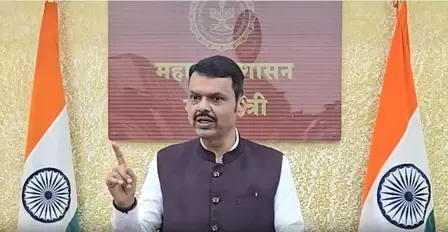
When an opponent's own words become a political weapon, the accusation writes itself. On Saturday, October 17, 2026, Maharashtra Chief Minister Devendra Fadnavis launched a sharp broadside on social media, accusing the opposition of revealing its true intent — not electoral victory, but a forced 'regime change' — after remarks surfaced that he says expose a contempt for democracy itself.
Posting in Marathi, Fadnavis framed the controversy around the Special Intensive Revision (SIR) of electoral rolls, a process overseen by the Election Commission of India. His argument was pointed: 'लोकशाही मार्गाने पात्र मतदारांच्या मताच्या माध्यमातून निवडून येण्याची शक्यता दूरदूरपर्यंत दिसत नसल्याने...' — 'Having no prospect of winning through the votes of eligible voters by democratic means, the truth has slipped from their mouths.'The 'Regime Change' Charge and What Fadnavis Says It Reveals
The Chief Minister's post is structured as a rapid-fire series of accusations, each one sharpening the last. Opposition to SIR, he argues, is not really about electoral rolls at all — it is, in his telling, a cover for opposing the democratic process itself. 'They do not want SIR because they want to change the regime,' he wrote. 'And since coming to power through elections is not possible, they speak the language of regime change.'
Fadnavis frames this as a binary choice for Maharashtra's voters: democracy, or those who speak the language of overthrowing it. 'Now we have to decide — do we want democracy, or those who talk of regime change? For democracy, there is no alternative to SIR,' he concluded.
SIR: The Electoral Roll Flashpoint
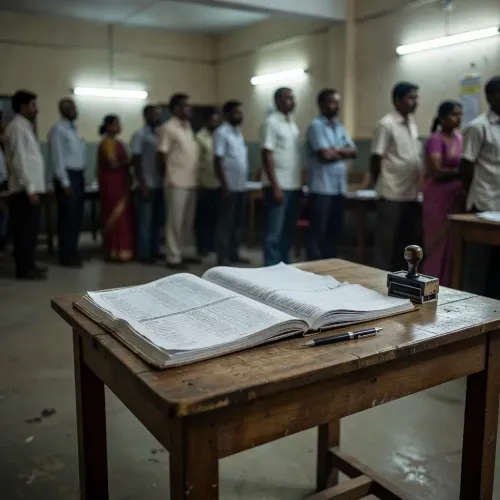
The Special Intensive Revision of electoral rolls is a periodic process through which the Election Commission of India updates voter lists — adding newly eligible voters, correcting errors, and removing duplicate or ineligible entries. The Election Commission has conducted such exercises across multiple states in successive election cycles as a standard mechanism for maintaining the integrity of the voter register.
In Maharashtra, as in other BJP-governed states, ruling parties have consistently defended such exercises as essential to free and fair elections. Opposition parties have at times pushed back, raising concerns about deletions of legitimate voters — a dispute that maps onto a long-running national debate about electoral integrity versus institutional bias.
A Calculated Political Strike Before the Next Cycle
Fadnavis's intervention is not merely a defence of a bureaucratic process. By anchoring opposition criticism of SIR to the phrase 'regime change,' he is attempting to recast the entire debate — from a procedural dispute about voter rolls into a question of constitutional loyalty. The rhetorical move is deliberate: tie an opponent's objection to a process to a more alarming vocabulary, and make voters choose between the two.
The hashtags #Maharashtra, #SIR, and #ElectionCommission signal that this messaging is designed to circulate widely, well beyond the immediate exchange that prompted it.
The real test of this framing will come when the Election Commission announces SIR implementation timelines — and when Maharashtra's opposition alliances decide how loudly and on what ground they choose to fight back.
Point of View
He shifts the debate away from the substantive questions around SIR (voter deletions, procedural fairness) and onto the safer, higher ground of democratic legitimacy. This tactic aligns with a recurring BJP playbook of defending Election Commission mechanisms as synonymous with democracy itself, making any critique of the process sound like a critique of elections. The intensity of the post, structured as a multi-point prosecution, suggests the opposition's remarks landed hard enough to warrant a coordinated pre-emptive response ahead of the next electoral cycle in Maharashtra.
NationPress
17 Oct 2026
Frequently Asked Questions
What is SIR in the context of Maharashtra elections?
SIR stands for Special Intensive Revision, a process by which the Election Commission of India updates electoral rolls — adding new eligible voters, correcting records, and removing ineligible or duplicate entries. It is a standard exercise conducted periodically across states.
Why is Devendra Fadnavis defending SIR?
CM Fadnavis has framed opposition criticism of SIR as an attack on the democratic process itself, arguing that those who oppose the voter roll revision do so because they cannot win through legitimate elections — and instead seek a 'regime change' by other means.
What did Fadnavis mean by 'regime change' in his post?
Fadnavis used the phrase 'regime change' to describe what he claims is the opposition's real goal — overthrowing the elected government through means other than democratic elections — after an opponent reportedly used similar language in public.
What is the Election Commission of India's role in this controversy?
The Election Commission of India is the constitutional body responsible for maintaining electoral rolls and conducting elections. Its SIR exercise is the procedural flashpoint at the centre of the dispute that Fadnavis addressed in his post.
What is the broader political context of this debate in Maharashtra?
Maharashtra has been a recurring battleground over electoral roll integrity, with ruling parties defending revision exercises as essential safeguards and opposition groups raising concerns about legitimate voter deletions. The debate mirrors a wider national argument about institutional trust in election management.