Smriti Irani hails ABVP's sweep in Odisha student polls
Synopsis
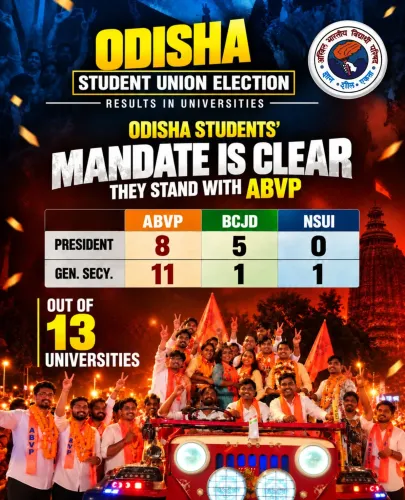
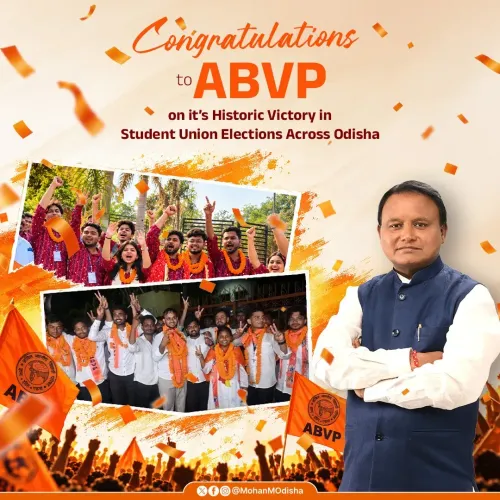
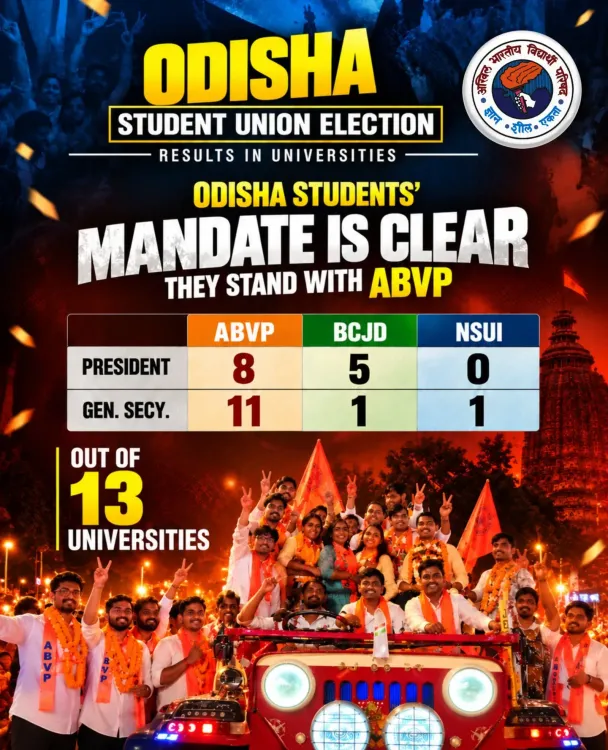
BJP leader Smriti Irani hailed ABVP's dominant performance in Odisha student union elections on 17 October 2026, calling it a clear youth mandate for nationalist ideology and a rebuke to forces she said were trying to spread anarchy among the young.
Key Takeaways
BJP leader Smriti Irani posted on X on 17 October 2026 celebrating ABVP 's victory in Odisha student union elections.
She described the result as an 'unambiguous mandate' of youth for a 'Nation First' ideology.
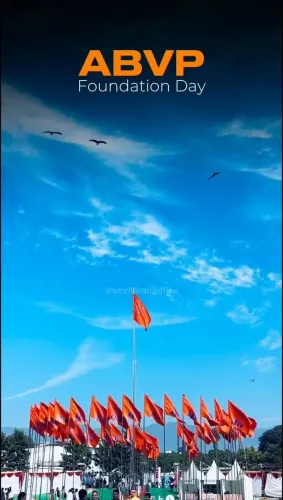
ABVP (Akhil Bharatiya Vidyarthi Parishad) was founded in 1948 and has ideological links to the RSS .
Irani's post framed the result as a message to those 'misleading youth to create anarchy.' Student union election outcomes in India are widely read as indicators of youth political sentiment ahead of mainstream elections.
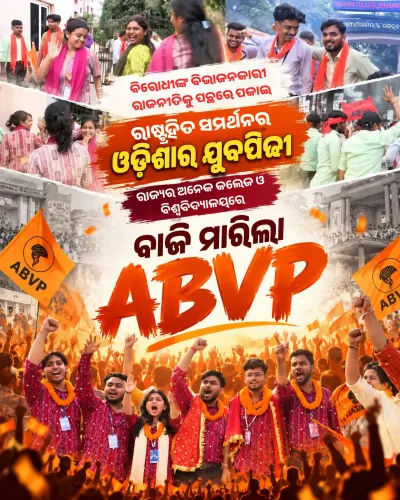
Odisha's university campuses have delivered a verdict — and BJP leader Smriti Irani was quick to read it as a generational statement. On Saturday, 17 October 2026, Irani took to X to celebrate a sweeping victory by the Akhil Bharatiya Vidyarthi Parishad (ABVP) in the recently concluded student union elections across Odisha, calling it an unambiguous mandate of the youth for a 'nation-first' ideology.
Irani's post, written in Hindi, declared: 'युवाशक्ति का संकल्प, राष्ट्रनिर्माण का विकल्प!' — 'The resolve of youth power, the alternative for nation-building!' She framed the ABVP result as a 'resounding victory' and a direct rejection of forces she accused of 'misleading youth to create an atmosphere of anarchy in the country.'
ABVP's long march through Odisha's campuses
Founded in 1948 and ideologically linked to the Rashtriya Swayamsevak Sangh (RSS), the ABVP has spent over seven decades building an institutional presence in Indian universities. Its track record in student union elections spans multiple states — and Odisha has emerged as a notable terrain in its eastern expansion. Irani extended 'heartfelt congratulations' to all ABVP workers for what she called a 'magnificent achievement.'
The organisation's wins are never just about campus governance. Student union elections in India have long functioned as a political barometer — an early-warning system for ideological shifts among first-time voters. When a nationalist student body sweeps a state's universities, party strategists on both sides pay close attention.
The message aimed beyond the campus gates
Irani's post carried a pointed political edge. She stated the result sends a 'clear message' to those attempting to spread confusion among the youth: 'भारत का युवा राष्ट्र प्रथम की विचारधारा के साथ खड़ा है' — 'India's youth stands with the ideology of Nation First.' The language signals that the BJP intends to position this campus result as part of a wider narrative ahead of any upcoming electoral contest.
Rival student organisations — particularly those linked to opposition parties — have contested ABVP's dominance on campuses for decades. The framing of this Odisha result as a rebuke to 'anarchy-mongers' suggests the political messaging will continue well past the campus notice boards.
India's youth — the world's largest — are not a monolith. But every time they vote, even in a student union, the country leans in to listen. Odisha just spoke. The question now is whether other states' campuses echo the same answer.
Frequently Asked Questions
What did Smriti Irani say about the Odisha student union elections?
Smriti Irani congratulated ABVP on its 'resounding victory' in Odisha student union elections, calling the result a clear youth mandate for a 'Nation First' ideology and a message against forces creating anarchy among the youth.
What is ABVP and which party is it associated with?
ABVP, or Akhil Bharatiya Vidyarthi Parishad, is a nationwide student organisation founded in 1948. It is ideologically linked to the Rashtriya Swayamsevak Sangh (RSS), which also informs the BJP's ideological base.
When were the Odisha student union elections held in 2026?
The exact dates of the individual election rounds were not specified in public record, but the results were celebrated by Smriti Irani on 17 October 2026.
Why do student union elections matter in Indian politics?
Student union elections are widely seen as early indicators of ideological preferences among young voters. Wins by student wings of major political organisations are often used by parties to claim momentum ahead of state or national elections.
How significant is Odisha for BJP's student politics?
Odisha is a strategically important eastern state where the BJP has actively expanded its presence. ABVP victories there strengthen the party's narrative of growing youth support in a region that was long dominated by regional parties.