CM Samrat Choudhary meets 3,000-km Nepal-to-Uttarakhand cycle yatra team
Synopsis
Bihar Chief Minister Samrat Choudhary met cyclists undertaking a ~3,000-km yatra from Janakpur Dham, Nepal to Uttarakhand, led by Padma Bhushan Dr. Anil Prakash Joshi, championing water conservation, river rejuvenation, and environmental protection.
Key Takeaways
Bihar CM Samrat Choudhary met the yatra team at Lok Sevak Avas, Patna on 17 October 2026 .
The cycle yatra covers approximately 3,000 kilometres , starting at Janakpur Dham, Nepal and ending in Uttarakhand .
The expedition is led by Padma Bhushan Dr.
Anil Prakash Joshi , founder of HESCO and a noted Himalayan ecologist.
The yatra's core message is 'Prakriti hi Prabhu hai' — Nature itself is God — with focus on water conservation, environmental protection, and river rejuvenation.
The route spans an international border, reflecting the shared ecological stakes of Indo-Nepal river basin communities.
The journey aligns thematically with national programmes such as Namami Gange (launched 2014 ) and the National Mission for Clean Ganga (established 2011 ).
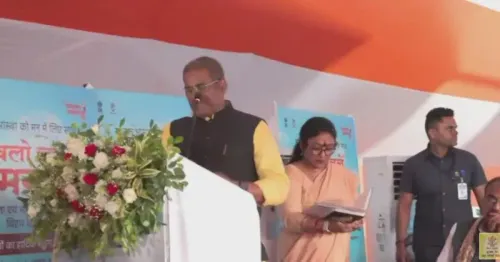
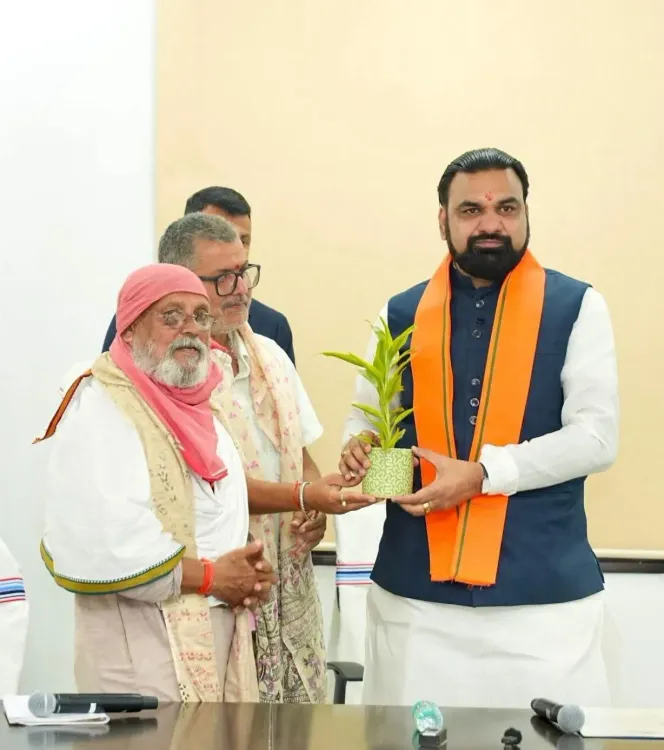
A group of cyclists carrying the message 'Prakriti hi Prabhu hai' — 'Nature itself is God' — pedalled their way into Patna on Saturday, 17 October 2026, and Bihar Chief Minister Samrat Choudhary made time for them. The CM met the yatra members at Lok Sevak Avas, Patna, honouring a remarkable journey that stretches nearly 3,000 kilometres from Janakpur Dham in Nepal all the way to Uttarakhand.
Padma Bhushan Dr. Anil Prakash Joshi's conservation ride
Leading the expedition is Padma Bhushan Dr. Anil Prakash Joshi, the Himalayan ecologist and founder of HESCO — an organisation with decades of work on sustainable mountain development. Dr. Joshi's choice to begin at Janakpur Dham, the Ramayana-linked cultural site in Nepal, is deliberate: it frames nature conservation within a civilisational and spiritual vocabulary that resonates deeply across the Gangetic plains. The route then cuts through Bihar before ascending into the Himalayas, tracing the very river systems the yatra is fighting to protect.
CM Choudhary described the initiative as 'praśaṃsanīya' — commendable — calling it a meaningful step toward water conservation, environmental protection, and river rejuvenation. Bihar, crisscrossed by major tributaries of the Ganga, sits squarely in the middle of this ecological story.
Why this route, why now
The cycle yatra straddles an international border — starting in Nepal and ending in an Indian Himalayan state — reflecting the shared fate of the sub-Himalayan river basin communities on both sides. The Ganga and its network of tributaries that flow through Bihar are also the focus of the Union government's flagship Namami Gange programme, launched in 2014, and the National Mission for Clean Ganga, established in 2011. The yatra draws on the same cultural-meets-conservation playbook that Indian environmental campaigns have used for decades: a long-distance journey, a religious touchstone, and a message simple enough to carry across hundreds of villages.
Indian environmental campaigns have long understood that a yatra — whether on foot or on two wheels — travels farther in public imagination than a policy paper ever can. At roughly 3,000 kilometres, this one does not lack for ambition.
Patna as a waypoint, not just a stopover
The CM's personal meeting at Lok Sevak Avas signals more than courtesy. Bihar is downstream of Himalayan glaciers and upstream of every water-security anxiety that climate change intensifies year by year. A state government blessing — even an informal one — adds political weight to what might otherwise be a civil-society gesture. Whether that translates into formal state commitments on water conservation or cross-border environmental cooperation with Nepal remains the next mile of this journey.
The riders still have Uttarakhand ahead of them. The harder climb — turning a 3,000-kilometre message into lasting policy — starts when the cycling stops.
Point of View
High-visibility signal that Bihar's political leadership is attentive to the growing public salience of river health and water security — issues that are not abstract in a state annually battered by Himalayan flood cycles and drought. By receiving the cyclists personally, Choudhary inserts Bihar into a narrative that connects Himalayan ecology to Gangetic plain governance, a frame increasingly useful as climate adaptation rises on the policy agenda. The cross-border dimension — Nepal to India — also carries quiet diplomatic resonance at a moment when India-Nepal water-sharing conversations continue to simmer. Whether this goodwill translates into concrete state action on river rejuvenation, or remains a photo-opportunity, will be the real measure of the moment.
NationPress
17 Oct 2026
Frequently Asked Questions
What is the Janakpur Dham to Uttarakhand cycle yatra?
It is a ~3,000-km cycle journey starting at Janakpur Dham in Nepal and ending in Uttarakhand, India, led by Padma Bhushan Dr. Anil Prakash Joshi to promote nature conservation, water conservation, and river rejuvenation under the message 'Prakriti hi Prabhu hai' (Nature itself is God).
Who is Dr. Anil Prakash Joshi?
Dr. Anil Prakash Joshi is a Padma Bhushan-awarded environmentalist and founder of HESCO, known for his work on Himalayan ecology and sustainable mountain development.
Why did Bihar CM Samrat Choudhary meet the cycle yatra members?
CM Choudhary met the yatra participants at Lok Sevak Avas, Patna on 17 October 2026 to encourage their initiative, calling it a commendable step toward water conservation, environmental protection, and river rejuvenation.
What is the significance of starting the yatra from Janakpur Dham in Nepal?
Janakpur Dham is a deeply significant religious and cultural site linked to the Ramayana. Starting there frames the conservation message within a civilisational and spiritual vocabulary, and reflects the shared ecological fate of Nepal and India's Himalayan river basin communities.
How does this yatra relate to India's river conservation programmes?
The yatra's goals align with national efforts such as the Namami Gange programme (launched 2014) and the National Mission for Clean Ganga (established 2011), both aimed at cleaning and rejuvenating the Ganga and its tributaries.