Pralhad Joshi warns opposition against exploiting India's youth
Synopsis
Union Minister Pralhad Joshi accused opposition parties on 17 October 2026 of exploiting India's youth to fuel 'political anarchy' and 'regime change' agendas, pledging the BJP will defend the next generation's future through stability, growth, and national sovereignty.
Key Takeaways
Union Minister Pralhad Joshi posted a sharp political warning on 17 October 2026 accusing the opposition of exploiting youth passion.
Joshi used the phrases 'political anarchy', 'regime change', and 'national sovereignty' — framing opposition mobilisation as a threat beyond normal democratic contest.
The BJP has deployed similar stability-versus-disruption rhetoric across multiple electoral cycles since 2014 .
No specific event, protest, or named opposition party was identified in the post — leaving the statement deliberately broad.
India's large youth population remains the central contested terrain for both the ruling coalition and the opposition.
The post signals the BJP intends to actively fight the narrative battle over who represents the interests of young Indians.
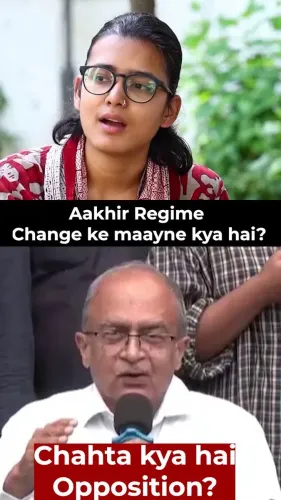
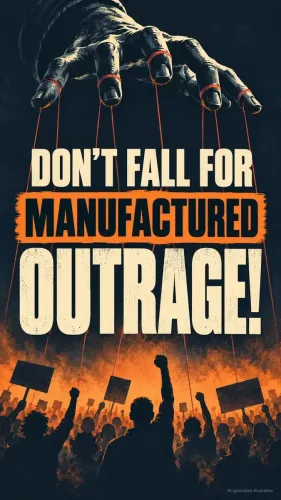
A sharp political warning landed on Saturday from Union Consumer Affairs and New and Renewable Energy Minister Pralhad Joshi, who accused opposition parties of cynically weaponising the passion of India's young population to advance what he called 'regime change' agendas — framing the ruling BJP's response as a defence of the next generation's future.
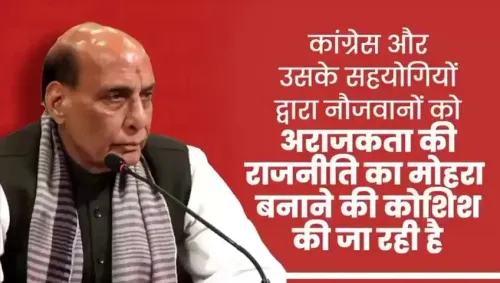
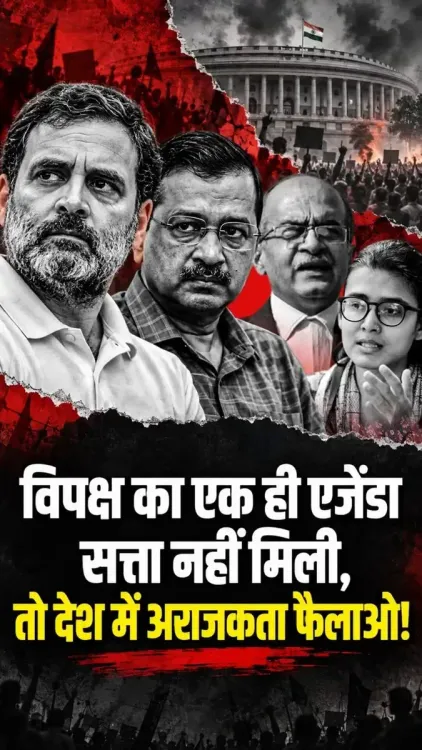
Posting on 17 October 2026, Joshi wrote: 'The opposition is trying to exploit the passion of our youth to fuel political anarchy and desperate regime change agendas. We will not let India's next generation pay the price for their hunger for power, our youth deserve a future built on stability, growth and national sovereignty.'
The accusation — and what it signals
The language Joshi deployed — 'political anarchy', 'regime change', 'national sovereignty' — is precise and deliberate. Each phrase does specific work: 'anarchy' frames opposition-led mobilisation as a breakdown of order rather than legitimate dissent; 'regime change' borrows Cold War vocabulary to imply foreign or extra-democratic interference; 'sovereignty' elevates what might otherwise be a domestic political dispute into a question of national security. Taken together, they position the BJP not as a political party defending its electoral mandate but as a structural guarantor of India's stability. This is a well-worn playbook for ruling-coalition figures. Since the BJP first came to power in 2014 under Prime Minister Narendra Modi, senior party leaders have consistently portrayed waves of street-level protest or opposition-coordinated campaigns as threats to growth and governance rather than expressions of democratic participation. Joshi's post fits that pattern cleanly — but the explicit mention of 'youth' signals that the mobilisation the party is currently watching is being driven, or at least fronted, by younger Indians.Why 'India's youth' is the contested terrain right now
India carries the world's largest youth population, and both ruling and opposition forces have invested enormous political capital in courting it. For the BJP, young Indians are the beneficiaries of schemes around jobs, skilling, and infrastructure — the growth story the party runs on. For the opposition, youth unemployment, economic precarity, and institutional grievances represent a genuine organising base. When Joshi says the opposition is 'exploiting' that passion, he is effectively contesting ownership of the narrative around young India's frustrations — insisting those frustrations are being manufactured or amplified for partisan gain, not responding to real conditions. The minister's assertion that the youth 'deserve a future built on stability, growth and national sovereignty' is simultaneously a rebuttal and a policy pitch: the BJP's offer is continuity and incremental progress; the opposition's offer, in this framing, is disruption and instability.What Joshi's post does not say — and why that matters
Joshi names no specific event, no particular protest, no named opposition leader or party. The post is calibrated to function as a broad political signal rather than a response to a single identifiable episode. That ambiguity is strategic: it allows the message to attach to any number of ongoing or emerging flashpoints while keeping the government above the specifics. Opposition leaders and youth-group spokespersons are likely to demand clarity — precisely which 'anarchy', and which 'agenda' — in the coming news cycle. The political battle over who speaks for India's youth is far from settled — and this post suggests the BJP intends to fight it hard.Point of View
Then plant the government's flag on 'stability' and 'sovereignty' — two words that reliably shrink the space for dissent by making protest sound unpatriotic. The explicit invocation of 'regime change' is notable; it elevates a domestic political fight to an almost geopolitical register, implying forces beyond the normal cut-and-thrust of Indian democracy are at work. This kind of language typically precedes a more sustained campaign — expect the framing to reappear in party communications, speeches, and campaign material in the months ahead. The opposition's challenge is to reclaim the youth narrative without walking into the 'anarchy' trap the BJP has carefully set.
NationPress
17 Oct 2026
Frequently Asked Questions
What did Pralhad Joshi say about the opposition and Indian youth?
On 17 October 2026 , Union Minister Pralhad Joshi posted that the opposition is 'trying to exploit the passion of our youth to fuel political anarchy and desperate regime change agendas', vowing the BJP will not let India's next generation pay the price for the opposition's 'hunger for power'.
Who is Pralhad Joshi?
Pralhad Joshi is a senior BJP leader from Karnataka serving as Union Minister of Consumer Affairs, Food and Public Distribution, and Minister of New and Renewable Energy in the Government of India.
What does 'regime change' mean in the context of Joshi's statement?
Joshi used 'regime change' to characterise opposition campaigns as attempts to topple the elected government through extra-electoral means — including street-level mobilisation of youth — rather than through legitimate democratic competition.
Why does the BJP focus on India's youth in political messaging?
India has the world's largest youth population, making young voters a decisive electoral bloc. Both the BJP and the opposition compete aggressively to frame their respective policies — jobs, skilling, economic growth versus accountability and institutional reform — as best serving young Indians' interests.
Has the BJP used this kind of stability-versus-anarchy framing before?
Yes. Senior BJP figures have consistently portrayed opposition-led protests and political campaigns as threats to India's stability and growth since the party came to power in 2014 , deploying similar language across multiple electoral cycles and periods of social-media-driven political mobilisation.