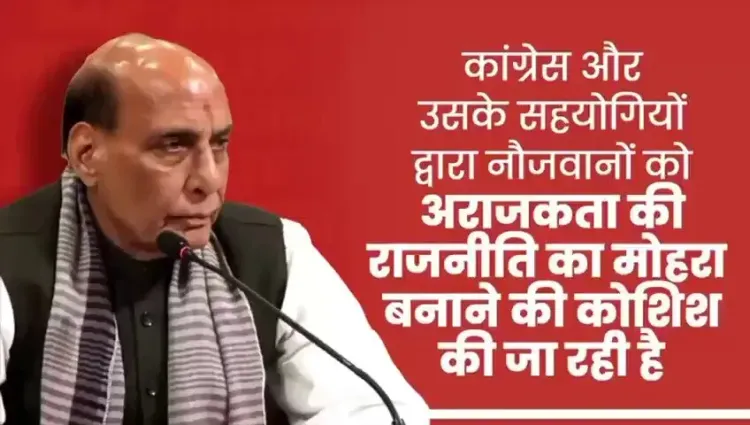
Pralhad Joshi warns against 'Regime Change' calls amid Delhi unrest
Synopsis
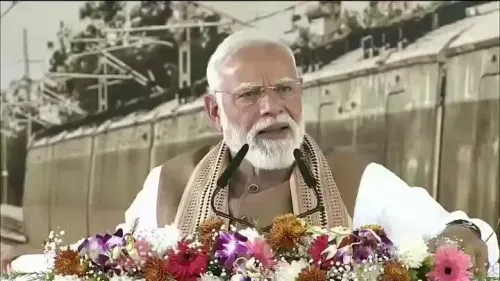
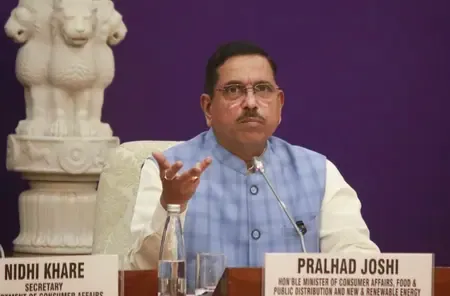
Union Minister Pralhad Joshi on October 16, 2026 cautioned that recent Delhi events reflect attempts to redirect youth energy toward destabilisation, flagging references to Bangladesh's 2024 upheaval as an inspiration for 'Regime Change' calls, and reaffirmed that democracy must operate through constitutional processes.
Key Takeaways
Minister Pralhad Joshi posted a stern warning on October 16, 2026 about recent political events in Delhi .
He cited explicit references to Bangladesh — where PM Sheikh Hasina was ousted in August 2024 amid student protests — as an alleged inspiration for 'Regime Change' rhetoric in India.
The post frames youth mobilisation toward political confrontation as a diversion from nation-building and constructive engagement.
BJP has consistently, since 2014 , argued that legitimate democratic change must occur through elections and constitutional processes, not street agitation.
Joshi's statement signals the government's intent to pre-emptively contest extra-constitutional framing before it gains wider traction.
Parliamentary debates and potential Delhi authority actions linked to the referenced events are the immediate things to watch.
A sharp warning from the heart of the Union Cabinet: Union Consumer Affairs Minister Pralhad Joshi on Friday, October 16, 2026, publicly cautioned that recent events in Delhi appear designed to pull India's youth away from nation-building and into the arena of political confrontation — and he invoked the spectre of Bangladesh to make the point land hard.
The Bangladesh comparison and what it signals
The most striking element of Joshi's statement is his direct reference to Bangladesh as an alleged inspiration for so-called 'Regime Change' rhetoric in India. Bangladesh witnessed the dramatic ouster of Prime Minister Sheikh Hasina in August 2024, driven by a student-led protest movement that rapidly escalated into a full-scale political upheaval. By naming that precedent explicitly, Joshi is signalling that the ruling establishment views any such framing — however rhetorical — as a serious threshold being crossed, not merely overheated campaign speech.
His post states plainly: 'References to Bangladesh as an inspiration for Regime Change, alongside calls to topple the government, raise troubling questions about the intent behind such actions.' The language is measured but the alarm is unmistakable.
Youth mobilisation at the centre of the debate
Joshi's framing places India's youth squarely at the centre of the political contest. The minister's argument is that constructive ambition — the energy that drives economic participation, education, and civic engagement — is being deliberately redirected toward destabilisation. This is not a new line for the BJP: since 2014, the party has consistently argued that legitimate political change must flow through elections and Parliament, not through street agitation or extra-constitutional pressure.
What gives the statement fresh urgency is the specific Delhi context. Student and youth unrest in the capital has historically carried outsized national resonance — from Jawaharlal Nehru University agitations to the anti-Citizenship Amendment Act protests. Any mobilisation in Delhi that begins to use the language of 'regime change' will inevitably attract both heightened political attention and scrutiny from security agencies.
Constitutional processes vs. street politics
Joshi closes with what functions as the ideological core of the statement: 'Democracy is strengthened through dialogue, debate and constitutional processes, not through attempts to destabilise institutions.' It is a formulation the ruling party returns to reliably — and one that opposition voices just as reliably contest, arguing that street protest is itself a constitutional right enshrined in Article 19.
The debate, in other words, is not just about Delhi. It is about where the boundaries of democratic expression sit — and who gets to draw them. Watch for parliamentary responses from opposition benches and any formal action by Delhi authorities linked to the events Joshi references.
If the Bangladesh parallel is now in active circulation in Indian political discourse, that frame will not disappear quietly — and the government has just made clear it intends to contest it, loudly and early.
Point of View
The government attempts to define — and delegitimise — the framing before it gains momentum. This fits a broader BJP pattern of treating constitutional process arguments as both a defensive shield and an offensive wedge against protest-led politics. The invocation of Bangladesh is particularly pointed given that the 2024 Dhaka upheaval has become a reference point for youth-led movements across South Asia. Whether the warning accelerates or dampens the Delhi situation will depend on how opposition parties choose to respond — and whether they own or disown the 'regime change' language attributed to their supporters.
NationPress
16 Oct 2026
Frequently Asked Questions
What did Pralhad Joshi say about Delhi protests in October 2026?
Joshi warned that recent events in Delhi appear designed to divert India's youth from constructive engagement toward political destabilisation, flagging explicit references to Bangladesh as an inspiration for 'Regime Change' calls and urging adherence to constitutional processes.
Why did Pralhad Joshi mention Bangladesh in his statement?
Bangladesh experienced the ouster of Prime Minister Sheikh Hasina in August 2024 through student-led protests. Joshi referenced it because, according to his post, some voices in Delhi's current unrest have cited Bangladesh as a model for toppling the Indian government.
What is 'Regime Change' in the context of Indian politics 2026?
In the context Joshi describes, 'Regime Change' refers to calls to topple the elected government through extra-constitutional means — street agitation or protest escalation — rather than through elections or parliamentary processes.
Is street protest constitutional in India?
Yes, the right to peaceful assembly and protest is protected under Article 19 of the Indian Constitution. The political debate is about whether specific forms of mobilisation cross from legitimate protest into attempts to destabilise elected institutions.
What could happen next following Joshi's warning about Delhi?
Likely next steps include parliamentary debates where opposition parties respond to the government's framing, possible statements from other ministers, and potential action by Delhi authorities linked to the events referenced in the post.