CM Sukhu: Tanda Medical College 60% Better Despite Fiscal Curbs
Synopsis
CM Sukhvinder Singh Sukhu claims a 60% improvement at Tanda Medical College and SR-ship revival after 20 years, while defending his government against fiscal pressure from RDG closure and OPS-linked borrowing curbs, directly countering BJP chief J.P. Nadda's funding claims.
Key Takeaways
CM Sukhu says the Centre's RDG closure (₹8,000 crore) and a ₹1,600 crore borrowing freeze linked to OPS restoration have constrained state finances.
He claims BJP's 2017–2022 tenure left medical colleges running at just 35% staff strength against actual need.
His government restarted Senior Residency positions at Tanda Medical College for the first time in 20 years .
Rajendra Prasad Government Medical College, Tanda has seen a claimed 60% improvement in the past three and a half years.
Sukhu called on BJP national president J.P.
Nadda to acknowledge the government's efforts rather than claim credit for past spending.
He pledged further health service improvements, setting a benchmark ahead of the 2027–28 budget cycle .
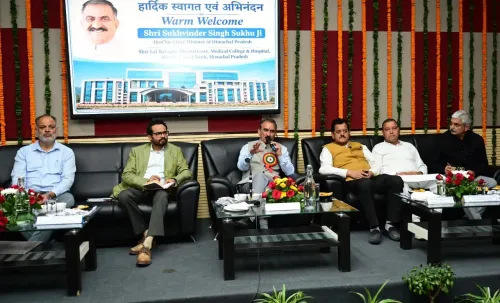
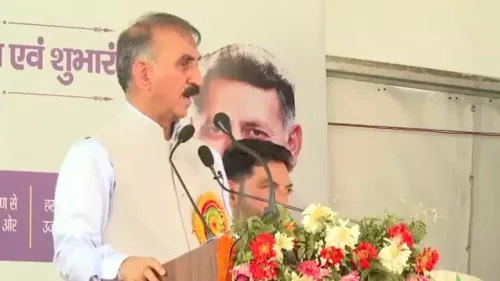
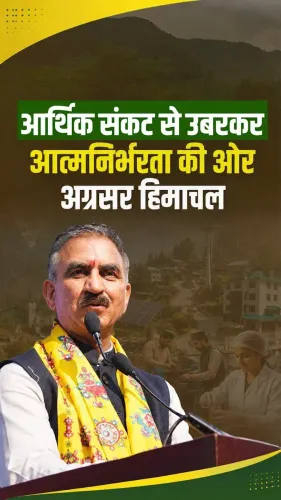
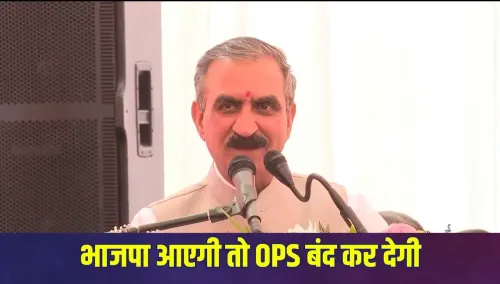
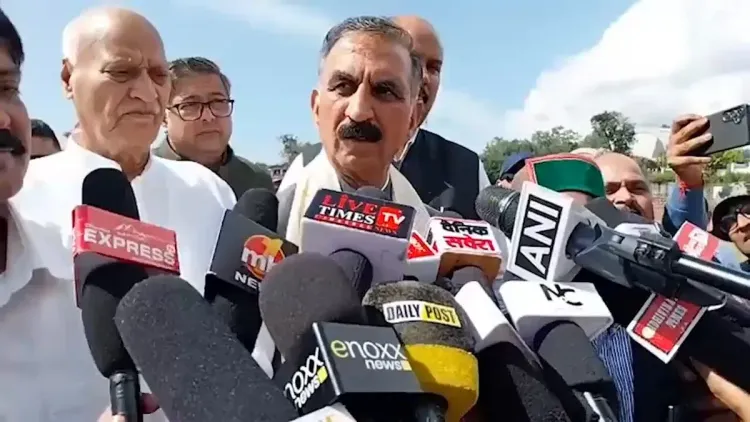
Himachal Pradesh Chief Minister Sukhvinder Singh Sukhu went on the offensive on Friday, October 16, 2026, claiming his government had turned around the state's health infrastructure and fiscal footing even as New Delhi blocked two major revenue streams — and calling out BJP national president J.P. Nadda by name for credit he says was not earned.
Two financial blows — and a government still standing
Sukhu's central argument is one of resilience under constraint. He said the Centre's closure of the Revenue Deficit Grant (RDG), worth ₹8,000 crore, combined with a freeze on ₹1,600 crore in additional borrowing capacity — a direct consequence of Himachal restoring the Old Pension Scheme (OPS) — had significantly squeezed state finances. Under the Fiscal Responsibility and Budget Management (FRBM) framework, states that reverted to OPS face central restrictions on additional market borrowings, a policy tension that Himachal has lived with since the Sukhu government reversed the 2005 switch to the National Pension System.
Despite that pinch, he argued, the state was 'standing on its own feet' — apne pairon par khada ho raha hai — and that the BJP, rather than scoring political points, ought to acknowledge the effort.
Nadda's funding claim and the staffing counter-punch
The sharpest exchange in the post is directed at Jagat Prakash Nadda, the BJP president and a senior leader from Himachal Pradesh who previously served as Union Health Minister. Sukhu dismissed Nadda's assertion that 'we gave money' by pointing to what he called a structural failure left behind: during the BJP government's 2017–2022 tenure, medical colleges in the state ran at just 35% staff strength. Where 100 positions were required, only 35 were filled, he said.
The BJP government had sanctioned and upgraded several medical colleges in that period, making Nadda's funding claim a familiar talking point. Sukhu's rebuttal pivots from capital outlay to operational reality — bricks and budgets mean little when wards are short-staffed.
Tanda's 20-year wait — and a 60% turnaround
Dr. Rajendra Prasad Government Medical College, Tanda, in Kangra district — established in 1996 and one of Himachal's oldest — sits at the centre of his evidence. Sukhu said the institution, which he described as being in a 'pathetic condition' three and a half years ago, had seen a 60% improvement since his government took over. Most strikingly, he said his government had restarted Senior Residency (SR) positions at Tanda after a gap of 20 years — a move that directly addresses the chronic shortage of specialist doctors who train and serve simultaneously.
SR-ships are the lifeblood of teaching hospitals: without them, both service delivery and postgraduate medical training stall. A two-decade lapse, if accurate, would represent a serious governance failure that long predates any single administration.
What Sukhu is signalling ahead of the budget cycle
The post closes with a forward pledge: health services will improve further in the time ahead. With the state budget cycle for 2027–28 approaching and the National Medical Commission conducting periodic staffing inspections of government colleges, the claim of a 60% turnaround at Tanda will eventually meet independent scrutiny. For now, Sukhu is staking his governance narrative on a single, specific institution — the kind of concrete anchor that is either vindicated or exposed by the next inspection report.
The Congress–BJP battle for credit over Himachal's health infrastructure is not new, but the specificity of the charge — 35% staffing, 20-year SR gap, ₹8,000 crore RDG loss — raises the stakes of the argument and shifts it from rhetoric to record.
Point of View
A metric the opposition cannot easily rebut without independent audit data. The broader arc here is the Congress playbook in Hindi-belt hill states: use granular service-delivery metrics to neutralise BJP's fiscal-discipline attack.
NationPress
16 Oct 2026
Frequently Asked Questions
Why did Himachal Pradesh lose ₹8,000 crore in Revenue Deficit Grant?
The Revenue Deficit Grant (RDG) is provided by the Centre to states with a certified revenue deficit under Finance Commission recommendations; it tapers and eventually closes as a state's fiscal position is deemed to have improved or its entitlement period ends. CM Sukhu has cited its closure as a major revenue shock to the state.
Why did Himachal Pradesh's OPS restoration lead to borrowing restrictions?
Under the FRBM framework, states that reverted to the Old Pension Scheme from the National Pension System lost eligibility for an additional borrowing window — worth up to 0.5% of GSDP — that the Centre had conditionally offered for fiscal reforms. Himachal forfeited that window when it restored OPS in 2022.
What is an SR-ship and why does it matter at Tanda Medical College?
Senior Residency (SR) positions allow postgraduate doctors to work and train simultaneously at teaching hospitals. Without SR-ships, hospitals struggle to retain specialist doctors and postgraduate medical education stalls. CM Sukhu claims SR-ships at Tanda were absent for 20 years before his government revived them.
What did J.P. Nadda say about Himachal Pradesh's health funding?
According to CM Sukhu's post, Nadda claimed credit by saying 'we gave money' — referring to central or BJP-era funding for medical colleges in the state. Sukhu countered that funding meant little when those colleges ran at only 35% staff capacity during the BJP's 2017–2022 tenure.
How old is Tanda Medical College and who runs it?
Dr. Rajendra Prasad Government Medical College, Tanda, is located in Kangra district of Himachal Pradesh and was established in 1996, making it one of the state's oldest government medical colleges. It is run by the Himachal Pradesh state government.