CM Sukhu defends OPS restoration, challenges BJP on pensions
Synopsis
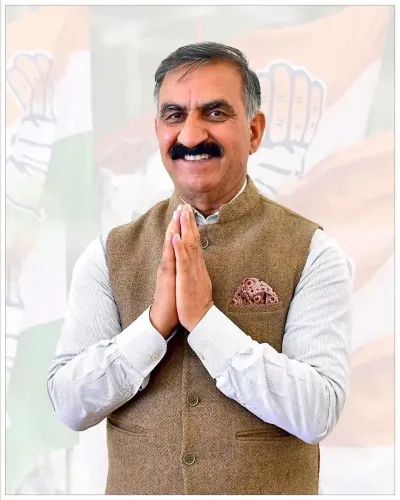
Himachal Pradesh CM Sukhvinder Singh Sukhu publicly challenged the BJP on pension policy on June 5, 2026, highlighting his government's restoration of the Old Pension Scheme at its first cabinet meeting in December 2022 as a welfare commitment for lakhs of state employees.
Key Takeaways
CM Sukhvinder Singh Sukhu publicly questioned why Himachal Pradesh voters should support the BJP, citing the pension policy contrast.
The Himachal Pradesh Congress government restored the Old Pension Scheme (OPS) at its very first cabinet meeting in December 2022 .
OPS provides a defined monthly pension based on last drawn salary, unlike the contributory and market-linked National Pension System (NPS) .
Sukhu stated the OPS decision was taken for the social and economic security of lakhs of state government employees, not for political gain.
The pension divide has become a recurring electoral issue, with multiple Congress-ruled states restoring OPS while the BJP-led Centre maintains NPS.
Himachal Pradesh's high government employee-to-population ratio makes pension policy especially consequential in the state.
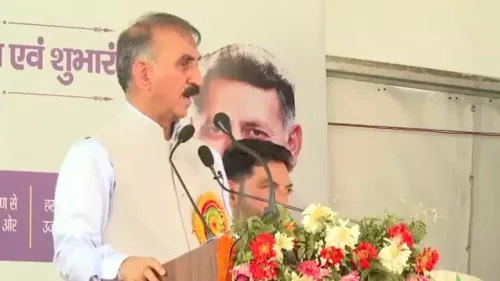
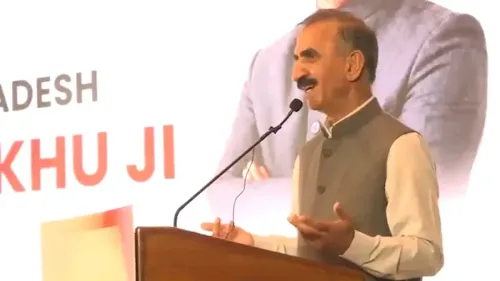
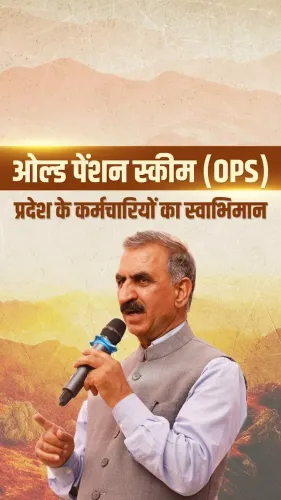
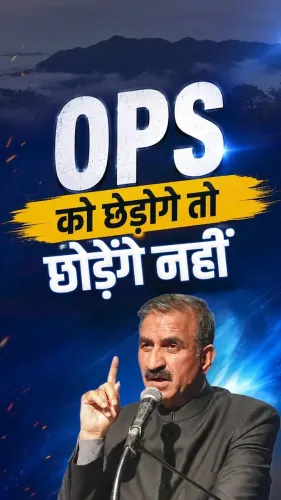
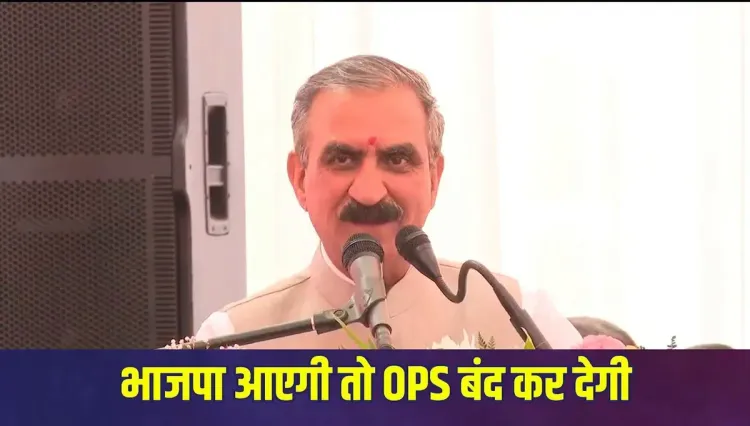
Himachal Pradesh Chief Minister Sukhvinder Singh Sukhu on Friday, June 5, 2026, publicly challenged the Bharatiya Janata Party (BJP) over its pension policy stance, asserting that his Congress government restored the Old Pension Scheme (OPS) for state employees in its very first cabinet meeting — a decision he described as driven by the social and economic security of lakhs of government workers, not political gain.
Posting in Hindi on X, CM Sukhu asked pointedly: 'हिमाचल की जनता भाजपा को वोट क्यों दे?' ['Why should the people of Himachal Pradesh vote for the BJP?']. He contrasted the BJP's continuation of the contributory National Pension System (NPS) at the national level with his government's move to reinstate the defined-benefit OPS for Himachal Pradesh state employees.
Context
The Old Pension Scheme guaranteed retiring government employees a fixed monthly payout — typically 50 per cent of the last drawn salary — funded entirely by the state exchequer. The National Pension System, introduced for new central government recruits from 2004 onward, shifted retirement savings to a contributory, market-linked model, transferring investment risk to the individual employee.
When the Congress party swept the Himachal Pradesh assembly elections in December 2022, OPS restoration was among its headline promises. The Sukhu cabinet fulfilled that commitment at its inaugural meeting, covering state employees recruited after the NPS cut-off date.
Policy Backdrop
The pension debate has sharpened into one of the most consistent fault lines between Congress-ruled and BJP-ruled states over the past several years. Opposition-governed states — including Rajasthan, Chhattisgarh, and Jharkhand — moved to restore OPS around the same period, responding to sustained pressure from state government employee unions.
The Centre, under the BJP, has maintained the NPS framework for its own employees and has argued that reverting to OPS places an unsustainable long-term fiscal burden on state finances. Economists and fiscal watchdogs have flagged that OPS commitments can crowd out development spending in future budget cycles, though proponents counter that assured pensions underpin social security for a large section of the organised workforce.
CM Sukhu's post frames the OPS decision as a moral and welfare imperative rather than electoral calculation — a framing that directly rebukes critics who have characterised such restorations as populist pre-election moves.
Stakeholders and Impact
Himachal Pradesh has a comparatively high ratio of government employees to population, making pension policy a particularly live issue in the state. Lakhs of state government employees and their families stand to benefit directly from the OPS restoration, which provides the certainty of a defined post-retirement income regardless of market performance.
For the BJP, the post represents a fresh political challenge ahead of future electoral cycles in the hill state. The party will need to articulate a counter-narrative on employee welfare, particularly given that its own state governments have not moved to restore OPS.
What's Next
The pension policy divide is unlikely to resolve soon. Himachal Pradesh's state budget documents in coming years will be closely watched for the fiscal trajectory of OPS commitments, as rising pension outlay can constrain capital expenditure. At the national level, any central review of NPS viability or the introduction of a hybrid pension model could reshape the political calculus on both sides. CM Sukhu's pointed public challenge signals that the Congress intends to keep OPS at the centre of its governance narrative in Himachal Pradesh well into the next electoral cycle.
Point of View
Using a welfare credential — OPS restoration — as a direct electoral argument against the BJP in a state where government employees form a critical voter bloc. By framing the decision as a matter of 'social and economic security' rather than politics, he attempts to neutralise the fiscal-populism critique that opponents routinely level at OPS restorations. The post fits a broader Congress strategy of differentiating its state governance record from BJP rule on employee welfare, a narrative the party has deployed across multiple states since 2022. Whether the fiscal sustainability of OPS commitments becomes a liability in future budget cycles remains the sharpest risk to this political positioning.
NationPress
20 Oct 2026
Frequently Asked Questions
What is the Old Pension Scheme and why was it restored in Himachal Pradesh?
The Old Pension Scheme (OPS) is a defined-benefit pension that guarantees retiring government employees a fixed monthly payout — typically 50 per cent of their last drawn salary — funded by the state. The Himachal Pradesh Congress government restored it for state employees at its first cabinet meeting in December 2022, fulfilling a key election promise to provide assured post-retirement income.
Why did CM Sukhu challenge the BJP over pension policy?
CM Sukhu challenged the BJP because the party-led central government has maintained the National Pension System (NPS) for government employees rather than reverting to OPS, while his Congress government in Himachal Pradesh restored OPS at its very first cabinet meeting. He argued the BJP has no comparable welfare record to show state employees.
What is the difference between OPS and NPS?
OPS provides a guaranteed, defined monthly pension based on the last salary drawn, with no contribution required from the employee and full financial liability on the government. NPS is a contributory, market-linked scheme where both employee and employer contribute to a fund, and the final payout depends on market returns, transferring investment risk to the individual.
Which other states have restored the Old Pension Scheme?
Several opposition-ruled states, including Rajasthan, Chhattisgarh, and Jharkhand, restored OPS around 2022-23 in response to government employee demands. Himachal Pradesh under CM Sukhu was among the first to act, doing so at its inaugural cabinet meeting in December 2022.
What are the fiscal concerns around OPS restoration?
Economists and fiscal analysts have cautioned that restoring OPS creates large, unfunded long-term pension liabilities for state governments, which can crowd out spending on infrastructure and development in future budgets. Proponents argue that the social security benefit for a large organised workforce outweighs the fiscal cost.