CM Sukhu Vows to Protect OPS, Slams BJP Over UPS Push
Synopsis
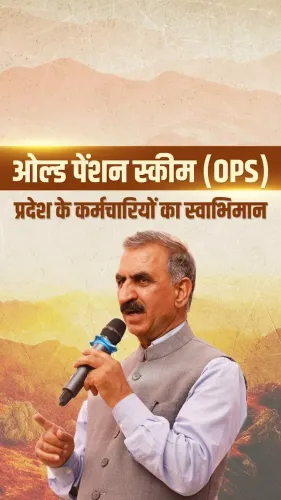
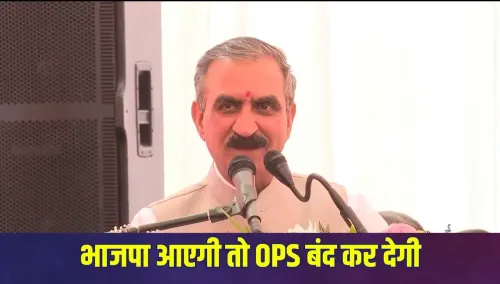
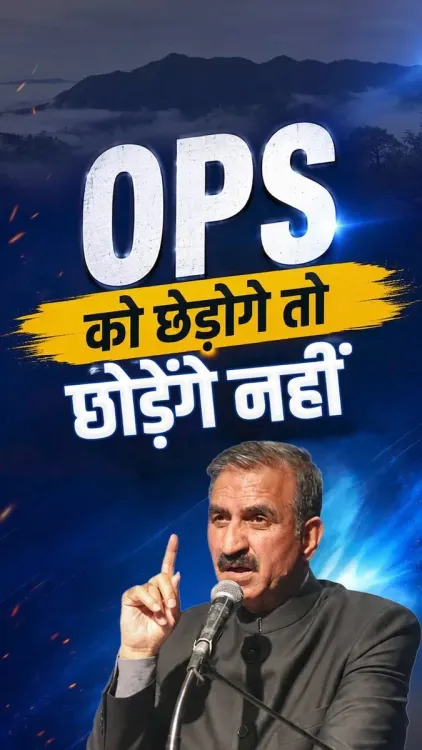
Himachal Pradesh CM Sukhvinder Singh Sukhu, citing his father's life as a government employee, reaffirmed the state's Old Pension Scheme restoration on June 16 and vowed to resist the BJP's push to replace it with the Unified Pension Scheme.
Key Takeaways
CM Sukhvinder Singh Sukhu publicly defended the Old Pension Scheme (OPS) restoration in Himachal Pradesh on June 16, 2026 .
Sukhu cited his personal background — his father was a government employee — as the basis for his commitment to post-retirement security.
He accused the BJP of wanting to end OPS and introduce the Unified Pension Scheme (UPS) , calling the move 'unfortunate.' The Congress government restored OPS in Himachal Pradesh after winning the 2022 assembly elections , reversing the 2004 shift to the market-linked New Pension Scheme (NPS) .
The OPS-versus-UPS debate has become a major political and fiscal fault line between Congress-ruled states and the Centre .
State government employees and their families remain the direct stakeholders in any pension policy change in the hill state.
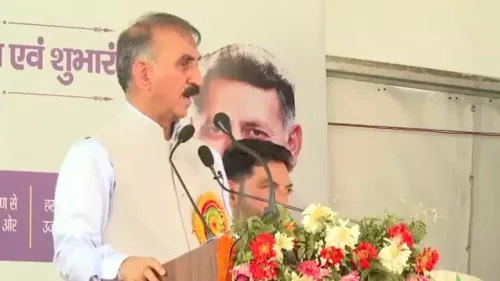
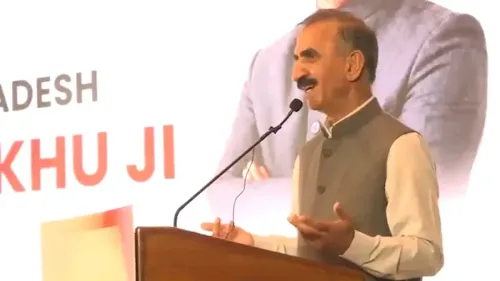
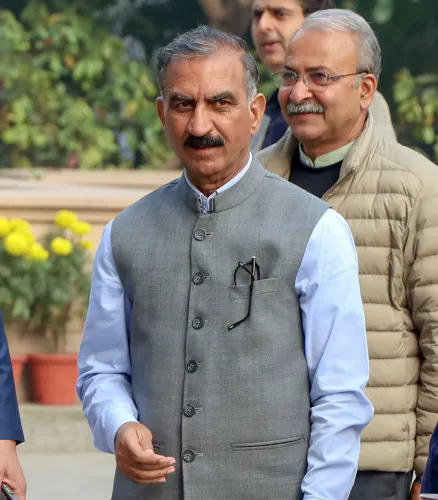
Himachal Pradesh Chief Minister Sukhvinder Singh Sukhu on Tuesday, June 16, 2026, reaffirmed his government's commitment to the Old Pension Scheme (OPS) for state employees, drawing on his personal background as the son of a government worker to underscore the policy's significance. Attacking the Bharatiya Janata Party (BJP), he declared that his administration would not allow any compromise on the interests of employees and their families.
Posting in Hindi, CM Sukhu wrote: 'मेरे पिताजी कर्मचारी थे' ['My father was a government employee']. He recalled witnessing his father's struggles, responsibilities, and sacrifices for the family at close quarters, adding that this personal experience gave him a deep understanding of why post-retirement dignity and financial-social security represent an employee's most valuable asset.
Context
The Congress government in Himachal Pradesh restored the Old Pension Scheme for state government employees after winning the 2022 assembly elections — one of its key poll promises. OPS guarantees a defined benefit to retirees, typically 50 per cent of last drawn salary, unlike the market-linked contributory model that replaced it. In his post, Sukhu explicitly positioned the restoration as a matter of personal conviction, not merely political calculation.
He stated that the BJP wants to end OPS and introduce the Unified Pension Scheme (UPS) in its place — a move he described as unfortunate. 'But,' he wrote, 'we will not allow any compromise with the interests of employees and their families.'
Policy Backdrop
The Central government discontinued OPS for new recruits in 2004, replacing it with the New Pension Scheme (NPS) — a contributory, market-linked system — primarily to reduce long-term fiscal liabilities on the exchequer. The shift was seen as a structural reform but drew sustained opposition from employee unions who argued it stripped workers of retirement security.
Following the 2022 state election cycle, several Congress-governed states moved to restore OPS, creating a sharp policy contrast with the Centre's NPS framework. The debate has since become a recurring fault line between state and central governments, with pension design emerging as a significant theme in electoral campaigns across India.
Stakeholders and Impact
State government employees and their families in Himachal Pradesh are the primary beneficiaries of the OPS restoration. For workers in a hill state where private-sector employment is limited, a guaranteed post-retirement income carries outsized economic and social weight. Employee unions have consistently lobbied for OPS, viewing NPS's market exposure as a risk to retirement security.
The fiscal dimension is equally significant. Restoring OPS increases long-term pension liabilities on the state budget, a concern flagged by fiscal analysts. Himachal Pradesh, which already carries a high debt-to-GSDP ratio, must balance employee welfare commitments against budgetary headroom — a tension that shapes every pension-related announcement.
What's Next
With the BJP signalling support for the Unified Pension Scheme at the national level, the OPS-versus-UPS debate is likely to intensify ahead of future assembly elections in multiple states. CM Sukhu's framing — rooted in personal narrative and employee solidarity — suggests the Congress intends to keep OPS as a central mobilisation issue. Observers will watch the Himachal Pradesh state budget for provisions on pension funding and any central government response on fiscal transfers to states carrying OPS liabilities.
Point of View
Relatable register that is difficult for opponents to attack directly. By invoking his father's sacrifices, he transforms a fiscal argument into a values argument, a terrain where Congress has historically been more comfortable than BJP on employee welfare. The OPS-UPS binary is fast becoming a template for Congress's state-level electoral identity, much as farm loan waivers were in an earlier cycle. How the Centre responds — and whether UPS gains traction among employee unions — will determine whether this issue sustains its political salience into the next round of state elections.
NationPress
15 Sept 2026
Frequently Asked Questions
What is the Old Pension Scheme (OPS) in India?
The Old Pension Scheme (OPS) is a defined-benefit retirement plan for government employees that guarantees a fixed pension — typically 50 per cent of the last drawn salary — funded entirely by the government. It was discontinued for new central government recruits in 2004 and replaced by the contributory, market-linked New Pension Scheme (NPS).
Has Himachal Pradesh restored OPS?
Yes. The Congress government in Himachal Pradesh, led by CM Sukhvinder Singh Sukhu, restored the Old Pension Scheme for state government employees after coming to power following the 2022 assembly elections, fulfilling a key poll promise.
What is the Unified Pension Scheme (UPS) and how is it different from OPS?
The Unified Pension Scheme (UPS) is a pension framework promoted at the central level as an alternative to both OPS and NPS. Unlike OPS, which provides a fully guaranteed defined benefit, UPS incorporates elements of contribution-based funding. CM Sukhu has opposed any move to replace OPS with UPS for Himachal Pradesh state employees.
Why is CM Sukhu against the BJP's pension plan?
CM Sukhu argues that OPS provides government employees and their families with guaranteed post-retirement dignity and financial security — values he links to his own experience as the son of a government worker. He has stated that his government will not compromise on employee welfare by allowing OPS to be replaced by the UPS.
Which other states have restored OPS?
After the 2022 state election cycle, several Congress-governed states moved to restore the Old Pension Scheme, creating a policy contrast with the Centre's continued preference for the New Pension Scheme. Himachal Pradesh was among the first to implement the restoration.