CM Sukhu Extends Old Pension Scheme to Pre-2003 HP Recruits
Synopsis
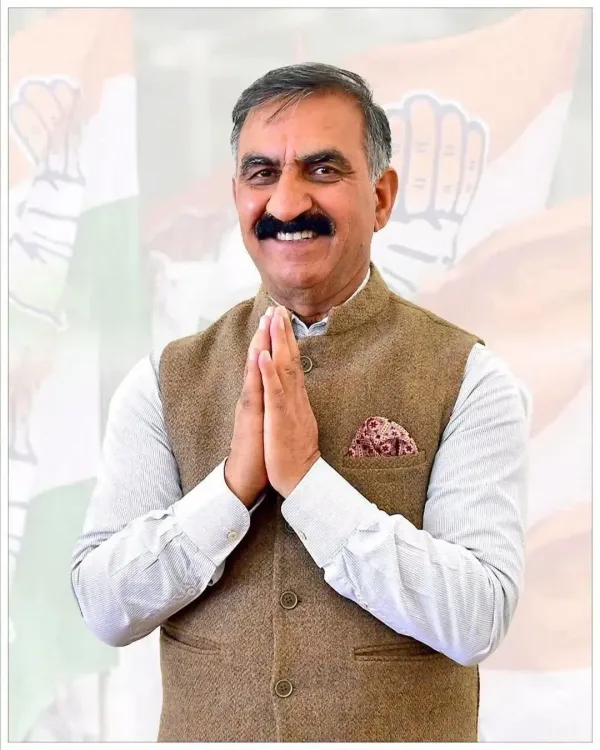
Himachal Pradesh Chief Minister Sukhvinder Singh Sukhu has announced that state employees recruited against posts advertised before 15 May 2003 will be brought under CCS (Pension) Rules, 1972, with their NPS contributions transferred to GPF accounts earning guaranteed interest rates.
Key Takeaways
Employees recruited against vacancies advertised before 15 May 2003 in Himachal Pradesh will be covered under CCS (Pension) Rules, 1972 .
The Finance Department issued a notification on 4 May 2023 to implement the restored Old Pension Scheme from 1 April 2023 .
NPS account balances of eligible serving employees will be transferred to General Provident Fund (GPF) accounts and will earn GPF interest rates.
Retired employees in this cohort will receive pension benefits calculated from their actual date of retirement .
The move is part of a broader Congress-government commitment to employee welfare, mirroring OPS-restoration steps taken by other Congress-ruled states after 2022.
State fiscal implications, including pension outgo projections, are expected to be reflected in upcoming Himachal Pradesh budget documents.
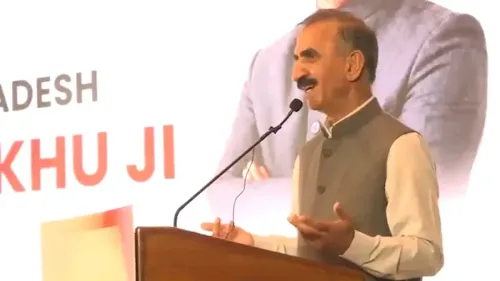
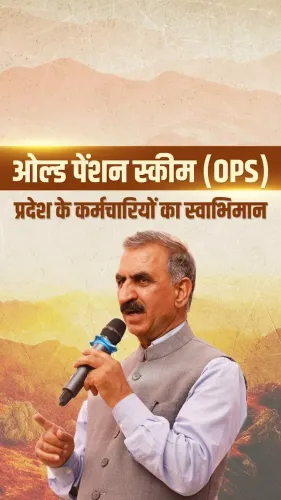
Himachal Pradesh Chief Minister Sukhvinder Singh Sukhu on Friday, 10 July 2026, outlined a series of employee-welfare decisions by the state government, highlighting the restoration of the Old Pension Scheme and a new order bringing employees recruited against posts advertised before 15 May 2003 under the CCS (Pension) Rules, 1972.
Context
Posting on X, Chief Minister Sukhu stated that 'प्रदेश के विकास में कर्मचारियों का योगदान अतुलनीय रहा है' ('The contribution of employees to the development of the state has been incomparable') and that Congress has always stood for the honour and rights of karmayogis (dedicated workers). The post catalogued six specific decisions the state government has taken in favour of employees since coming to power in December 2022.
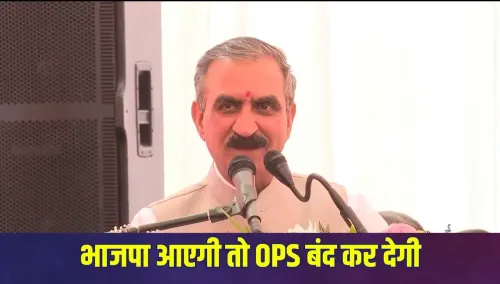
The announcement signals a further consolidation of the Sukhu government's pension-reform agenda, which has been a centrepiece of the Congress administration in Himachal Pradesh since it assumed office.
Policy Backdrop
The central government replaced the Old Pension Scheme (OPS) with the National Pension System (NPS) for new recruits effective 1 January 2004. States, including Himachal Pradesh, adopted NPS for employees joining after that date. The shift drew sustained opposition from employee unions who argued that NPS, being market-linked and contributory, offered less security than the defined-benefit OPS.
After the Congress government took office, it moved swiftly: the Finance Department issued a notification on 4 May 2023 to implement the restored OPS fully from 1 April 2023. The latest decision extends the benefit further, covering employees recruited against vacancies advertised before 15 May 2003 — a cohort that had remained in a grey zone because they were recruited before the NPS cutoff but after earlier OPS circulars.
Under the new order, employee contributions currently parked in NPS accounts will be transferred to General Provident Fund (GPF) accounts, where they will earn interest at GPF rates. Retired employees brought under CCS (Pension) Rules, 1972 will receive pension benefits calculated from their date of retirement. Similar OPS-restoration moves were undertaken by Rajasthan, Chhattisgarh, and Jharkhand governments around 2022–23, reflecting a broader state-level pushback against NPS.
Stakeholders and Impact
The beneficiaries are thousands of serving and retired state government employees in Himachal Pradesh who were recruited against posts advertised before 15 May 2003. Chief Minister Sukhu's post described the decision as directly benefiting this specific cohort, though exact beneficiary numbers were not cited in the post.
For serving employees, the transfer of NPS contributions to GPF accounts means their retirement corpus will now earn a government-guaranteed interest rate rather than being subject to market fluctuations. For retired employees in this category, the change means a shift to a defined monthly pension under CCS (Pension) Rules, 1972, calculated from their actual retirement date.
State finances will bear the additional pension liability. Fiscal analysts and budget watchers will closely track how Himachal Pradesh's pension outgo projections change in subsequent state budget documents, given the state's historically constrained fiscal position.
What's Next
The government is expected to issue formal departmental orders and clarifications on the timeline for GPF transfers from NPS accounts. Questions around how the NPS corpus held by the central recordkeeping agencies will be returned to the state for GPF credit remain to be resolved through centre-state coordination.
Employee unions will watch closely whether implementation notifications match the policy commitments listed in the Chief Minister's post. With assembly elections on the horizon in several Congress-governed states, the Himachal model of OPS restoration is likely to remain a reference point in the national debate over pension security for government workers.
Point of View
The Congress government is reinforcing its identity as the party of karmayogis ahead of any future electoral cycle. The extension of OPS to the pre-15 May 2003 recruitment cohort fills a specific legal gap that had left a section of employees in limbo, suggesting the administration is moving from broad-stroke announcements to granular implementation. This fits into a wider pattern of Congress-ruled states using OPS restoration as a differentiator against the BJP-led centre's NPS framework, turning pension policy into a sustained political battleground. The key test will be whether the fiscal machinery — particularly the NPS-to-GPF corpus transfer — can be executed without straining Himachal Pradesh's already tight state finances.
NationPress
8 Oct 2026
Frequently Asked Questions
Who benefits from Himachal Pradesh's latest pension decision?
Thousands of serving and retired Himachal Pradesh government employees who were recruited against posts or vacancies advertised before 15 May 2003 will benefit, as they will now be covered under CCS (Pension) Rules, 1972 instead of the National Pension System.
From when is the Old Pension Scheme restored in Himachal Pradesh?
The Himachal Pradesh Finance Department issued a notification on 4 May 2023 to implement the restored Old Pension Scheme fully from 1 April 2023.
What happens to NPS contributions of eligible Himachal Pradesh employees?
The employee contributions currently deposited in NPS accounts of eligible serving employees will be transferred to their General Provident Fund (GPF) accounts, where they will earn interest at the applicable GPF rates.
What is the difference between OPS and NPS for government employees?
The Old Pension Scheme (OPS) under CCS Pension Rules 1972 is a defined-benefit plan guaranteeing a fixed monthly pension based on last drawn salary, while the National Pension System (NPS) is a contributory, market-linked scheme where retirement corpus depends on investment returns.
Which other states have restored the Old Pension Scheme?
Rajasthan, Chhattisgarh, and Jharkhand announced restoration of Old Pension Scheme benefits for pre-2005 recruits around 2022–23, reflecting a wider trend among non-BJP-ruled states responding to employee demands.