CM Saini Meets Punjabi Diaspora in Sweden, Flags Drug Crisis
Synopsis
Haryana CM Nayab Singh Saini met Punjabi diaspora members during a Sweden visit, where drug abuse back home dominated the conversation. He reaffirmed India's commitment to the Nasha Mukt Bharat Abhiyan launched under PM Modi in 2020.
Key Takeaways
Haryana CM Nayab Singh Saini met Punjabi diaspora families in Sweden on October 16, 2026 , describing the encounter as emotionally significant.
Diaspora members raised Punjab's drug abuse crisis as a primary concern during the meeting.
Saini invoked the Nasha Mukt Bharat Abhiyan , launched in 2020 by the Ministry of Social Justice and Empowerment, as India's national framework to combat drug abuse.
The campaign operates under PM Narendra Modi's leadership and combines community mobilisation, rehabilitation, and awareness over pure enforcement.
Punjab has faced persistent drug challenges linked to its border location and documented trafficking routes, making it a focal point of national anti-drug policy.
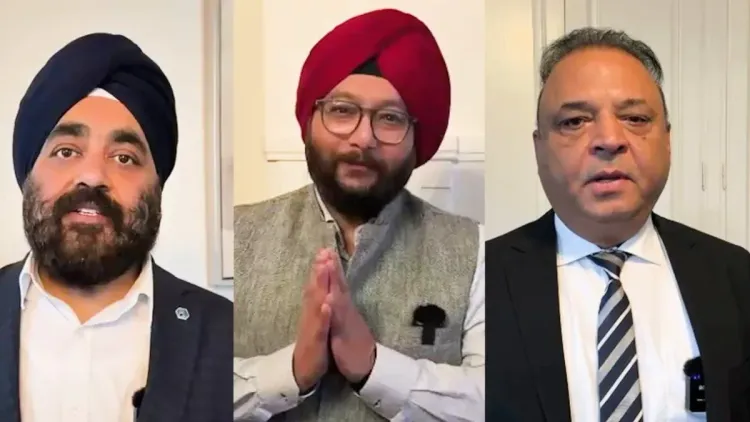
Thousands of kilometres from home, the conversation kept circling back to the same wound. Haryana Chief Minister Nayab Singh Saini, during a visit to Sweden, sat with Punjabi diaspora families — people whose hearts, as he put it, remain rooted in India even while they build lives abroad — and the talk turned to what is quietly devastating a generation back home: drugs.
Posting on October 16, 2026, Saini captured the encounter with a line that cuts through: 'Dil Punjab mein... aatma Bharat mein' — 'Heart in Punjab... soul in India.' He described meeting these families as a moment of genuine joy, but the emotion that lingered was concern. The diaspora members raised Punjab's drug crisis directly, and Saini acknowledged the shared anxiety, noting that the issue worries everyone.
What Punjabi Families Abroad Told Saini
The Indian diaspora has long served as an informal early-warning system for conditions back home — migrants who left Punjab often did so precisely to escape the social devastation that addiction has caused in villages and small towns. That these families, settled in Scandinavia, are still urgently raising the drug problem signals how deep and persistent the crisis feels to those who have watched it consume relatives and neighbours.
Punjab, which shares a long border with Pakistan and sits on well-documented drug trafficking routes, has faced a drug abuse challenge for decades. The problem cuts across economic lines, hitting rural youth and urban families alike, and successive governments — state and central — have wrestled with it as a public-health, law-enforcement, and social-welfare crisis simultaneously.
NashaMuktBharat: The National Framework Saini Invoked
Saini's response was to point to the national architecture now in place. He invoked the Nasha Mukt Bharat Abhiyan — launched in 2020 by the Ministry of Social Justice and Empowerment under Prime Minister Narendra Modi — as the framework under which the country has made a firm collective resolve to fight drug abuse.
The campaign's design deliberately moves beyond enforcement: it mobilises communities, funds rehabilitation infrastructure, and builds awareness at the grassroots level. The idea is that policing alone cannot drain demand; families, schools, and panchayats have to be part of the solution. Saini's framing of it as a national 'dridh sankalp' — an unwavering resolve — was a signal that the political will, at least at the level of stated intent, runs from the Prime Minister's office downward.
Diaspora as a Bridge — and a Constituency
Indian leaders meeting diaspora communities abroad is a well-worn ritual of modern Indian diplomacy. But this encounter carried a specific texture: it was not a celebration of India's rise or an investment pitch. It was a grievance session about something going wrong at home. That distinction matters.
The families Saini met are not abstract stakeholders — many will have relatives currently in Punjab, and the drug crisis affects remittance decisions, family reunification plans, and the emotional calculus of whether to return. Their concerns, relayed now through a sitting Chief Minister, have a direct line into the policy conversation.
Whether Saini's Sweden conversations translate into concrete Haryana-Punjab coordination on de-addiction, or produce any new state-level push under the Nasha Mukt Bharat umbrella, is the question that will define whether this moment was a diplomatic gesture or the start of something more substantive.
Point of View
Not merely a domestic policy file. By anchoring his response in the Nasha Mukt Bharat Abhiyan, he positioned the BJP's national framework as the answer to a problem that transcends state borders. The political subtext is notable: Haryana and Punjab share borders, water disputes, and now, apparently, a joint stake in de-addiction outcomes. Whether this diplomatic moment catalyses cross-border state coordination or remains symbolic will be a meaningful test of the campaign's real reach.
NationPress
16 Oct 2026
Frequently Asked Questions
Why did Haryana CM Nayab Singh Saini visit Sweden?
Saini visited Sweden and met Punjabi diaspora families there. During the meeting, the families raised concerns about drug abuse in Punjab, which Saini acknowledged as a shared national worry.
What is the Nasha Mukt Bharat Abhiyan?
Nasha Mukt Bharat Abhiyan is a national anti-drug campaign launched in 2020 by India's Ministry of Social Justice and Empowerment. It focuses on community awareness, rehabilitation, and grassroots mobilisation to fight drug abuse across India.
Why is Punjab particularly affected by drug abuse?
Punjab shares a long border with Pakistan and sits on documented drug trafficking routes, making it especially vulnerable to drug abuse. The problem has persisted for decades and affects rural youth as well as urban families.
What did the Punjabi diaspora in Sweden tell CM Saini?
According to Saini's post, the Punjabi families in Sweden raised the issue of drug addiction in Punjab as a serious concern. He said their remarks on the subject are something everyone is worried about.
How does the Nasha Mukt Bharat Abhiyan address drug abuse?
The campaign goes beyond law enforcement by mobilising communities, funding rehabilitation infrastructure, and building awareness through schools, families, and local governance bodies like panchayats.