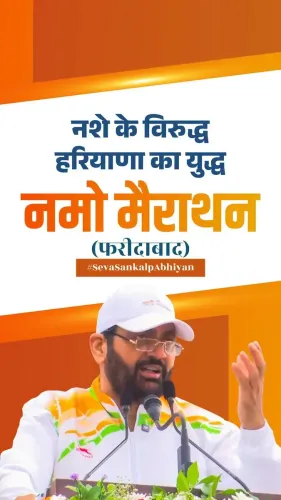
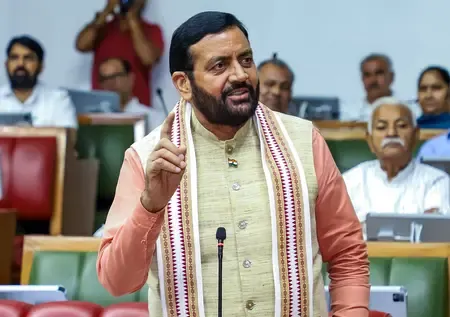
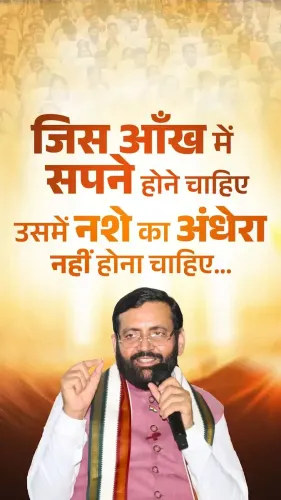
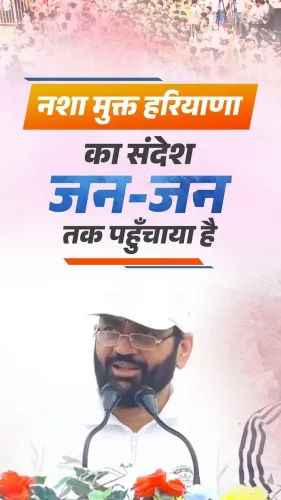
CM Saini shares Shah's Punjab drug barb, backs Nasha Mukt Yatra
Synopsis
Haryana CM Nayab Singh Saini shared Home Minister Amit Shah's pointed remark on 30 September 2026, questioning Punjab's government credibility to fight the chitta drug crisis, under the banner of the Nasha Mukt Punjab Yatra campaign.
Key Takeaways
Haryana CM Nayab Singh Saini amplified a quote by Union Home Minister Amit Shah on 30 September 2026 targeting Punjab's ruling establishment over the drug crisis.
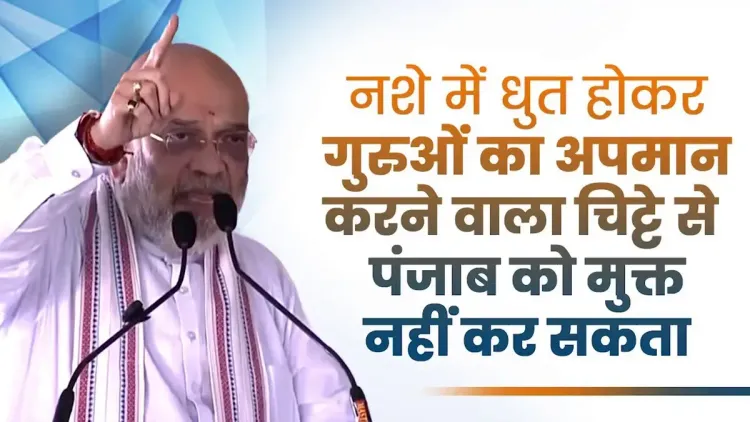
Shah's quoted remark alleges that a leader who 'insults Gurus while intoxicated' cannot liberate Punjab from chitta (white heroin).
The post is tagged under #NashaMuktPunjabYatra , a campaign tied to the central government's Nasha Mukt Bharat Abhiyan launched in 2020 .
Punjab's drug crisis, particularly the chitta epidemic in border districts, has been a persistent governance and security issue linked to Pakistan -side cross-border trafficking.
BJP leaders have consistently framed Punjab's narcotics problem as a failure of state governance, keeping the issue active as a political pressure point.
A sharp political dart flew across state lines on Wednesday, 30 September 2026, when Haryana Chief Minister Nayab Singh Saini took to X to amplify a pointed remark by Union Home Minister Amit Shah — one that directly questioned Punjab's ruling establishment on its credibility to fight the drug crisis.
The post quotes Shah with blunt force: 'Jo nashe mein dhut hokar guruon ka apman kare, vo chitte se Punjab ko mukt nahi kar sakta' — 'One who, intoxicated, insults our Gurus, cannot free Punjab from chitta (white heroin).' The hashtag #NashaMuktPunjabYatra ties the quote to an active campaign targeting substance abuse in the border state.Chitta, Gurus, and a political double-barrel
The statement packs two charges into one sentence. The first is moral — an allegation of disrespect toward Sikh religious figures. The second is practical — the claim that such a figure cannot credibly lead a de-addiction drive. Together, they form a direct broadside against Punjab's non-BJP government, whose leaders have faced BJP criticism over law-and-order and drug enforcement.
Punjab has grappled with a narcotics crisis for over a decade, with chitta — a potent heroin-methamphetamine mix — devastating communities, particularly youth in border districts. Cross-border supply routes from Pakistan have been repeatedly cited by central security officials, including Shah in his capacity as Home Minister overseeing the Border Security Force and narcotics agencies.
The Nasha Mukt Punjab Yatra and its political backdrop
The Nasha Mukt Punjab Yatra is framed as a grassroots awareness and mobilisation effort under the broader umbrella of the Nasha Mukt Bharat Abhiyan, the nationwide de-addiction programme launched in 2020 by the Ministry of Social Justice and Empowerment. That central scheme targeted 272 vulnerable districts across the country — Punjab's border belt featured prominently among them.
By sharing Shah's quote under the Yatra hashtag, CM Saini positions Haryana — a state with its own border-adjacent drug concerns — as an invested stakeholder in Punjab's cleanup, while lending the amplification weight of a neighbouring chief minister's platform to the BJP's anti-drug political campaign.
The families of Punjab's estimated hundreds of thousands of drug-dependent individuals are watching whether the yatra translates to enforcement and rehabilitation — or remains, as critics argue, a campaign tool ahead of electoral cycles.
The words are out. Now the count that matters is not retweets — it's recoveries.
Point of View
Consistent with BJP's pattern of using central scheme branding to contest state-level narratives. Whether the campaign generates measurable de-addiction outcomes or remains primarily rhetorical will determine its durability as a political asset.
NationPress
30 Sept 2026
Frequently Asked Questions
What did Amit Shah say about Punjab and drugs?
Amit Shah reportedly said that someone who insults Gurus while intoxicated cannot free Punjab from chitta — a direct dig at Punjab's ruling leadership and their credibility to lead anti-drug efforts.
What is the Nasha Mukt Punjab Yatra?
The Nasha Mukt Punjab Yatra is a campaign aimed at raising awareness and mobilising action against drug abuse in Punjab, linked to the central government's broader Nasha Mukt Bharat Abhiyan programme launched in 2020.
What is chitta and why is it a problem in Punjab?
Chitta is a potent mixture of white heroin and synthetic drugs that has devastated Punjab's youth, particularly in border districts with proximity to cross-border trafficking routes from Pakistan.
Why is Haryana CM Nayab Saini commenting on Punjab's drug problem?
As a neighbouring BJP chief minister and party leader, Saini used his platform to amplify Shah's remarks as part of BJP's broader political campaign against Punjab's non-BJP government on the drug crisis issue.
What is the Nasha Mukt Bharat Abhiyan?
The Nasha Mukt Bharat Abhiyan is a national de-addiction programme launched in 2020 by India's Ministry of Social Justice and Empowerment, targeting 272 vulnerable districts with awareness, counselling, and rehabilitation efforts.