CM Saini Calls for Unity to Fight Punjab's Chitta Drug Crisis
Synopsis
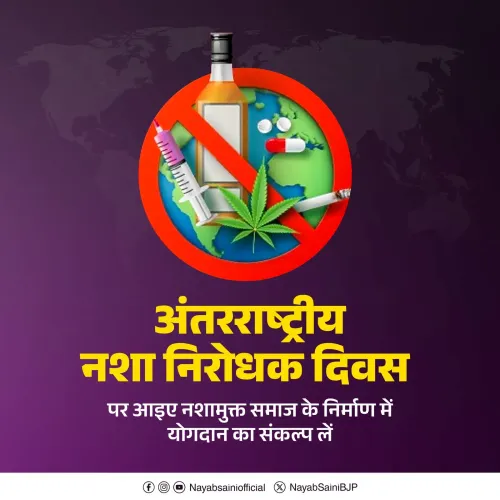
Haryana Chief Minister Nayab Singh Saini on 13 June 2026 called for collective unity to address Punjab's chitta synthetic drug crisis, warning the menace poses a grave threat to the state's youth, families, and social future.
Key Takeaways
Haryana CM Nayab Singh Saini posted on X on 13 June 2026 calling for united action against Punjab's drug crisis.
Chitta — a white synthetic drug — has been a severe public-health crisis in Punjab since the 2010s .
Saini described chitta as 'a serious crisis looming over the future of our younger generation, families, and society.' Haryana and Punjab share a porous border, making cross-border drug trafficking a common challenge for both states.
Punjab's Aam Aadmi Party government launched a state-wide anti-drug drive after coming to power in 2022 .
Possible inter-state coordination on joint border checks and de-addiction programmes may follow Saini's appeal.
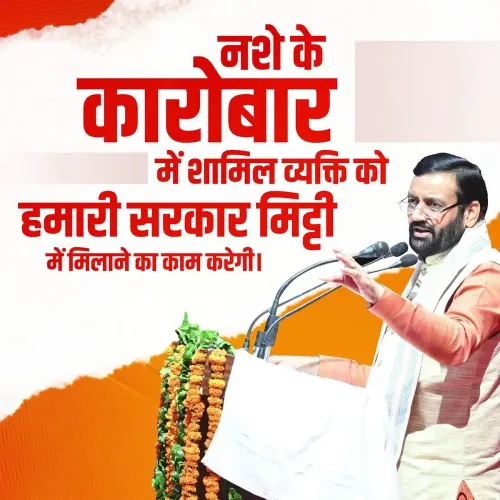
Haryana Chief Minister Nayab Singh Saini on Saturday, 13 June 2026, issued a public call for collective action against the synthetic drug crisis gripping Punjab, describing 'chitta' as a grave threat to the state's youth, families, and social fabric. Posting on X, Saini urged all stakeholders to come together to secure Punjab's future.
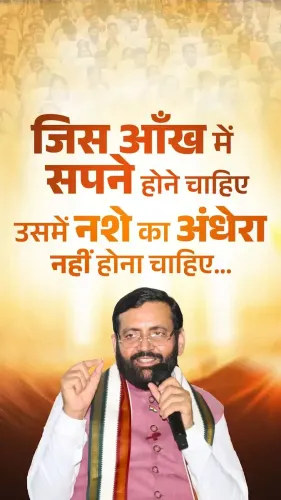
In the post, written in Hindi, Saini stated: 'Punjab ka bhavishy surakshit karne ke liye hum sabhi ko ekjut hokar aage aana hoga.' ['To secure Punjab's future, all of us must come forward in unity.'] He added that chitta is no longer merely a drug — it has become, in his words, 'a serious crisis looming over the future of our younger generation, our families, and our society.'
Context
Chitta is a colloquial term for a class of white synthetic drugs — primarily heroin and pharmaceutical opioids — that emerged as a dominant substance-abuse concern in Punjab during the 2010s. The drug's affordability and widespread availability made it particularly devastating among young men in rural and semi-urban areas. Addiction to chitta has been linked to a sharp rise in overdose deaths, broken families, and economic distress across the state.
Haryana and Punjab share a porous border, and cross-border drug trafficking has remained a persistent challenge for law-enforcement agencies in both states for more than a decade. Leaders from the two neighbouring states have periodically raised concerns about each other's drug situations, reflecting both genuine regional interdependence and underlying political dynamics.
Policy Backdrop
The Aam Aadmi Party government in Punjab, which came to power in 2022 on an explicit promise to eliminate the drug menace, launched a state-wide anti-drug initiative shortly after assuming office. The campaign included de-addiction drives, police crackdowns on trafficking networks, and community-awareness programmes. Despite these efforts, synthetic drug abuse has continued to feature prominently in public discourse around Punjab's governance.
Saini, who assumed office as Haryana Chief Minister in 2024, has positioned his administration as a stakeholder in the broader social and public-health challenges of the region. His appeal for unity signals an intent to frame the drug crisis as a cross-state concern rather than a purely internal Punjab matter.
Stakeholders and Impact
The primary victims of the chitta crisis are Punjab's youth — a demographic that both state governments have identified as critical to the region's economic and social future. Families, particularly in rural Punjab, have borne the heaviest social burden, with addiction disrupting livelihoods, education, and community cohesion. Civil-society organisations, health workers, and local religious bodies have all been active in de-addiction efforts at the grassroots level.
Saini's intervention, made from Haryana, adds a regional political dimension to the conversation. It implicitly calls on Punjab's administration, community leaders, and civil society to align on a common response — though the specific mechanisms or joint programmes he envisages were not detailed in the post.
What's Next
Observers will watch for whether Saini's statement is followed by formal coordination between Haryana and Punjab authorities — including possible joint border-check operations or shared de-addiction programme frameworks. Any response from Punjab's ruling administration will be a key indicator of whether this appeal translates into inter-state policy action. The broader fight against synthetic drugs in the region remains one of the most pressing public-health and law-enforcement challenges in northern India.
Point of View
He positions Haryana as a concerned neighbour while implicitly raising questions about the effectiveness of Punjab's ruling party. The statement fits a broader BJP pattern of engaging with opposition-governed states on law-and-order and public-health narratives ahead of electoral cycles. Whether it leads to substantive inter-state policy coordination — or remains a rhetorical intervention — will determine its lasting political weight.
NationPress
19 Sept 2026
Frequently Asked Questions
What is chitta drug and why is it a problem in Punjab?
Chitta is a colloquial term for white synthetic drugs, primarily heroin and pharmaceutical opioids, that became widely abused in Punjab during the 2010s due to their low cost and easy availability, causing widespread addiction and overdose deaths among young people.
Why is Haryana CM Nayab Singh Saini commenting on Punjab's drug problem?
Haryana and Punjab share a porous border, making cross-border drug trafficking a common challenge for both states. Saini framed the chitta crisis as a regional concern requiring collective action, not just a Punjab-specific issue.
What did Nayab Singh Saini say about Punjab's drug crisis?
On 13 June 2026, Saini posted on X saying chitta is no longer just a drug but 'a serious crisis looming over the future of our younger generation, families, and society,' and called for all stakeholders to unite.
What has Punjab's government done about the chitta drug problem?
The Aam Aadmi Party government, which came to power in Punjab in 2022 on an anti-drug promise, launched a state-wide initiative including police crackdowns, de-addiction drives, and community-awareness programmes.
Could Haryana and Punjab cooperate on fighting drug trafficking?
Analysts say Saini's statement could be a precursor to formal inter-state coordination such as joint border checks or shared de-addiction frameworks, though no specific joint programme has been announced yet.