Amit Shah to meet families of anti-chitta voices killed in Punjab
Synopsis
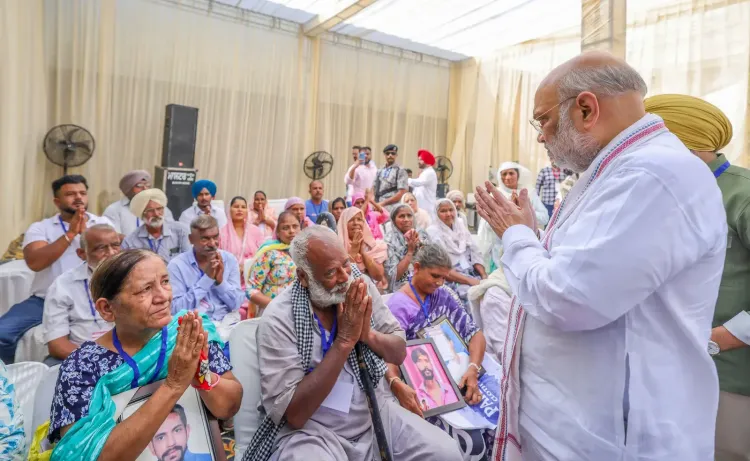
Home Minister Amit Shah is set to meet families of activists killed for speaking out against chitta — Punjab's fastest-spreading synthetic opioid — as the Centre seeks a report from the state's Chief Secretary on three drug-related deaths. With ISI-linked networks allegedly exploiting addicts for terror logistics and the 2027 elections approaching, the drug war is becoming one of India's most politically charged security flashpoints.
Key Takeaways
Amit Shah is scheduled to meet families of individuals killed for opposing the spread of 'chitta' in Punjab.
The Union Home Ministry has sought a report from Punjab's Chief Secretary on three drug-related deaths.
Addicts spend an average of ₹1,400–₹2,000 per day on chitta; the drug reportedly reaches consumers faster than food in some areas.
The Reporters' Collective has documented nearly 50 instances of media censorship in Punjab targeting anti-drug voices.
Anti-drug activists Parminder Singh Jhotta and Bikramjit Singh were killed; Gulzar Singh died by suicide after being publicly humiliated for questioning a minister.
Intelligence officials warn that ISI-backed networks are exploiting the drug crisis to recruit addicts for terror and arms smuggling, with the 2027 Punjab Assembly elections as a potential trigger point.
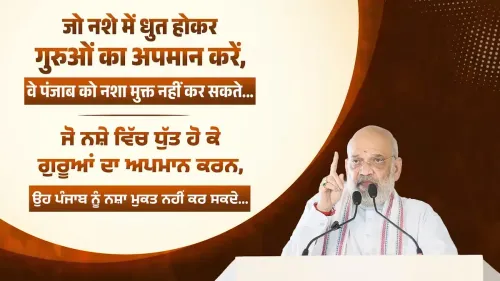
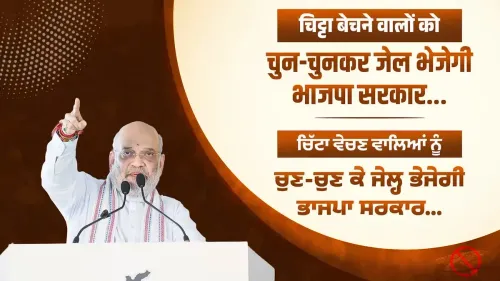
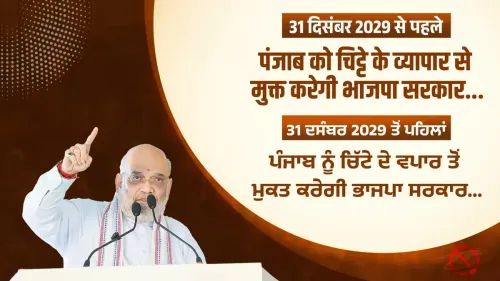
Union Home Minister Amit Shah, who has declared a war on narcotics, is set to meet the families of individuals killed for speaking out against 'chitta' — a potent synthetic opioid that has emerged as Punjab's most devastating drug crisis in recent memory. The meeting, announced on 19 October 2026, follows a Union Home Ministry directive seeking a report from Punjab's Chief Secretary on three drug-related deaths, and signals a sharp escalation in Centre-state tensions over the state's narcotics menace.
What Is Chitta and Why Is It Spreading
Chitta — meaning 'white' in Punjabi — is an adulterated opioid mixture derived from heroin, smuggled into Punjab through the Golden Crescent route passing through Pakistan and Afghanistan. According to officials, the drug's delivery network has grown so pervasive that chitta reportedly reaches consumers faster than food. Data indicates that thousands of young people across the state are addicted, with a significant proportion falling in the 15–25 age group. Studies suggest that addicts spend an average of ₹1,400 to ₹2,000 per day on the drug — a sum most cannot afford legitimately.
Officials say the resulting financial desperation is pushing unemployed addicts into the orbit of criminal networks. They are allegedly being recruited to retrieve drug consignments dropped by drones, ferry arms and ammunition, and, in some reported cases, carry out targeted killings. 'This would ensure that the state remains on the boil and could well pave the way for the revival of the Khalistan movement in Punjab,' one official said.
A Pattern of Silencing: The 'Shoot the Messenger' Incidents
An Intelligence Bureau official has flagged a troubling pattern: individuals who publicly speak out against chitta are increasingly being targeted. A report by The Reporters' Collective has documented nearly 50 instances of media censorship in Punjab, including FIRs, police raids, copyright strikes, and disruptions of news coverage critical of the system.
The year 2026 has seen a spike in such incidents. Maninderjeet Singh Sidhu, who exposed a local dealer in a video documenting the drug menace, was booked in an abetment-to-suicide case after the dealer, Sukhjinder Singh alias Chinda, died by suicide following the exposure. Parminder Singh Jhotta, a prominent anti-drug activist from Mansa, was shot dead by unidentified assailants. Bikramjit Singh, a 40-year-old anti-drug activist, was killed in Mari Panwan village. In another incident, Gulzar Singh, who publicly questioned Punjab Finance Minister Harpal Singh Cheema at a public meeting about the easy availability of chitta in his village Toor Banjara, was summoned by the village panchayat the following day and asked to apologise; humiliated by the episode, he reportedly died by suicide.
'When people who speak out are killed, it hampers law enforcement operations as their sources begin to dry up,' the Intelligence Bureau official said. 'Without reliable ground-level sources, intelligence agencies find it difficult to function, as the flow of vital information from the ground is disrupted.'
Centre vs AAP: The Political Fault Line
Home Minister Shah has accused the Punjab government of pushing the state deeper into the drug crisis, asserting it had 'left no stone unturned' in doing so. He also stated that attempts to silence those who speak out against the drug menace would never succeed. The Bharatiya Janata Party (BJP) and the ruling Aam Aadmi Party (AAP) are already at loggerheads, and officials expect the drug menace to become a defining flashpoint ahead of the 2027 Punjab Assembly elections.
This comes amid multiple intelligence reports suggesting that Pakistan's Inter-Services Intelligence (ISI) is actively exploiting the addiction crisis to recruit addicts for acts of terror, arms smuggling, and violence — moves analysts see as part of a broader effort to destabilise Punjab and revive the Khalistan movement ahead of the elections.
The Road Ahead for Law Enforcement
Officials acknowledge that while there have been major drug busts in Punjab, the fight against chitta specifically still has a long way to go. Central and state agencies, officials say, need to be on the same page to mount an effective response — a coordination that has so far proven elusive. The Union Home Ministry's report-seeking move is being read as the Centre's first formal assertion of pressure on the AAP government. How Punjab responds will be closely watched as the state heads into a politically charged pre-election period.
Point of View
Whistleblowers prosecuted, a citizen dying by suicide after being humiliated for questioning a cabinet minister — points to a failure of institutional protection that goes beyond the drug trade itself. The Centre's move to seek a report and schedule a meeting with victims' families is politically timed, but the underlying intelligence warnings about ISI exploitation of addicts for terror logistics deserve to be assessed on their own merits, independently of the BJP-AAP slugfest. The real accountability gap is this: neither the Centre nor the state has put forward a verifiable framework for measuring addiction treatment outcomes, prosecutorial success rates, or source protection for informants — without which the 'war on chitta' risks being a war of press releases rather than one of genuine interdiction.
NationPress
19 Oct 2026
Frequently Asked Questions
What is 'chitta' and why is it a crisis in Punjab?
Chitta is an adulterated opioid mixture derived from heroin, smuggled into Punjab via the Golden Crescent route through Pakistan and Afghanistan. Thousands of young people — many in the 15–25 age group — are reportedly addicted, with daily consumption costing between ₹1,400 and ₹2,000 per user, pushing many toward crime to sustain their habit.
Why is Amit Shah meeting the families of anti-chitta activists?
Amit Shah is set to meet the families of individuals killed or driven to suicide for speaking out against the chitta drug menace in Punjab. The meeting follows the Home Ministry seeking a report from Punjab's Chief Secretary on three drug-related deaths, and comes amid allegations that the state government has failed to protect anti-drug voices.
What incidents of 'shooting the messenger' have been reported in Punjab?
In 2026, anti-drug activist Parminder Singh Jhotta was shot dead in Mansa, and Bikramjit Singh was killed in Mari Panwan village. Gulzar Singh died by suicide after being publicly humiliated for questioning Punjab Finance Minister Harpal Singh Cheema about chitta availability. Separately, Maninderjeet Singh Sidhu was booked in an abetment-to-suicide case after exposing a local dealer.
How is the ISI allegedly linked to Punjab's drug crisis?
According to intelligence officials, Pakistan's Inter-Services Intelligence (ISI) is allegedly exploiting drug addiction in Punjab to recruit addicts for terror logistics, including retrieving drone-dropped drug and arms consignments and carrying out targeted killings. Officials warn this is part of a broader effort to destabilise Punjab and revive the Khalistan movement ahead of the 2027 elections.
How does the chitta crisis affect the 2027 Punjab Assembly elections?
The drug menace is expected to be a major point of contention between the BJP and the ruling AAP in the run-up to the 2027 Punjab Assembly elections. The Centre's escalating pressure — including the Home Ministry's report-seeking move and Shah's planned meeting — is being read as a political as well as a security offensive against the state government.