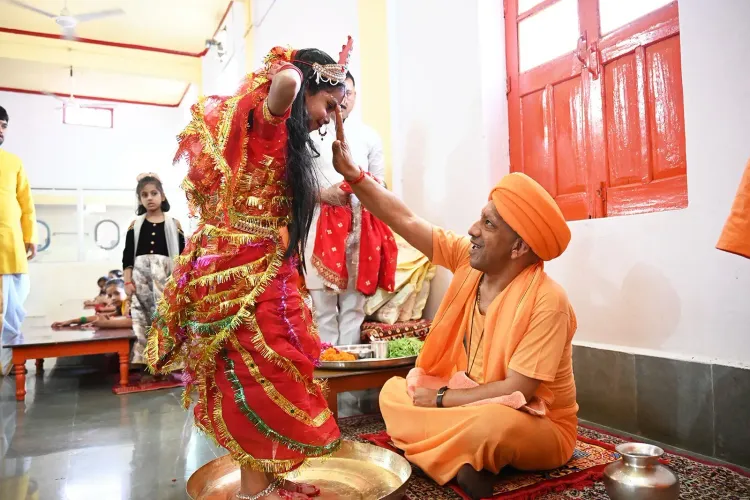
CM Yogi performs Kanya Pujan at Gorakhnath Temple on Mahanavami
Synopsis
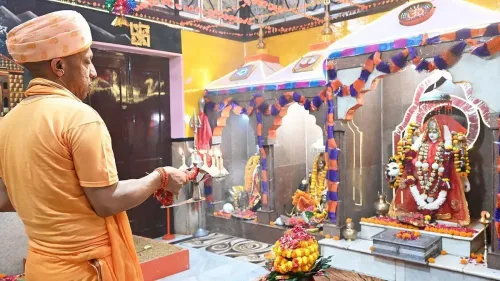
Chief Minister Yogi Adityanath performed Kanya Pujan at Gorakhnath Temple in Gorakhpur on Mahanavami, worshipping young girls as divine embodiments of Shakti and praying for the welfare and prosperity of all Uttar Pradesh residents.
Key Takeaways
CM Yogi Adityanath performed Kanya Pujan at Gorakhnath Temple, Gorakhpur on 19 October 2026 .
The occasion was Mahanavami , the ninth and most auspicious day of Sharadiya Navratri .
He prayed to Jagajjannani Maa Jagdamba for the happiness, prosperity, and good health of Uttar Pradesh's people.
Yogi Adityanath is both the elected Chief Minister of UP and the mahant of the Gorakhnath Peetha , giving the ritual dual religious and institutional significance.
He has performed Navratri observances at the temple consistently every year since taking office in 2017 .
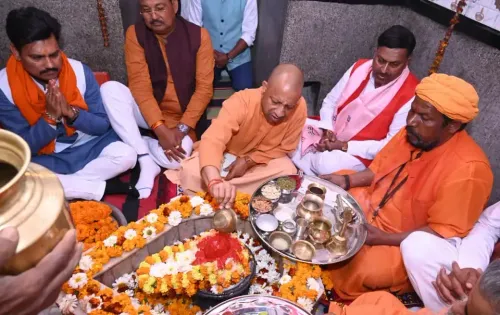
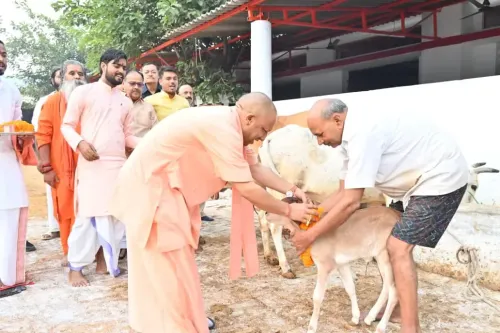
On the auspicious ninth day of Sharadiya Navratri, Uttar Pradesh Chief Minister Yogi Adityanath offered prayers to young girls as divine embodiments of the goddess — a tradition that fuses faith, governance, and cultural identity in one vivid frame at Gorakhnath Temple, Gorakhpur, on Monday, 19 October 2026.
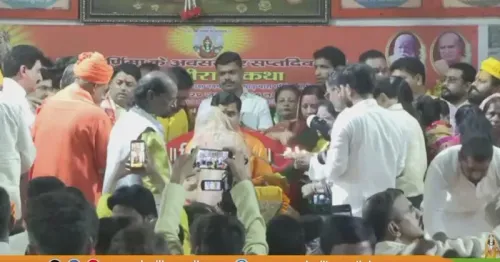
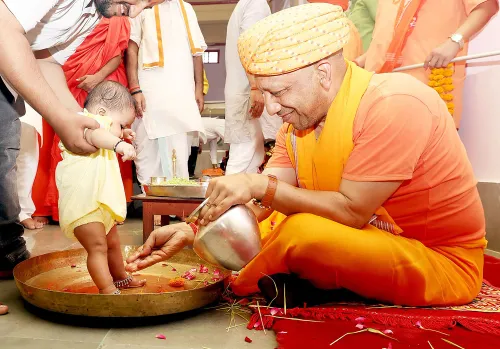
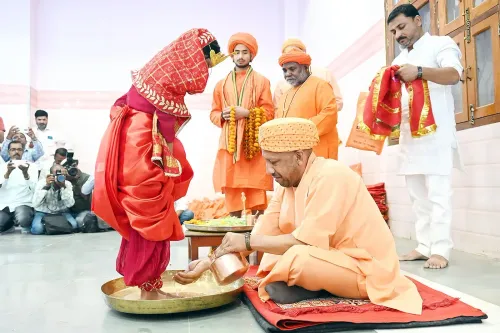
The Chief Minister's Office of Uttar Pradesh announced on X that CM Yogi performed Kanya Pujan — the ritual worship of young girls as living representations of Shakti — at @GorakhnathMndr on the occasion of Mahanavami. In keeping with the ceremony's spirit, he also prayed to Jagajjannani Maa Jagdamba — the Universal Mother — for the happiness, prosperity, and good health of the people of Uttar Pradesh.
Mahanavami at Gorakhnath: what the ritual means
Mahanavami, the ninth and final day of Navratri's core nine nights, is considered among the most auspicious tithis in the Hindu calendar. Kanya Pujan on this day involves welcoming young girls into the home or temple, washing their feet, applying tilak, offering food, and seeking their blessings — because tradition holds that on this day each girl is a living manifestation of the goddess.
For Yogi Adityanath, this observance carries a double significance. He is simultaneously the elected head of India's most populous state and the mahant — spiritual head — of the Gorakhnath Peetha, one of the most revered seats of the Nath yogi tradition. The temple in Gorakhpur is not merely a place of worship for him; it is his institutional home, making these rituals an extension of his identity in a way that few other political leaders can claim.
A consistent Navratri presence since 2017
Since taking office in 2017, CM Yogi has performed Kanya Pujan and associated Navratri rituals at Gorakhnath Temple each year — both in Chaitra (spring) and Sharadiya (autumn) cycles. The consistency of the observance has made it a fixture of Uttar Pradesh's public religious calendar, drawing attention well beyond Gorakhpur.
Indian state leaders across the political spectrum participate in major Hindu festivals, but the combination of Yogi Adityanath's religious office and his administrative role gives these moments an unusual institutional weight — they are at once personal devotion, cultural continuity, and public communication.
With Diwali weeks away, all eyes will be on how the state marks the next major festival on the calendar — and whether the scale of public participation continues to grow.
Point of View
Which makes these observances uniquely potent public signals. Over nearly a decade in office, the consistency of these rituals has helped consolidate his image in Uttar Pradesh's cultural imagination well beyond the reach of conventional political messaging. As the BJP prepares for the next electoral cycle in the state, that image of piety paired with administrative continuity remains one of the party's most reliable assets.
NationPress
19 Oct 2026
Frequently Asked Questions
What is Kanya Pujan and why is it performed on Mahanavami?
Kanya Pujan is a Hindu ritual in which young girls are worshipped as living embodiments of the goddess Durga. It is traditionally performed on Mahanavami — the ninth day of Navratri — which is considered the most auspicious tithi of the festival. Devotees wash the girls' feet, apply tilak, offer food, and seek their blessings.
Where did CM Yogi perform Kanya Pujan in 2026?
CM Yogi Adityanath performed Kanya Pujan at Gorakhnath Temple in Gorakhpur, Uttar Pradesh, on 19 October 2026, on the occasion of Sharadiya Navratri's Mahanavami.
What did CM Yogi pray for during the Mahanavami ceremony?
According to the Chief Minister's Office of Uttar Pradesh, CM Yogi prayed to Jagajjannani Maa Jagdamba for the happiness, prosperity, and good health of all residents of Uttar Pradesh.
What is Gorakhnath Temple and why is it significant for Yogi Adityanath?
Gorakhnath Temple in Gorakhpur is the headquarters of the Nath yogi tradition and one of the most historically significant temple complexes in Uttar Pradesh. It is significant for Yogi Adityanath because he is the mahant — spiritual head — of the Gorakhnath Peetha, making it both his religious home and a key site for public ceremonial observances.
Does CM Yogi perform Navratri rituals every year?
Yes. Since assuming office in 2017, Yogi Adityanath has consistently performed Kanya Pujan and other Navratri rituals at Gorakhnath Temple during both the Chaitra and Sharadiya Navratri cycles each year.