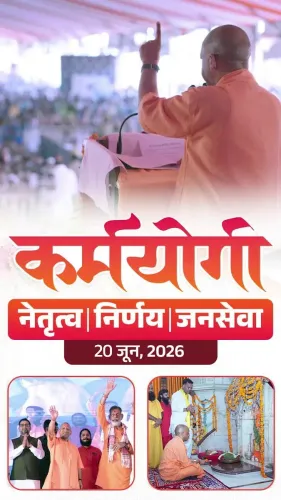
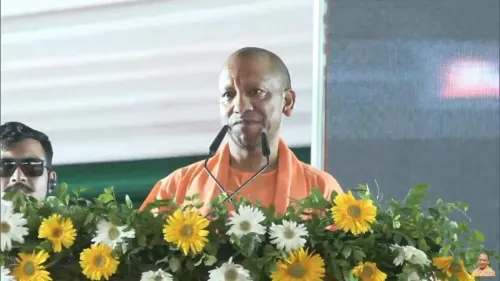
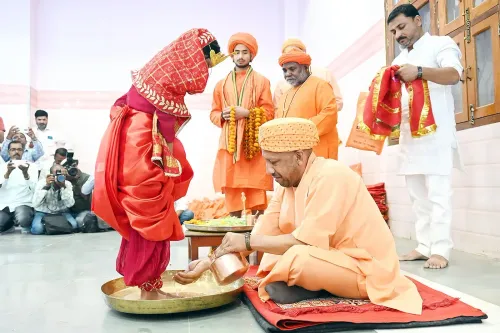
CM Yogi Extends Navratri Wishes, Calls UP a Hub of Cultural Renaissance
Synopsis
On Shardiya Navratri 2026, UP CM Yogi Adityanath extended greetings and issued a civic pledge — urging citizens to champion women's safety, support girl-child education, and help women achieve self-reliance, framing the festival as a call for social action.
Key Takeaways
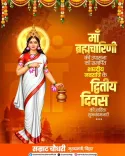
CM Yogi Adityanath posted Shardiya Navratri greetings on October 12, 2026 , addressing citizens of Uttar Pradesh.
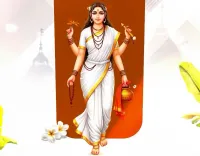
He interpreted the nine forms of the Mother Goddess as symbols of triumph of humility, courage, and justice over arrogance and negativity.
The Chief Minister declared Uttar Pradesh a 'powerful centre of renaissance of faith, culture, and tradition.' He called for a three-point Navratri pledge: champion women's safety, support girl-child education, and assist women seeking self-reliance.
The message linked devotional worship to civic responsibility, consistent with the Gorakhnath Math's tradition of socially activist religious interpretation.
The post reinforces the UP government's ongoing Mission Shakti messaging on women's welfare during a high-visibility religious season.
On the auspicious occasion of Shardiya Navratri 2026, Uttar Pradesh Chief Minister Yogi Adityanath has framed the nine-day festival not merely as a religious observance but as a moral and social call to action — urging every citizen to stand as a voice for women's safety, education, and economic independence.
In a post shared on Monday, October 12, the Chief Minister wrote: 'Ahankaar, duraagrah, aasakthi aur badhti nakaraatmak pravrittiyon par vinmrata, saahas, shakti, sankalp, nyay aur dharm ki vijay ka bhaav hi Maa ke nau swaroopон mein nihit hai' — 'The essence of the nine forms of the Mother Goddess lies in the triumph of humility, courage, power, resolve, justice, and righteousness over arrogance, stubbornness, attachment, and growing negativity.' He addressed citizens as 'my respected fellow residents of the state,' setting a tone that was personal before it was political.
Navratri as a Mirror for Society's Struggles
The Chief Minister's message drew a direct line between the mythology of Mahishasuramardini — the goddess who slew the buffalo demon — and contemporary social challenges. He argued that Navratri reminds society that goodness alone is insufficient; it must be backed by 'shakti aur sankalp ka saamarthya' — the strength of power and resolve. The framing positions the festival as an annual civic reset, not just a personal spiritual observance.
This is consistent with the Gorakhnath Math's long tradition of interpreting Shakti worship in socially activist terms. As head of the Gorakhnath Math in Gorakhpur, Yogi Adityanath occupies a dual role: chief executive of India's most populous state and a religious authority whose theological readings carry institutional weight across a vast devotional network in the Hindi belt.
UP as a 'Powerful Centre of Cultural Renaissance'
The post made a pointed assertion about Uttar Pradesh's identity under the current administration: 'Uttar Pradesh aaj aastha, sanskriti aur parampara ke punarnavaagaran ka sashakt kendra ban raha hai' — 'Uttar Pradesh is today becoming a powerful centre for the renaissance of faith, culture, and tradition.' This phrase has become a recurring motif in CM Yogi's public communication, positioning the state as the spiritual and cultural heartland of India amid large-scale infrastructure and religious tourism investments, including the Ayodhya development corridor.
A Three-Point Pledge for Women's Empowerment
Beyond the spiritual salutation, the Chief Minister issued a three-part public pledge: to become the voice of a sister's safety, to support a girl child's education, and to become a support system for a woman striving to be self-reliant. The language of the pledge — collective, actionable, citizen-directed — is deliberate. It moves the moral weight of Navratri from the temple to the street, asking worshippers to translate devotion into civic behaviour.
The emphasis on daughters receiving 'shiksha, suraksha aur saman avsar' — education, security, and equal opportunity — echoes several state-level schemes targeting girl-child welfare in UP, including efforts around school enrolment, women's self-help groups, and Mission Shakti, the state's flagship programme for women's safety and empowerment launched in 2020.
As the festival lasts nine days and culminates in Vijayadashami, the Chief Minister's message lands at the very threshold of a fortnight that holds enormous cultural and political resonance across the Hindi heartland. The confluence of Navratri's devotional energy and an explicit policy pitch for women's welfare is a signature of how UP's government has sought to weave religious occasion into governance messaging — and this Navratri is no different.
Point of View
He makes welfare policy feel like sacred duty — a framing that resonates deeply in UP's vast rural devotional belt and is difficult to oppose without seeming to oppose the goddess herself. The 'cultural renaissance' assertion serves a longer-term narrative architecture: positioning UP as India's civilisational anchor ahead of future electoral cycles. The citizen-directed pledge, rather than a list of government schemes, is also strategically smart — it distributes moral ownership of women's welfare across society, not just administration, softening accountability while amplifying reach.
NationPress
12 Oct 2026
Frequently Asked Questions
What did CM Yogi Adityanath say on Navratri 2026?
CM Yogi Adityanath extended Shardiya Navratri greetings on October 12, 2026, urging UP citizens to pledge support for women's safety, girl-child education, and women's self-reliance, while calling UP a powerful centre of cultural and spiritual renaissance.
What is the significance of Shardiya Navratri?
Shardiya Navratri is a nine-day Hindu festival celebrating the nine forms of the Mother Goddess, culminating in Vijayadashami. It commemorates the goddess Mahishasuramardini's victory over evil and is one of the most widely observed religious festivals in northern India.
What is Mission Shakti in Uttar Pradesh?
Mission Shakti is a flagship programme launched by the Uttar Pradesh government in 2020, focused on women's safety, security, and empowerment. It operates across districts and encompasses awareness campaigns, legal aid, and support for women's economic self-reliance.
What is the Gorakhnath Math and CM Yogi's connection to it?
The Gorakhnath Math is a prominent Hindu monastery in Gorakhpur, Uttar Pradesh, with a centuries-old tradition of Nath Sampraday worship. CM Yogi Adityanath is the head — or Mahant — of this Math, making him both the chief minister of UP and a major religious authority in the region.
What did CM Yogi say about Uttar Pradesh's cultural identity?
CM Yogi stated that Uttar Pradesh is today becoming a 'powerful centre of renaissance of faith, culture, and tradition,' framing the state as India's civilisational and spiritual heartland under his administration.