CM Yogi Links Faith-Respect to Development in UP
Synopsis
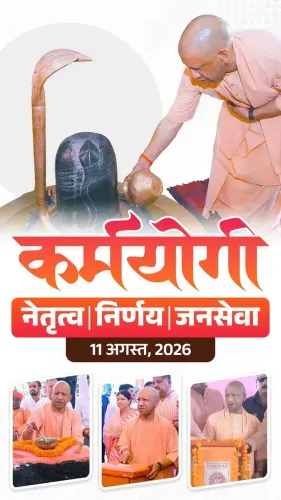
Uttar Pradesh CM Yogi Adityanath posted on August 11, 2026, arguing that only a government respecting citizens' faith can deliver development — a statement that sharpens the BJP's cultural-governance narrative ahead of the 2027 state assembly elections.
Key Takeaways
CM Yogi Adityanath posted on August 11, 2026 linking respect for faith directly to a government's capacity for development.
The post stated that those who do not respect citizens' faith 'cannot bring development either' — a pointed implicit contrast with rival parties.
The framing echoes the BJP's governance model in Uttar Pradesh since 2017 , exemplified by projects like the Kashi Vishwanath Corridor .
Uttar Pradesh assembly elections are due in 2027 , giving the statement clear electoral context.
The BJP has consistently presented faith-aligned governance as a distinguishing feature from previous state governments.
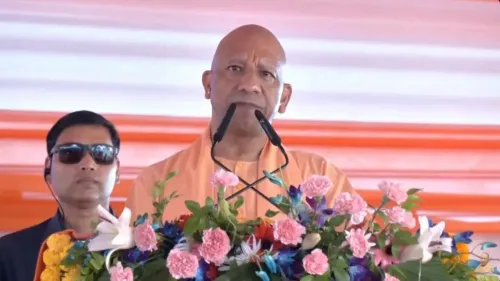
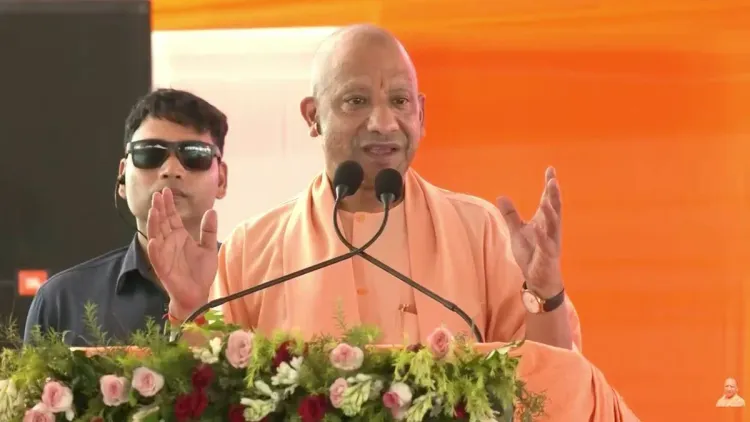
Faith and governance are inseparable — that is the argument Uttar Pradesh Chief Minister Yogi Adityanath put forward on Tuesday, August 11, 2026, in a pointed post on X that drew a direct line between a government's regard for religious sentiment and its capacity to deliver development.
Posting in Hindi, CM Yogi stated: 'Only a government that respects your faith will be able to bring development. Those who do not hold your faith in respect cannot bring development either.' The formulation is compact but deliberate — faith-respect as a prerequisite, not a byproduct, of effective administration.
A governance argument nine years in the making
This framing did not arrive in a vacuum. Since Yogi Adityanath first took office in 2017, his government has pursued a model that weaves religious heritage into the state's development architecture. The Kashi Vishwanath Corridor in Varanasi — linking the ancient temple precinct to the ghats — became the flagship example: a project that simultaneously claimed religious restoration and economic stimulus through religious tourism.
Temple circuits, restoration of pilgrimage infrastructure, and cultural-identity legislation have all been presented under the same umbrella: that a government attuned to Uttar Pradesh's majority faith is, by that very attunement, better positioned to govern its people. Tuesday's post distils that nine-year argument into two sentences.
The political clock ticking toward 2027
The timing sharpens the message. Uttar Pradesh heads to assembly elections in 2027, and the BJP's state campaign is expected to contrast its record with that of predecessor governments. The implicit audience in the post is clear: Hindu devotees and UP voters who are being invited to see their faith not as separate from civic life but as the very ground on which development stands.
Opposition parties have historically pushed back on this framing, arguing that conflating religious identity with governance competence risks marginalising communities outside the majority faith. No formal opposition response to this specific post was immediately available.
What the post signals — with the 2027 election less than a year away — is that the BJP's core cultural narrative in Uttar Pradesh is not softening. It is sharpening.
Point of View
The statement functions as both a philosophical claim and a campaign contrast — positioning the BJP as the natural custodian of the state's majority faith and, by extension, its development agenda. The risk in this framing is its exclusionary logic: critics will argue it conditions development entitlement on religious identity. Whether the opposition can convert that critique into electoral traction in UP remains the central political question heading into 2027.
NationPress
25 Sept 2026
Frequently Asked Questions
What did CM Yogi Adityanath say about faith and development?
On August 11, 2026, CM Yogi posted that only a government that respects citizens' faith can bring development, and that those without such respect cannot deliver development either.
Why is Yogi Adityanath linking religion to governance?
Since 2017, Yogi Adityanath's government has presented respect for religious heritage as central to its development model, citing projects like the Kashi Vishwanath Corridor as proof that faith-aligned governance drives economic and social progress.
What is the Kashi Vishwanath Corridor and how does it relate?
The Kashi Vishwanath Corridor in Varanasi is a flagship UP government project that redeveloped the area around the ancient temple, linking religious heritage with tourism infrastructure — the clearest example of the BJP's faith-plus-development approach in the state.
Is this statement related to the 2027 UP elections?
While no specific electoral event triggered the post, Uttar Pradesh is headed to assembly elections in 2027 and the statement aligns with the BJP's expected campaign narrative contrasting its cultural governance record with that of previous governments.
What has been the opposition's response to Yogi's faith-development argument?
Opposition parties have historically argued that linking governance competence to religious identity risks sidelining minority communities, though no formal response to this specific August 11 post was immediately available.