CM Yogi's UP Writes New Chapter of Faith, Heritage and Growth
Synopsis
The Chief Minister's Office of Uttar Pradesh says CM Yogi Adityanath is leading the state in writing a new prosperity chapter grounded in respect for faith, heritage conservation, and a development resolve — continuing a policy arc active since 2017.
Key Takeaways
The Chief Minister's Office of Uttar Pradesh posted on 20 June 2026 reaffirming the state's commitment to faith, heritage, and development under CM Yogi Adityanath .
The message continues a governance narrative in place since March 2017 , linking religious cultural renewal with economic growth.
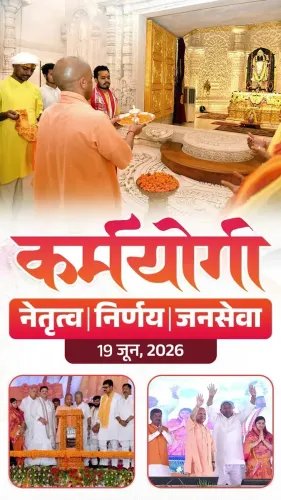
The Kashi Vishwanath Corridor in Varanasi , inaugurated in 2021 , remains the flagship symbol of this combined heritage-and-development approach.
Ayodhya , Mathura , and Prayagraj have each seen state-backed infrastructure upgrades tied to their religious tourism potential.
Tourism revenue and footfall data from newly commissioned corridors will be key indicators of whether the policy delivers measurable economic returns.
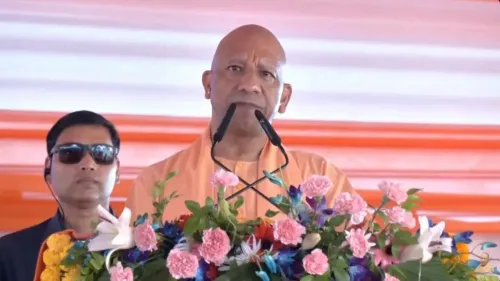
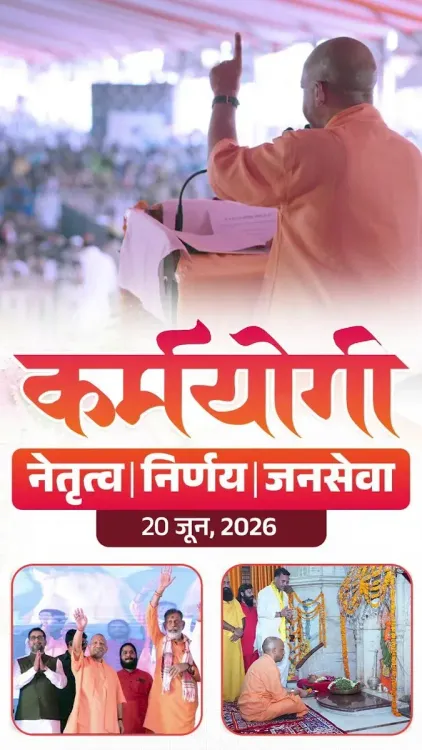
The Chief Minister's Office of Uttar Pradesh on Saturday, 20 June 2026, declared that Uttar Pradesh under Chief Minister Yogi Adityanath is writing a new chapter of prosperity — one built on respect for faith, preservation of heritage, and a firm resolve for development.
The post, shared from the official CMO handle, stated in Hindi: 'नया उत्तर प्रदेश आस्था के सम्मान, विरासत के संरक्षण और विकास के संकल्प के साथ समृद्धि के नए अध्याय लिख रहा है' — meaning, 'The new Uttar Pradesh is writing new chapters of prosperity with respect for faith, preservation of heritage, and a resolve for development.'
Context
The message reflects the Yogi Adityanath government's long-standing communication strategy of presenting cultural and religious renewal as inseparable from economic progress. Since March 2017, when CM Yogi first assumed office, the state government has consistently framed its governance around this dual mandate. The post carries no reference to a specific scheme or event, but arrives against a backdrop of sustained infrastructure and heritage investment across Uttar Pradesh.Policy Backdrop
The most visible expression of this philosophy has been the Kashi Vishwanath Corridor in Varanasi, inaugurated in 2021, which expanded public access to the Jyotirlinga temple while redeveloping the surrounding precinct with central and state funding. The project is widely cited by the state government as a model for integrating religious tourism with urban infrastructure. Similarly, Ayodhya — site of the Ram Mandir — has seen state-supported road, rail, and airport upgrades tied directly to its religious significance and tourism potential. State government notifications issued from 2017 onward designated multiple religious sites for integrated conservation and tourism infrastructure development, establishing a policy lineage that the current messaging continues to invoke.Stakeholders and Impact
Pilgrims visiting major centres such as Varanasi, Ayodhya, Mathura, and Prayagraj are the most direct beneficiaries of corridor and infrastructure projects linked to this policy thrust. Residents of heritage towns stand to gain from improved civic amenities, though the pace and distribution of benefits across communities remains a subject of ongoing public discussion. The tourism sector in Uttar Pradesh — one of India's largest by pilgrim footfall — has a direct stake in the state's ability to sustain and expand its religious tourism circuits. This approach mirrors similar state-level initiatives in Madhya Pradesh and Rajasthan, where heritage restoration has been linked to broader tourism economy strategies.What's Next
Observers will watch for tourism and revenue figures from newly commissioned corridors in Ayodhya, Mathura, and Prayagraj over the next two financial years, as well as any fresh state budget allocations for heritage site management authorities. The CMO's messaging signals that the government intends to keep faith, heritage, and development tightly bundled as a political and policy narrative heading into future electoral cycles. Whether this translates into measurable economic gains for the state's broader population — beyond the pilgrimage economy — will be the defining test of the 'new Uttar Pradesh' proposition.Point of View
Making the messaging as much electoral groundwork as governance communication. The framing of 'new Uttar Pradesh' as a prosperity story anchored in faith mirrors a broader BJP-governed state playbook visible in Madhya Pradesh and Rajasthan. The real test will be whether corridor-led growth translates into per-capita income gains and employment beyond the pilgrimage economy.
NationPress
19 Sept 2026
Frequently Asked Questions
What is CM Yogi Adityanath's vision for Uttar Pradesh?
CM Yogi Adityanath's stated vision, as reflected in official government communication, is a 'new Uttar Pradesh' that combines respect for religious faith, preservation of cultural heritage, and infrastructure-led economic development simultaneously.
What is the Kashi Vishwanath Corridor and why is it significant?
The Kashi Vishwanath Corridor is a redevelopment project in Varanasi that expanded public access to the Jyotirlinga temple. Inaugurated in 2021, it is the flagship example of the Yogi government's approach to combining heritage conservation with tourism infrastructure.
How has Uttar Pradesh developed religious tourism since 2017?
Since 2017, the Uttar Pradesh government has designated multiple pilgrimage centres — including Varanasi, Ayodhya, Mathura, and Prayagraj — for integrated conservation and tourism infrastructure upgrades, framing religious tourism as an economic multiplier for the state.
What is the significance of Ayodhya in Uttar Pradesh's development plans?
Ayodhya, as the site of the Ram Mandir, has received state-supported road, rail, and airport infrastructure upgrades. The government presents these investments as both honouring the city's religious significance and boosting its tourism economy.
What should we watch for next in Uttar Pradesh's heritage policy?
Key indicators to watch include tourism footfall and revenue data from corridors in Ayodhya, Mathura, and Prayagraj, as well as any new state budget allocations for heritage site management authorities in the coming financial years.