CM Yogi Pledges Development, Security and Faith for UP
Synopsis
Uttar Pradesh Chief Minister Yogi Adityanath on 13 June 2026 posted a four-line Hindi pledge on X, reaffirming his government's simultaneous commitment to development, security, religious respect, and prosperity — a formulation central to the BJP's governance narrative in the state ahead of the 2027 assembly elections.
Key Takeaways
Yogi Adityanath posted a Hindi pledge on 13 June 2026 outlining four governance priorities: development, security, faith, and prosperity.
The post translates as: 'We will bring development, we will provide security, we will honour faith, and we will take all of you towards new heights of prosperity.' The four-point formulation has been a recurring theme of Adityanath's public messaging since he first took office in 2017 .
The BJP -led Uttar Pradesh government has previously paired such rhetoric with on-ground projects including expressways, anti-encroachment drives, and the Ayodhya development corridor.
The post comes ahead of the 2027 Uttar Pradesh assembly elections , giving it significance as a political consolidation signal.
The religious tourism sector — centred on Ayodhya , Varanasi , and Mathura — is among the key stakeholder groups likely to watch for follow-up policy action.
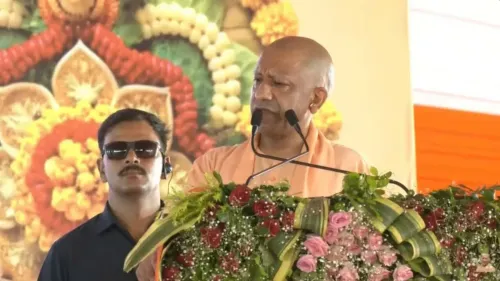
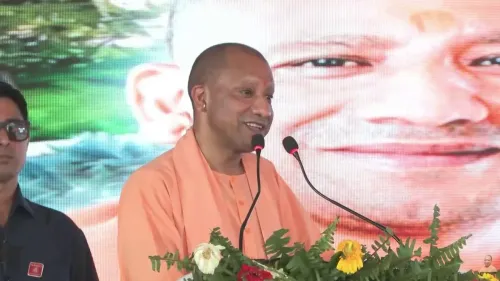
Uttar Pradesh Chief Minister Yogi Adityanath on Saturday, 13 June 2026, reaffirmed his government's commitment to simultaneous economic growth, public security, and respect for religious faith, posting a four-line pledge on X that has become a signature refrain of his administration's outreach to voters across the state.
In the post, written in Hindi, the Chief Minister declared: 'हम विकास भी करेंगे, सुरक्षा भी देंगे, आस्था का सम्मान भी करेंगे, समृद्धि की नई ऊंचाई की ओर भी आप सबको लेकर जाएंगे' — translated as: 'We will bring development, we will provide security, we will honour faith, and we will take all of you towards new heights of prosperity.'
Context
The post distils the three-pronged governance philosophy that Yogi Adityanath has articulated since first taking office in 2017: infrastructure-led economic growth, strict law-and-order enforcement, and public affirmation of Hindu religious sentiment. The messaging is directed at the residents of Uttar Pradesh, India's most populous state, which the Chief Minister has governed under the banner of the Bharatiya Janata Party (BJP) for two consecutive terms.
The four-line formulation — development, security, faith, prosperity — is not new to Adityanath's public communication. It has appeared across election rallies, state-level summits, and social-media addresses as a condensed articulation of his administration's priorities, binding together constituencies that value economic opportunity and those motivated by cultural and religious identity.
Policy Backdrop
Since 2017, the Adityanath government has pursued large-scale infrastructure projects — expressways, industrial corridors, and urban development schemes — alongside high-profile law-and-order campaigns including anti-encroachment drives and 'Operation Clean.' These initiatives were presented not as competing priorities but as mutually reinforcing pillars of governance.
The faith dimension received its most prominent expression through the Ayodhya development project, which accelerated after 2019 and culminated in the consecration of the Ram Temple. The state government framed religious-site development and economic investment as complementary, drawing pilgrimage-linked tourism into its prosperity narrative. The religious tourism sector in Uttar Pradesh has since become a significant driver of the state's hospitality and infrastructure spending.
Stakeholders and Impact
The immediate audience for the post is the broad electorate of Uttar Pradesh — a state of more than 24 crore people spanning agricultural communities, urban middle classes, and religiously active constituencies. For each group, one of the four pledges — development, security, faith, prosperity — carries particular resonance, making the formulation a deliberate act of political consolidation.
The religious tourism sector, which has grown substantially around sites such as Ayodhya, Varanasi, and Mathura, stands to benefit if the prosperity pledge translates into fresh infrastructure announcements. Small traders, hoteliers, and transport operators in these pilgrimage corridors have emerged as a stakeholder group closely aligned with the Adityanath government's economic messaging.
What's Next
With the 2027 Uttar Pradesh assembly elections approaching, political observers will watch whether this social-media pledge is followed by concrete scheme launches or policy announcements — particularly in infrastructure, policing reform, or religious-site development. The BJP's strategy in the state has historically paired such rhetorical reaffirmations with on-ground rollouts timed to the electoral calendar.
Any fresh announcements on law-and-order initiatives or new tourism and industrial investment packages in the coming months will be read against this publicly stated four-point commitment, giving the post a benchmarking quality beyond its immediate communicative purpose.
Point of View
Not a routine social-media update — its deliberate sequencing of development, security, faith, and prosperity mirrors the BJP's coalition-building logic in Uttar Pradesh, addressing economic aspirants, law-and-order voters, and religiously motivated constituencies in a single breath. The timing, roughly eighteen months before the 2027 assembly elections, suggests the party is already in campaign-consolidation mode, using the Chief Minister's personal platform to anchor the incumbent narrative. What distinguishes this cycle from previous ones is the maturity of the Ayodhya infrastructure as a deliverable: the Ram Temple consecration has already occurred, allowing the 'faith' pillar to shift from promise to achievement. The post therefore functions as a scorecard reminder as much as a forward pledge — a subtle but significant rhetorical evolution.
NationPress
27 Oct 2026
Frequently Asked Questions
What did CM Yogi Adityanath post on X on 13 June 2026?
Yogi Adityanath posted a four-line Hindi message pledging that his government will deliver development, security, respect for faith, and lead citizens towards new heights of prosperity in Uttar Pradesh.
What does Yogi Adityanath's governance model focus on?
His governance model centres on three simultaneous priorities: infrastructure-led economic development, strict law-and-order enforcement, and public affirmation of Hindu religious sentiment — a framework he has maintained since taking office in 2017.
How does this post relate to the 2027 UP elections?
With Uttar Pradesh assembly elections due in 2027, the post is widely seen as an early consolidation signal, reaffirming the BJP's core narrative of development paired with security and faith-based outreach to the state's diverse electorate.
What major projects has the Yogi government linked to its faith and development narrative?
The Ayodhya development corridor and Ram Temple project, accelerated after 2019, are the most prominent examples where the government has combined religious-site investment with broader infrastructure and tourism development.
Who are the key stakeholders affected by Yogi Adityanath's governance pledges?
The primary stakeholders are Uttar Pradesh's more than 24 crore residents, with particular relevance for the religious tourism sector around Ayodhya, Varanasi, and Mathura, as well as agricultural communities and urban middle-class voters.