CCUS to play key role in India's Net Zero 2070 vision: Government
Synopsis
India is formally positioning Carbon Capture, Utilisation and Storage as a pillar of its Net Zero 2070 strategy, with NITI Aayog flagging it as critical for industries like steel and cement that cannot easily electrify. Announced at ESTIC-2026 in New Delhi, this signals CCUS moving from research priority to mainstream industrial policy — with an indigenous ecosystem already taking shape across multiple states.
Key Takeaways
CCUS identified as a critical pathway for India's Net Zero by 2070 target, per an official government statement on 27 October 2026 .
NITI Aayog has flagged CCUS as essential for decarbonising hard-to-abate sectors: steel, cement, oil and gas, petrochemicals, chemicals, and fertilisers .
The government is building an ecosystem combining research institutions, public sector enterprises, and private industry across multiple states.
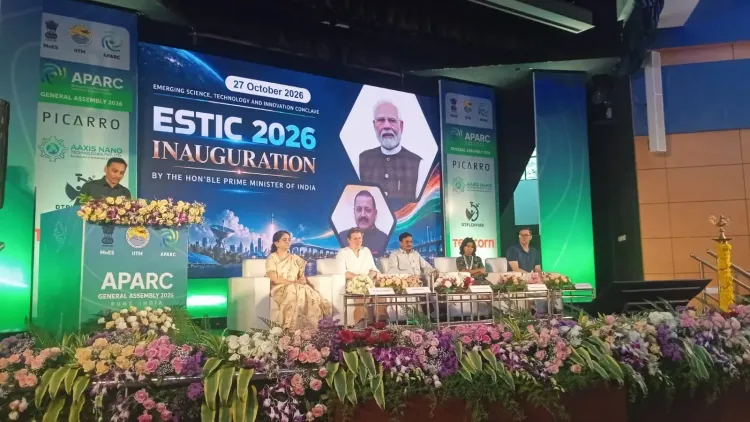
The announcement coincides with ESTIC-2026 , organised by CSIR at Bharat Mandapam, New Delhi , running 27–29 October 2026 .
CCUS is framed as complementing renewable energy, not replacing it, by addressing industrial processes that cannot be electrified.
Carbon Capture, Utilisation and Storage (CCUS) is emerging as a critical pathway for reducing emissions from hard-to-abate sectors and supporting India's Net Zero by 2070 target, according to an official statement issued on Tuesday, 27 October 2026. The announcement came on the sidelines of ESTIC-2026, the second edition of India's Emerging Science, Technology and Innovation Conclave, being held at Bharat Mandapam in New Delhi from 27–29 October 2026.
Why CCUS Matters for India
Renewable energy can substantially cut emissions across the economy, but several industrial processes remain resistant to electrification — particularly those requiring very high temperatures or carbon-based inputs. CCUS addresses this gap by capturing carbon dioxide from industrial sources before it enters the atmosphere, then either utilising it in productive applications or storing it securely underground.
According to the official statement, NITI Aayog identifies CCUS as critical for decarbonising hard-to-abate sectors including steel, cement, oil and gas, petrochemicals, chemicals, and fertilisers. These industries contribute significantly to industrial emissions and face structural technological barriers to achieving deep decarbonisation through electrification alone.
Building an Indigenous CCUS Ecosystem
The government is actively fostering an ecosystem that brings together research institutions, public sector enterprises, and private industry. This ecosystem spans operational projects, projects under execution, and proposed initiatives across multiple states. According to the statement, these collective efforts are laying the foundation for indigenous CCUS capabilities, carbon utilisation infrastructure, and secure carbon storage networks.
By connecting capture with utilisation and underground storage across multiple stages, the integrated approach is designed to address emissions while preserving industrial output. Officials noted that CCUS can also open avenues for new technology development and industrial capability-building within India.
ESTIC-2026: The Conclave Context
The official statement was issued in the context of ESTIC-2026, organised by the Council of Scientific and Industrial Research (CSIR) under the theme 'Creative Minds, Catalyzing Science, Empowering Technologies.' Spanning 12 thematic areas, the conclave features plenary sessions, technical discussions, and exhibitions, with energy technologies — including CCUS — forming a central focus.
This is the second edition of the conclave, reflecting the government's intent to institutionalise a platform for translating frontier science into industrial application. Notably, the choice of CCUS as a headline theme signals its elevation from a niche research interest to a mainstream policy priority.
Industrial Competitiveness and Climate Goals
The official framing positions CCUS not merely as a climate tool but as a driver of industrial competitiveness and resource efficiency. The statement argues that CCUS can reduce emissions from existing facilities while sustaining the production of essential goods — a balance India will need as it pursues economic growth alongside its 2070 net-zero commitment made at COP26.
Critics and climate economists have long noted that CCUS technology remains expensive and has yet to scale globally; the government's emphasis on indigenous capability-building suggests an attempt to bring down costs domestically over time. As the conclave runs through 29 October 2026, further policy signals on CCUS financing and regulatory frameworks are expected.
Point of View
But without a dedicated financing mechanism or a regulatory framework for carbon storage liability, the ecosystem risks staying a conclave talking point rather than becoming an industrial reality. The sectors flagged — steel, cement, fertilisers — are also among India's most politically sensitive in terms of pricing and employment, which makes any cost-add from CCUS retrofits a policy tightrope. The real test will be whether ESTIC-2026 produces actionable timelines, not just thematic endorsements.
NationPress
27 Oct 2026
Frequently Asked Questions
What is Carbon Capture, Utilisation and Storage (CCUS) and why is India pursuing it?
CCUS is a suite of technologies that capture carbon dioxide from industrial sources before it enters the atmosphere, then either use it productively or store it underground. India is pursuing it because several key industries — steel, cement, fertilisers — cannot be easily decarbonised through electrification alone, making CCUS essential to achieving the country's Net Zero by 2070 target.
Which sectors does CCUS target in India?
According to NITI Aayog, CCUS is critical for hard-to-abate sectors including steel, cement, oil and gas, petrochemicals, chemicals, and fertilisers. These industries contribute significantly to India's industrial emissions and face technological barriers to deep decarbonisation.
What is ESTIC-2026 and what is its relevance to CCUS?
ESTIC-2026 is the second edition of India's Emerging Science, Technology and Innovation Conclave, organised by the Council of Scientific and Industrial Research (CSIR) at Bharat Mandapam, New Delhi, from 27–29 October 2026. It is themed 'Creative Minds, Catalyzing Science, Empowering Technologies' and spans 12 thematic areas, with CCUS featured as a key energy technology focus.
How does CCUS complement India's renewable energy push?
Renewable energy can reduce emissions across much of the economy, but some industrial processes require very high temperatures or carbon-based inputs that cannot be electrified. CCUS fills this gap by capturing emissions at source, making it a complement — rather than a substitute — for renewables in India's low-carbon transition.
What is the current status of CCUS projects in India?
According to the official statement, India's CCUS ecosystem currently spans operational projects, projects under execution, and proposed initiatives across multiple states. The government is working to develop indigenous CCUS capabilities, carbon utilisation applications, and secure underground storage infrastructure, though specific project names or capacities were not detailed in the statement.