Non-fossil energy must cross 80% for India's net-zero goal: NITI Aayog
Synopsis
India's primary energy mix is still over 80% fossil-fuel dependent — yet NITI Aayog says that number must flip to 80% non-fossil for the country to reach net-zero. With a ₹37,500 crore coal gasification push and a new SAF partnership, the IBEC 2026 conference signalled that India is betting on multiple transition levers simultaneously, not just renewables.
Key Takeaways
NITI Aayog Advisor Rajnath Ram said non-fossil sources must exceed 80 per cent of India's primary energy basket for the country to achieve net-zero.
Currently, more than 80 per cent of India's primary energy comes from fossil fuels; renewables account for only 15–18 per cent .
India has expanded its energy sourcing network from 27 countries to more than 40 countries amid global supply disruptions.
The government has approved a ₹37,500 crore coal gasification initiative to convert domestic reserves into synthetic natural gas and methanol.
India holds nearly 300 billion tonnes of coal reserves that can support the gasification programme.
TPCI signed an MoU with the Sustainable Aviation Fuel (SAF) Association at IBEC 2026 to advance collaboration in sustainable aviation fuels.
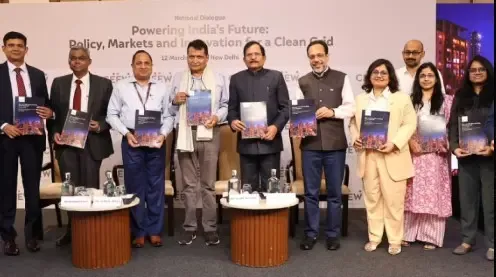
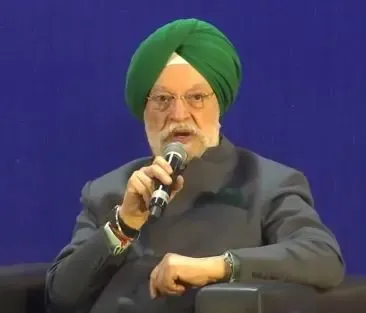
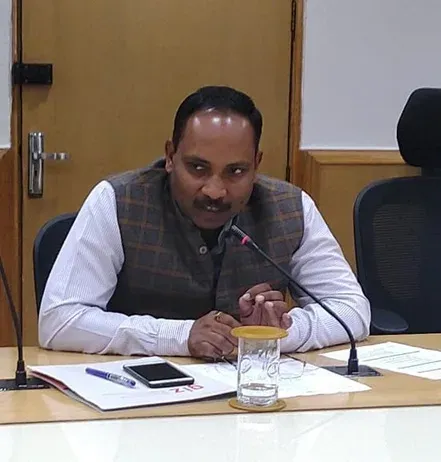
NITI Aayog has said India must reverse its energy mix fundamentally — raising the share of non-fossil sources to more than 80 per cent of its primary energy basket — to achieve its net-zero emissions target. The call came from Rajnath Ram, Advisor (Energy) at NITI Aayog, speaking at the India Bio Energy Conference (IBEC) 2026 in New Delhi, organised by the Trade Promotion Council of India (TPCI).
The Scale of the Challenge
Currently, more than 80 per cent of India's primary energy consumption is sourced from fossil fuels, while renewables and other non-fossil sources account for only 15–18 per cent. Ram described this imbalance as the central obstacle to India's net-zero ambitions.
'If you really want to become a net-zero country, the current system of your primary energy basket, which is heavily loaded with fossil-based energy sources, has to be reversed,' he said.
Diversifying Energy Sources and Geographies
Ram underlined the urgency of energy security in an increasingly volatile global environment. He noted that recent global disruptions have already pushed India to expand its energy sourcing network from 27 countries to more than 40 countries. He stressed that domestic resource utilisation must also improve alongside this geographic diversification.
Notably, India's energy import bill remains one of the largest drains on its current account, making supply-chain resilience a fiscal priority as much as a strategic one.
Coal Gasification as a Bridge Strategy
Ram highlighted coal gasification as a near-term lever for reducing import dependence. India holds nearly 300 billion tonnes of coal reserves, which can be converted into synthetic natural gas, methanol, and other downstream industrial products. He pointed to the government's recently approved ₹37,500 crore coal gasification initiative as a concrete step in this direction.
'If this synthetic natural gas is manufactured in the country, this will entirely replace our import of natural gas,' Ram said. The programme targets conversion of domestic coal and lignite reserves into synthesis gas for industrial use.
Bio-Energy and the Green Growth Agenda
TPCI Chairman Mohit Singla positioned bio-energy as a strategic pillar of India's energy transition, arguing it goes well beyond being an alternative fuel. 'Bio-energy is not merely an alternative fuel source; it is a strategic pillar of India's green growth story, poised to become a cornerstone of our energy transition,' Singla said. He added that bio-energy can simultaneously reduce fossil fuel dependence, address waste management, generate rural employment, and support farmers.
On the sidelines, TPCI signed a memorandum of understanding (MoU) with the Sustainable Aviation Fuel (SAF) Association to deepen collaboration in that sector.
What the Conference Covered
The IBEC 2026 brought together policymakers, diplomats, industry leaders, and energy experts to deliberate on compressed biogas (CBG), ethanol blending, sustainable aviation fuel (SAF), climate finance, biomass integration, and long-term energy security strategy. The breadth of the agenda reflects the growing consensus that India's energy transition cannot be driven by a single technology or fuel type.
With India's net-zero deadline set for 2070, the gap between the current 15–18 per cent non-fossil share and the required 80-plus per cent underscores how much structural transformation lies ahead.
Point of View
Yet the pace of transition so far has barely moved the needle. The ₹37,500 crore coal gasification bet is an interesting hedge — it monetises domestic reserves and reduces import exposure — but synthesis gas is still a carbon-emitting fuel, which means it buys time rather than delivers net-zero. The real question IBEC 2026 did not fully answer is what the binding policy mechanism will be to enforce the 80 per cent target. India has set ambitious energy mix goals before without credible enforcement timelines; without those, the 80 per cent figure risks becoming another aspirational headline.
NationPress
27 Oct 2026
Frequently Asked Questions
What did NITI Aayog say about India's net-zero energy target?
NITI Aayog Advisor Rajnath Ram said India must raise the share of non-fossil energy sources to more than 80 per cent of its primary energy basket to achieve its net-zero goal. Currently, over 80 per cent of India's primary energy comes from fossil fuels, with renewables contributing only 15–18 per cent.
What is India's ₹37,500 crore coal gasification initiative?
It is a government-approved programme worth ₹37,500 crore aimed at converting India's domestic coal and lignite reserves into synthesis gas, which can then be used to produce synthetic natural gas, methanol, and other industrial products. According to NITI Aayog, successful domestic production of synthetic natural gas could entirely replace India's current natural gas imports.
Why is India diversifying its energy sourcing to 40-plus countries?
Recent global supply disruptions have highlighted the risks of concentrated energy import dependence. India has expanded its energy sourcing network from 27 to more than 40 countries to improve resilience and reduce vulnerability to geopolitical shocks in any single supply corridor.
What role does bio-energy play in India's energy transition?
TPCI Chairman Mohit Singla described bio-energy as a strategic pillar of India's green growth agenda, capable of reducing fossil fuel dependence while also addressing waste management, creating rural employment, and supporting farmers. TPCI also signed an MoU with the SAF Association at IBEC 2026 to advance sustainable aviation fuel collaboration.
What is India's net-zero target year?
India has committed to achieving net-zero carbon emissions by 2070, as pledged under its Nationally Determined Contributions (NDCs) submitted to the United Nations Framework Convention on Climate Change (UNFCCC).