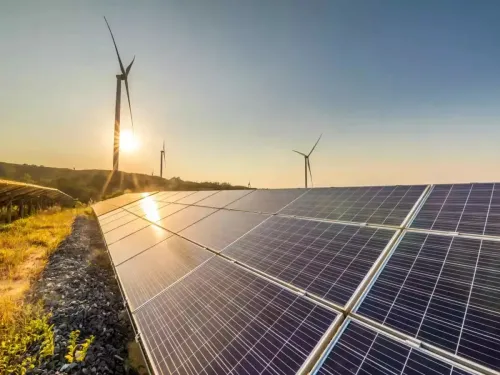
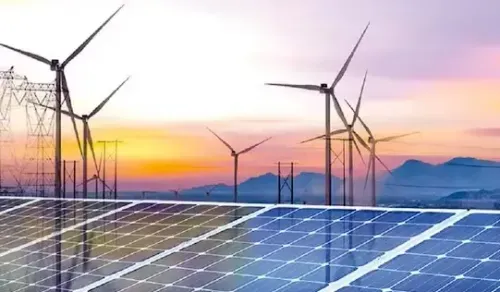
Has India Reached 50% Electricity Capacity from Non-Fossil Fuels?
Synopsis
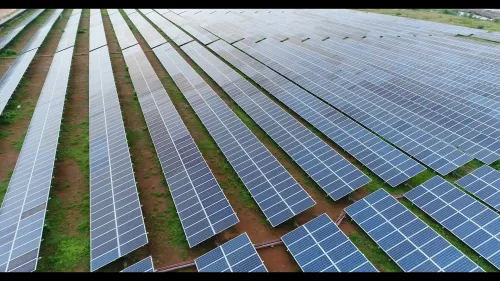
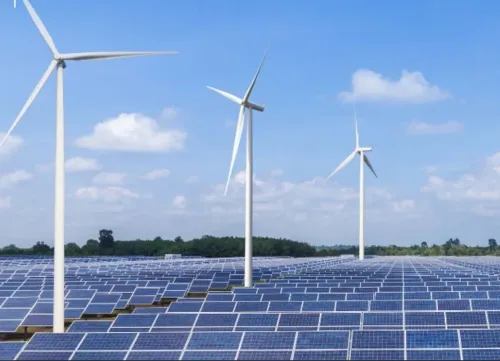
India has made significant strides towards sustainable energy by achieving 50% of its electricity capacity from non-fossil fuels, which is a milestone ahead of its target. This achievement not only highlights India's commitment to reducing carbon emissions but also boosts its carbon sink, ensuring a greener future.
Key Takeaways
50% of India's electricity capacity now comes from non-fossil fuels.
Creation of an additional carbon sink of 2.29 billion tonnes of CO2 equivalent.
Reduction of GHG emissions by 7.93% from 2019 to 2020.
India’s emission intensity of GDP decreased by 36% from 2005 to 2020.
Commitment to achieving net-zero emissions by 2070 .
New Delhi, Dec 8 (NationPress) The Indian government has declared that it has successfully achieved 50% of its electricity capacity from non-fossil fuels while simultaneously enhancing its carbon sink, as reported to Parliament on Monday.
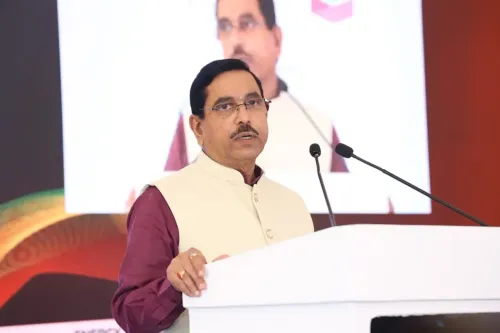
In a formal response in the Lok Sabha, Union Minister of State for Environment, Forest, and Climate Change (MoEFCC) Kirti Vardhan Singh highlighted the nation’s progress in minimizing carbon emissions.
“India has fulfilled its Nationally Determined Contribution (NDC) target of having a share of non-fossil fuel-based power generation capacity exceeding 50%, five years ahead of schedule, which was set for 2030,” Singh remarked.
He further noted, “India has established an additional carbon sink amounting to 2.29 billion tonnes of CO2 equivalent from its forest and tree cover.”
Referencing the Fourth Biennial Update Report (BUR-4) submitted to the United Nations Framework Convention on Climate Change (UNFCCC) in 2024, Singh pointed out that India's net national greenhouse gas (GHG) emissions in 2020 were 2,437 million tonnes of CO2 equivalent, a reduction of 7.93% compared to 2019.
This reduction is primarily attributed to the energy sector, where emissions decreased by 5.7%, and the Industrial Process and Product use sector, which saw a 9.5% decline from 2019 to 2020.
“India presented its Nationally Determined Contribution (NDC) under the Paris Agreement in 2015 and updated it in August 2022, establishing enhanced targets, including a 45% reduction in emissions intensity of GDP by 2030 from 2005 levels, achieving 50% cumulative electric power installed capacity from non-fossil fuel sources by 2030, and creating an additional carbon sink of 2.5 to 3 billion tonnes of CO2 equivalent through augmented forest and tree cover,” stated the Minister.
According to BUR-4, from 2005 to 2020, India’s emission intensity of Gross Domestic Product (GDP) decreased by 36%, he added.
India’s Long-Term Low-Carbon Development Strategy (LT-LEDS), submitted to the UNFCCC in November 2022, outlines a framework comprising seven key strategic transitions in areas such as electricity, transport, urban development, industry, carbon dioxide removal technologies, forestry, and financial resources to achieve net-zero emissions by 2070, guided by the principles of Common but Differentiated Responsibilities and Respective Capabilities (CBDR-RC), equity, and climate justice.
Point of View
I observe this development as a pivotal moment for India in the global fight against climate change. The government's proactive measures in achieving these ambitious targets reflect a strong commitment to sustainability, positioning India as a leader in the transition to clean energy. Such initiatives not only contribute to environmental goals but also enhance national pride and global standing.
NationPress
10 Oct 2026
Frequently Asked Questions
What is India's achievement in renewable energy?
India has achieved 50% of its electricity capacity from non-fossil fuels, surpassing its target set for 2030.
How much carbon sink has India created?
India has created an additional carbon sink of 2.29 billion tonnes of CO2 equivalent from forest and tree cover.
What are India's NDC targets?
India's NDC targets include a 45% reduction in emissions intensity of GDP by 2030 and achieving 50% of cumulative electric power capacity from non-fossil sources.
How much did India's GHG emissions decrease?
India's net national greenhouse gas emissions in 2020 were 2,437 million tonnes of CO2 equivalent, which is 7.93% lower than 2019.
What is India's plan for achieving net-zero emissions?
India's LT-LEDS outlines strategic transitions across various sectors to reach net-zero emissions by 2070.