Has India achieved over 50,000 MW of new power capacity in just 10 months of FY 26?
Synopsis
India has made significant strides in renewable energy, adding a record 52,537 MW of capacity in just 10 months. This achievement reflects an 11% increase, with a strong emphasis on solar and wind power. Discover how India's energy sector is evolving and the impact of these changes on national sustainability goals.
Key Takeaways
Record Addition: 52,537 MW added in FY 26.
Renewable Focus: 39,657 MW from renewable sources.
Historical Milestone: Highest annual capacity addition ever.
Future Goals: 500 GW of non-fossil fuel capacity by 2030.
Community Empowerment: Programs for households and farmers.
New Delhi, Feb 15 (NationPress) A remarkable 52,537 MW of electricity generation capacity has been successfully added in India up to January 31 during the ongoing financial year, reflecting an 11 percent growth compared to the same period in 2024-25, as per an official announcement made on Sunday.
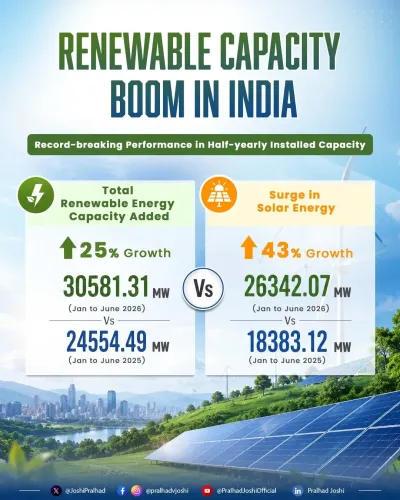
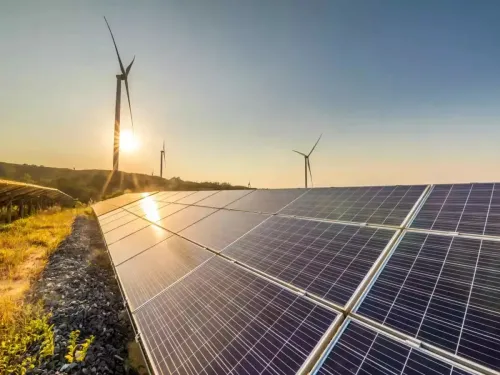
Of this total capacity, renewable energy sources contribute a significant 39,657 MW, which is composed of 34,955 MW from solar energy and 4,613 MW from wind energy.
This achievement marks the highest annual capacity addition ever recorded, surpassing the previous peak of 34,054 MW established during FY 2024–25.
As of January 31, 2026, India's cumulative installed power generation capacity reaches 520,510.95 MW. This includes 248,541.62 MW of fossil fuel-based capacity alongside 271,969.33 MW of non-fossil fuel capacity.
Within the non-fossil fuel segment, renewable energy constitutes 263,189.33 MW, while nuclear energy contributes 8,780 MW.
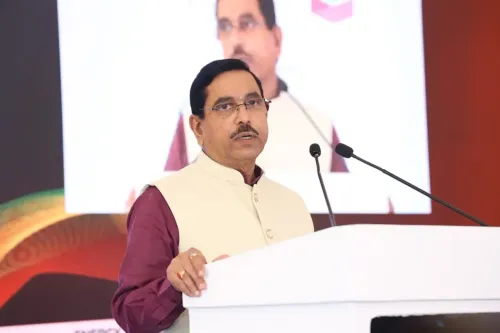
Union Minister of New and Renewable Energy, Pralhad Joshi, reaffirmed India's goal of reaching 500 GW of non-fossil fuel installed power capacity by 2030 and achieving Net Zero emissions by 2070 during the 16th Assembly of the International Renewable Energy Agency (IRENA) in Abu Dhabi.
Minister Joshi highlighted a significant milestone, stating that India achieved 50 percent of its installed electricity capacity from non-fossil fuel sources in 2025, five years ahead of its Nationally Determined Contribution (NDC) targets set by the Paris Agreement.
"India's renewable energy capacity has surpassed 266 GW, positioning the country as a global leader in renewable energy deployment," he emphasized.
The Minister also pointed out that as one of the fastest-growing major energy markets globally, India is focusing on building reliable and resilient power systems through the rapid implementation of energy storage solutions, modernizing the grid, developing Green Energy Corridors, and employing innovative bidding strategies such as hybrid and continuous renewable energy projects.
Moreover, he stressed India's endeavors to fortify clean energy supply chains and expand domestic manufacturing in sectors like solar, wind, battery production, and electrolysers, which bolster national self-reliance while diversifying global supply chains.
Highlighting the human-centric approach of India's energy transition, Minister Joshi noted flagship initiatives aimed at empowering families and farmers.
Under the PM Surya Ghar: Muft Bijli Yojana, nearly 2.5 million households have benefitted from rooftop solar installations within a span of less than two years.
Similarly, the Pradhan Mantri Kisan Urja Suraksha evam Utthaan Mahabhiyaan (PM-KUSUM) scheme has aided around 2.17 million farmers by replacing diesel pumps and solarizing agricultural feeders.
Point of View
I believe that India's impressive strides in renewable energy capacity are not just a testament to our commitment to sustainability but also a necessary step towards energy independence. The government's push towards non-fossil fuels, while empowering local communities, reflects a forward-thinking approach to tackling climate change. We stand with India on this transformative journey.
NationPress
19 Sept 2026
Frequently Asked Questions
What is the total new power capacity added in India during FY 26?
India has added a record 52,537 MW of new electricity generation capacity by January 31, 2026.
What percentage increase does this represent over the previous year?
This represents an 11 percent increase over the corresponding figure for 2024-25.
What portion of the new capacity comes from renewable sources?
Renewable energy accounts for 39,657 MW of the total capacity added.
What are the major sources of renewable energy in this capacity?
The new capacity includes 34,955 MW from solar power and 4,613 MW from wind power.
What is India's target for non-fossil fuel capacity by 2030?
India aims to achieve 500 GW of non-fossil fuel installed power capacity by 2030.