India Hits New Heights: 520.51 GW Power Capacity Added in FY26
Synopsis
India has made history by adding a record 52,537 MW of power generation capacity in FY26, surpassing previous records. This achievement underscores the country's commitment to meeting rising energy demands while fostering economic growth.
Key Takeaways
India achieved a record capacity addition of 52,537 MW in FY26.
39,657 MW of the new capacity came from renewable energy sources.
Peak power demand was recorded at 242.49 GW.
Power shortage reduced to 0.03 percent by December 2025.
Significant investments were made through various government initiatives.
New Delhi, March 19 (NationPress) India has achieved a remarkable milestone by adding a staggering 52,537 MW (520.51 GW) of generation capacity across all sources during the fiscal year 2026 (up to January 31). This accomplishment represents the highest capacity increase ever recorded in a single year, eclipsing the previous record of 34,054 MW set in FY25, according to government reports.
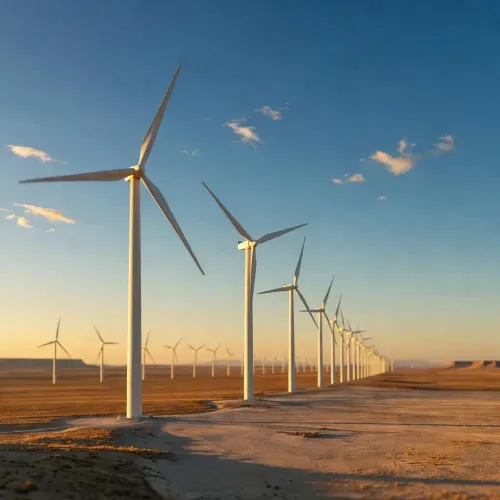
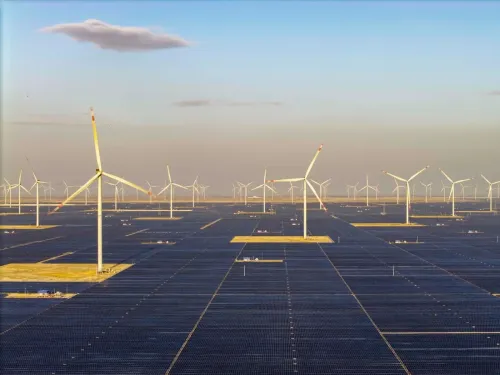
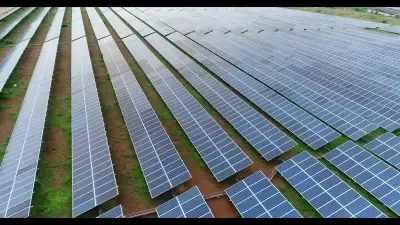
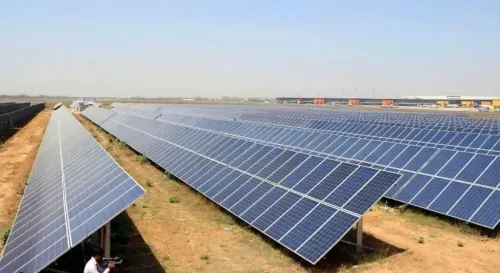
The substantial capacity addition comprised 39,657 MW from renewable energy sources, with 34,955 MW from solar energy and 4,613 MW from wind energy, resulting in a total installed capacity of 520.51 GW, as stated in an official announcement.
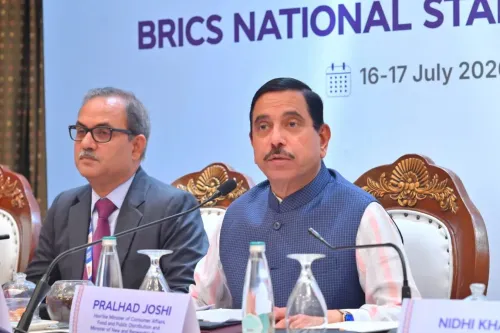
The backdrop of this announcement coincided with the commencement of the four-day 'Bharat Electricity Summit 2026' on Thursday, which gathered policymakers, industry leaders, regulators, investors, and civil society to deliberate on energy transitions and sector reforms.
The statement highlighted, "India's consistent growth in power generation capacity ensures that the nation is well-equipped to satisfy the increasing consumption demands while bolstering economic progress."
In FY26, India successfully managed a peak power demand of 242.49 GW, and the power shortage has significantly decreased to 0.03 percent by December 2025, down from 4.2 percent in FY14, according to the government report.
Efforts have also been made to enhance the transmission and transformation infrastructure within the power system. New substations, upgraded transformers, and expanded high-capacity transmission corridors have been established to facilitate the efficient movement of electricity from generation sites to load centers across states. These investments have alleviated bottlenecks, enhanced grid stability, and enabled smoother integration of diverse energy sources into the national grid.
Moreover, the availability of reliable electricity has decreased dependence on diesel generation and traditional fuels, thereby reducing costs and improving environmental outcomes.
India's national transmission network, renowned as the world's largest synchronous national grid, has surpassed 5 lakh circuit kilometers and attained a transformation capacity of 1,407 gigavolt amperes (GVA), as noted in the report.
Initiatives like the Deen Dayal Upadhyaya Gram Jyoti Yojana (DDUGJY), the Integrated Power Development Scheme (IPDS), and Saubhagya have mobilized approximately Rs 1.85 lakh crore in investments, electrifying 18,374 villages and providing electricity connections to around 2.86 crore households.
aar/na
Point of View
It's crucial to recognize the significance of India's record-breaking power capacity addition. This milestone reflects the nation's dedication to enhancing its energy infrastructure and meeting future demands while promoting sustainable practices. It's a pivotal moment for India's energy sector.
NationPress
24 Sept 2026
Frequently Asked Questions
What was the total power capacity added by India in FY26?
India added a record 52,537 MW (520.51 GW) of generation capacity in FY26.
How much of the new capacity came from renewable sources?
Out of the total, 39,657 MW was sourced from renewable energy, including solar and wind.
What was the peak power demand in FY26?
The peak power demand reached 242.49 GW in FY26.
What initiatives contributed to these developments?
Initiatives like the DDUGJY, IPDS, and Saubhagya mobilized significant investments to electrify villages and households.
How has the power shortage changed in recent years?
Power shortage has fallen to 0.03 percent by December 2025, down from 4.2 percent in FY14.